×

The Standard e-Paper
Join Thousands Daily
 The Standard Group Plc is a
multi-media organization with investments in media platforms spanning newspaper
print operations, television, radio broadcasting, digital and online services. The
Standard Group is recognized as a leading multi-media house in Kenya with a key
influence in matters of national and international interest.
The Standard Group Plc is a
multi-media organization with investments in media platforms spanning newspaper
print operations, television, radio broadcasting, digital and online services. The
Standard Group is recognized as a leading multi-media house in Kenya with a key
influence in matters of national and international interest.

Audio By Vocalize
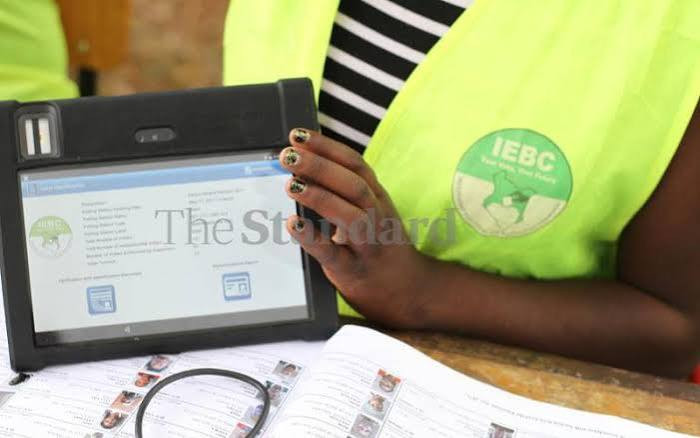
Uganda’s First Deputy Prime Minister Rebecca Kadaga’s threat to arrest her citizens for crossing into Kenya to register or vote in next year’s General Election has reignited concerns raised by a recent KTN exposé that Ugandan nationals were acquiring Kenyan identification documents and registering as voters ahead of the 2027 election.
Not going away, this controversy warrants far greater public scrutiny. Most election experts agree that counting votes is the easy part. The real challenge is determining who is eligible to vote before polling begins.
This is particularly important in a region where the borders drawn by a handful of Berlin Conference delegates in 1884 cut through historically homogeneous communities, and our freedom of movement remains a fundamental right.
True or false, allegations of non-citizens being registered in Suam District and along the Kenya-Uganda border cannot be simply wished away and ignored.
Left unresolved, they will puncture public confidence in the legitimacy of next year’s election. While we focus here, we need to extend our vigilance to the other four countries that border Kenya. Unlike Canada, Australia and New Zealand, Kenya allows voters to register outside their place of residence.
While this offers flexibility, it also creates opportunities for manipulation. As Nairobi’s Kilimanians sometimes joke, courtesy of their local leaders, their Dagoretti and Kibera cousins like to turn up en masse once every five years.
Corridor communities along our five borders may share languages, cultural ties and cross-border trade, but they are also different and require electoral safeguards. We must distinguish between genuine citizens eligible to vote, those exercising legitimate mobility and those being mobilised to fraudulently skew an electoral outcome.
Now that the controversy is with us, election-watch organisations and citizens must get intimate with some numbers.
How does voter registration data compare against census data, adult population estimates, polling station data and identity and voter cards issuance and voter transfers?Allow me to dissuade those reading this from a listening of “how to rig an election” and think that by hiding this data it will help them win.
Hiding any one of these data sets is one step towards disinformation, violence, a failed election and a failed state. The electoral commission must boldly step in front of the allegations and controversies by encouraging and facilitating citizens to inspect the provisional voter registers and report inaccuracies before the elections.
Unproven claims dismantle public trust as effectively as actual misconduct. The Uganda border spans five Kenyan counties: Busia, Bungoma, Trans Nzoia, West Pokot and Turkana. Recent voter registration drives added more than 39,000 new voters in each of these counties, with Bungoma alone registering 73,599.
To place this in context, the combined total of these new voters is large enough to have decided the 2022 presidential race alone. In a close election, just these new voters combined could swing next year’s election.
We need deeper and more independent analysis here and along the Tanzania, Ethiopia, Somalia and South Sudanese corridors not just for president but across the other five seats.
At this moment, the Electoral Commission, Directorate of Criminal Investigations and other electoral stakeholders must go beyond the allegation-denial game. The stakes are too high.
Full transparency is the strongest response. Can the IEBC publish detailed registration and transfer statistics, clean and facilitate public inspection of voter rolls, strengthen voter transfer verification, and conduct regular data-based audits?
Stay informed. Subscribe to our newsletter
If there is nothing to hide, publish them for independent domestic and international scrutiny. The purpose is not to prevent voter fraud but to build public confidence that the elections will reflect the will of eligible Kenyan voters whether in Busia, Mandera, Migori, Marsabit or Nairobi.
DPM Kadaga’s statement rightfully spoke of upholding Kenyan sovereignty.
Given our corridor communities often graze cattle in one country, marry and do business in another, let the Kenyan state make it transparently clear who is eligible to vote and where.
The choice between respecting border communities and protecting elections is false. Mature democracies do both, but the playbook must be rules-based and clear to all.
Subscribe to our newsletter and stay updated on the latest developments and special offers!

 Prefer the Standard on Google






 join
join