×

The Standard e-Paper
Smart Minds Choose Us
 The Standard Group Plc is a
multi-media organization with investments in media platforms spanning newspaper
print operations, television, radio broadcasting, digital and online services. The
Standard Group is recognized as a leading multi-media house in Kenya with a key
influence in matters of national and international interest.
The Standard Group Plc is a
multi-media organization with investments in media platforms spanning newspaper
print operations, television, radio broadcasting, digital and online services. The
Standard Group is recognized as a leading multi-media house in Kenya with a key
influence in matters of national and international interest.

Audio By Vocalize
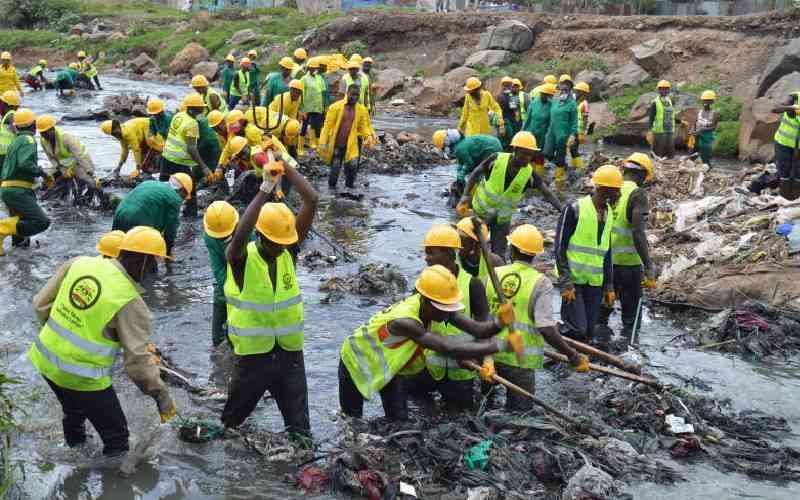
Some of the world’s most beautiful metropolises have one thing in common: rivers flowing through them. River ecosystems lend London, Cairo, Paris, and Shanghai splendour and a cooling effect, while water sports and walks along the banks add to the therapeutic experience of city dwellers.
Though smaller by comparison, the Nairobi River should offer a similar experience. But years of pollution, encroachment, and deforestation have made this water body a pale shadow of what it ought to be. Multiple interventions by different administrations have failed to restore the Nairobi River to a city attraction.
In 1999, the Nairobi River Basin Rehabilitation Programme (NRBP) was established, focusing on water quality assessment, pollution monitoring, and building public awareness. The intergovernmental and multi-sectoral initiative also focused on riparian zone delineation and tree planting to control soil erosion.
Its overall aim was to improve urban livelihoods, enhance biodiversity, manage solid waste, and secure sustainable water supplies. Nearly 27 years later, that target remains a pipe dream. A clean, free-flowing, and pleasant Nairobi River is hard to conjure up for many residents of Nairobi.
The recent Climate Works Mtaani Initiative, which works alongside the Nairobi River Regeneration and Engineering Works Programme under the Nairobi Rivers Commission, is the latest effort to reclaim the river’s glory.
So, why have all past efforts struggled to deliver results? What have other global cities done to their rivers that Nairobi misses?
Foremost, a city’s rivers must be integrated into its urban plan. To achieve the most from the unique blend of land, built infrastructure, and water bodies requires careful planning. In a well-functioning city, infrastructural and cityscape plans recognise water bodies as part of the residents’ everyday life. This recognition enhances their conservation as an essential component of city life. As such, city designs aim to facilitate development, protection, and drainage, alongside human activities such as sport fishing, kayaking, and surfing.
This is precisely what the Nairobi River lacks. The city’s masterplan neglected this vital water ecosystem. If it exists, developments have overrun it. This has had deadly consequences, as encroachment on riparian land exposes riverside settlements to frequent floodwaters.
Buildings on its banks have their backs on the river, and city roads cross it rather than run along it. Having the river behind buildings means that less attention is given to it – making it an easy dumping site for solid waste and untreated sewage. Constructing roads along the river would allow residents to see and interact with it daily. This interaction subconsciously urges them to preserve the river.
If the Nairobi Regeneration project were to restore this important river, it must redesign buildings and other infrastructure by reorienting them to it. Like beachfront properties, riverine properties are pricier. The government’s affordable housing project is an attractive place to begin. Units under construction on reclaimed sections of the river could provide a panoramic view of the river.
At the same time, less busy and non-motorised city roads should be constructed along the river to connect to other busier roads and sections of the city.
Paving the banks, planting trees, and building embankments to prevent stormwater surges would also encourage Nairobi residents to cycle, skateboard, and jog along the river.
Ultimately, restoring the Nairobi River successfully will depend on the scope of its cleanup. Ridding this water body of decades of murk and filth is necessary and urgent for its long-term rehabilitation. Dredging its bed and mortaring its banks will allow clean water to flow, which residents can use for washing and irrigation.
Stay informed. Subscribe to our newsletter
Regenerating the capital’s river cannot be complete and comprehensive without blending nature and infrastructure. The transformation cannot endure without first creating an intimate connection between the river and the city’s residents.
Beyond the aesthetics and functionality, this river serves another silent, invisible but critical role: cooling the city’s vicinity. As cities globally experience more frequent and intense climate-induced heat stress, Nairobi will not be spared. Reclaiming its main river could prove the difference between cooling and boiling the city.
Nothing stops the Nairobi River from becoming like the Danube in Vienna, the Rhine in Cologne, or the Nordström in Stockholm. Their majesty can be reimagined here. But we must want this transformation hard enough to achieve it. We must also reassess our communion with the river.
This time, the Nairobi River Regeneration Project must get it right.
Subscribe to our newsletter and stay updated on the latest developments and special offers!


 Prefer the Standard on Google








 join
join