×

The Standard e-Paper
Stay Informed, Even Offline
 The Standard Group Plc is a
multi-media organization with investments in media platforms spanning newspaper
print operations, television, radio broadcasting, digital and online services. The
Standard Group is recognized as a leading multi-media house in Kenya with a key
influence in matters of national and international interest.

Audio By Vocalize
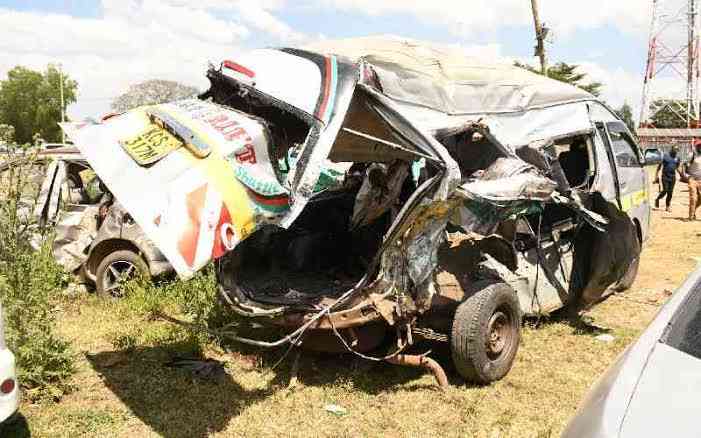
As road deaths continue to rise, questions are being raised about whether years behind the wheel are enough to prepare matatu drivers to carry passengers safely.
Millions of Kenyans rely on matatus to get to work, school and back home, making the decisions drivers make on the road critical to passenger safety. But according to Edwin Mukabana, chairman of the Federation of the Public Transport Sector, knowing how to drive is not enough.
His concerns come against a worrying national picture. Kenya recorded 5,009 road deaths in 2025, up from 4,748 in 2024, according to the Kenya National Bureau of Statistics.
By October 4, 2026, the National Transport and Safety Authority (NTSA) had recorded 3,995 deaths, a 9.2 per cent increase from the 3,657 reported during the same period in 2025. The figures cover all road users, not just matatu passengers.
While the figures do not show how many of the deaths involved matatus, they point to the wider road safety challenge facing a country where millions depend on public transport every day.
For Mukabana, part of the answer lies in how drivers are prepared for the job. He argues that training should go beyond teaching someone how to operate a vehicle and help them understand the responsibility that comes with carrying passengers.
He points to the former Kenya Bus Service as an example of an employer that took driver training seriously. According to him, prospective drivers underwent medical assessments before completing eight weeks of training in passenger transport and city driving.
The training was not just about handling a vehicle. It was also about shaping drivers' attitudes towards their work, regardless of how long they had been driving.
“Whether you had driven for 17 years, 20 years, it didn't matter. You had to go through training because what we were attacking at that time is your mind,” he said.
Experience, Mukabana's argument suggests, does not always translate into safe driving. A driver may be familiar with a vehicle and the road but still take risks when rushing to pick up passengers, attempting a dangerous overtake or trying to complete more trips to increase earnings.
Mukabana argues that drivers need to understand that passenger safety must come before the number of trips they make.
But responsibility does not rest with drivers alone. Operators, supervisors and the organisations managing public service vehicles also play a role in setting the standards drivers are expected to follow. Training can teach drivers how to identify risks, but those lessons must also be reflected in how the business is run.
Mukabana also says drivers on long-distance routes need training suited to highway driving, which presents different challenges from navigating traffic in towns and cities. Managing fatigue, judging when it is safe to overtake and responding to hazards at high speeds all require careful judgement.
His concerns come amid efforts by NTSA to strengthen training in the public service vehicle sector.
Stay informed. Subscribe to our newsletter
In September 2026, the authority launched a nationwide capacity-building programme targeting more than 4,000 PSV drivers, operators, supervisors and Savings and Credit Cooperative Society (SACCO) managers.
The programme covers defensive driving, hazard prevention, vehicle safety checks, passenger care and regulatory compliance. By October 20, NTSA reported that 3,201 participants had undergone training, including 2,352 PSV drivers and 849 transport management personnel.
The initiative brings drivers and transport management personnel into the same training effort, recognising that road safety depends on more than individual decisions behind the wheel.
However, questions remain on whether the measures address the pressures drivers face and how effectively they tackle risky behaviour beyond basic driving skills.
Subscribe to our newsletter and stay updated on the latest developments and special offers!


 Prefer the Standard on Google