×

The Standard e-Paper
Fearless, Trusted News
 The Standard Group Plc is a
multi-media organization with investments in media platforms spanning newspaper
print operations, television, radio broadcasting, digital and online services. The
Standard Group is recognized as a leading multi-media house in Kenya with a key
influence in matters of national and international interest.
The Standard Group Plc is a
multi-media organization with investments in media platforms spanning newspaper
print operations, television, radio broadcasting, digital and online services. The
Standard Group is recognized as a leading multi-media house in Kenya with a key
influence in matters of national and international interest.

Audio By Vocalize
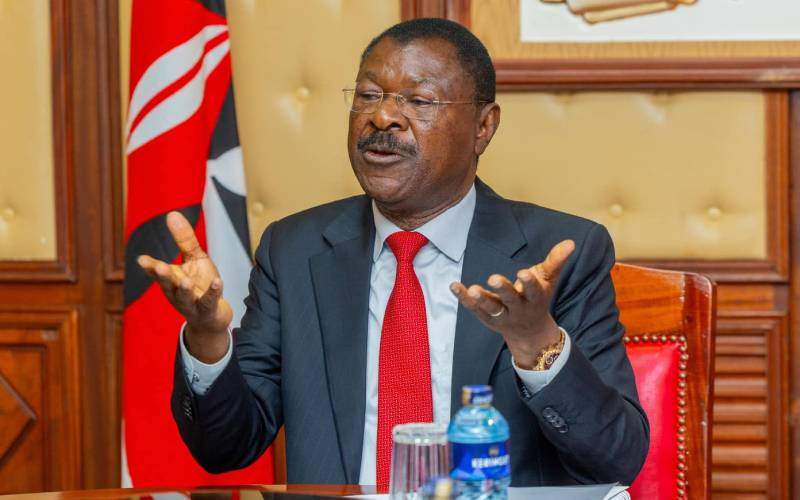
Africa must strengthen its response to climate change by holding environmental polluters accountable and developing home-grown financing mechanisms for climate action, National Assembly Speaker Moses Wetang’ula has said.
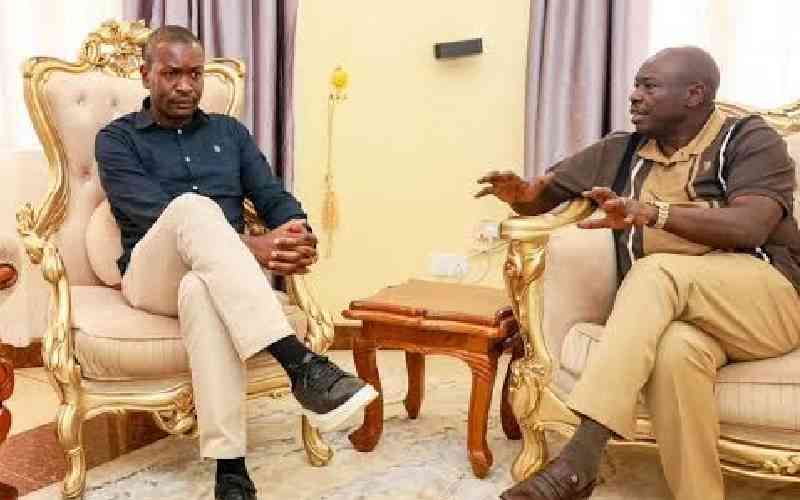
Wetang’ula made the call on Wednesday, September 30, 2026, when he hosted a delegation from the Pan-African Parliament (PAP) at Parliament Buildings in Nairobi.
The discussions focused on the continent’s worsening climate crisis and efforts to develop a Model Law on Climate Change for Africa.
“We have the will, laws and treaties, but remain an island that is helpless,” Wetang’ula said, stressing that legislation without resources for implementation would have limited impact.
The Speaker welcomed the initiative, arguing that African countries needed a common legal and policy framework capable of addressing environmental degradation while ensuring that climate interventions are backed by sustainable financing.
He called for the establishment of dedicated climate financing mechanisms, including a Climate Change Fund, and proposed that African countries consider taxing the extraction of minerals and other natural resources, with part of the proceeds channelled towards environmental protection, climate adaptation and mitigation.
“It should not be left to individual countries to decide what to do with some of our heritage,” he said, urging the continent to collectively protect its natural wealth for present and future generations.
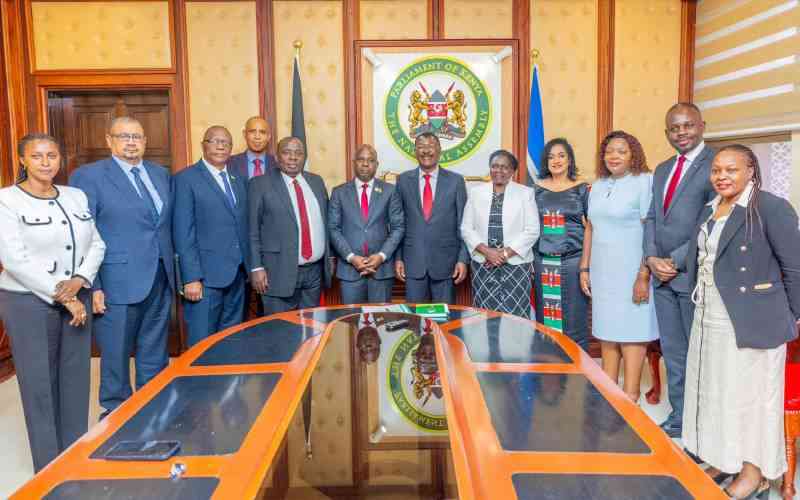
Wetang’ula said Africa should first develop a common continental approach to environmental protection and natural resource management before taking its demands to international forums.
“We created the Pan-African Parliament to save Africans. There are certain things we can do as Africans before going to the international arena to make our case,” he said.
The Speaker painted a picture of a continent where changing weather patterns are already disrupting livelihoods and traditional knowledge.
“We grew up in rural areas, and our parents, who never had formal education, could predict weather patterns. Today, you cannot predict them. Planting seasons have changed,” he said.
He further pointed to the drying of water sources, saying many streams that were once permanent had become seasonal.
“90 percent of our streams are now seasonal. They dry up for more than four months a year. This is a nightmare,” he said.
Wetang’ula cited Kenya’s tree-growing programme and efforts to rehabilitate rivers, including the Nairobi River, as examples of climate interventions that require sustained investment.
He also pointed to Kenya’s hosting of the United Nations Environment Programme as an opportunity for the country to champion stronger continental environmental action.
Stay informed. Subscribe to our newsletter
“We need to commit and punish climate polluters. We are on our own,” he warned.
The call for stronger accountability was echoed by the Pan-African Parliament delegation.
PAP Vice-Chairperson of the Committee on Agriculture, Euphreme Outata, said Africa was bearing a disproportionate burden from climate change and needed stronger financing mechanisms to respond.
“Africa is paying a heavy price for climate change. We need proper taxation of those extracting our minerals,” Outata said.
He proposed that revenues generated from mineral extraction be ring-fenced for climate interventions, ensuring that communities benefit directly from the exploitation of natural resources.
Outata said the proposed model law had undergone scrutiny to determine whether it could operate effectively across different African institutions and countries.
“We are making progress. We have examined this modern law and tested whether it can work across all institutions and countries,” he said.
He also urged African governments to ensure climate policies protect vulnerable groups, including women, children, persons with disabilities and fishing communities, who often face heightened exposure to environmental and economic disruptions.
The push comes against the backdrop of growing pressure on African countries to balance economic development with environmental protection.
While the continent holds vast mineral, energy and natural resources, many countries remain financially constrained in their ability to fund adaptation and mitigation.
Subscribe to our newsletter and stay updated on the latest developments and special offers!


 Prefer the Standard on Google