×

The Standard e-Paper
Join Thousands Daily
 The Standard Group Plc is a
multi-media organization with investments in media platforms spanning newspaper
print operations, television, radio broadcasting, digital and online services. The
Standard Group is recognized as a leading multi-media house in Kenya with a key
influence in matters of national and international interest.
The Standard Group Plc is a
multi-media organization with investments in media platforms spanning newspaper
print operations, television, radio broadcasting, digital and online services. The
Standard Group is recognized as a leading multi-media house in Kenya with a key
influence in matters of national and international interest.

Audio By Vocalize

A Ukrainian rescuer works among debris in the courtyard of a residential building following an air attack in Odesa on September 2, 2026, amid the Russian invasion of Ukraine. [AFP]
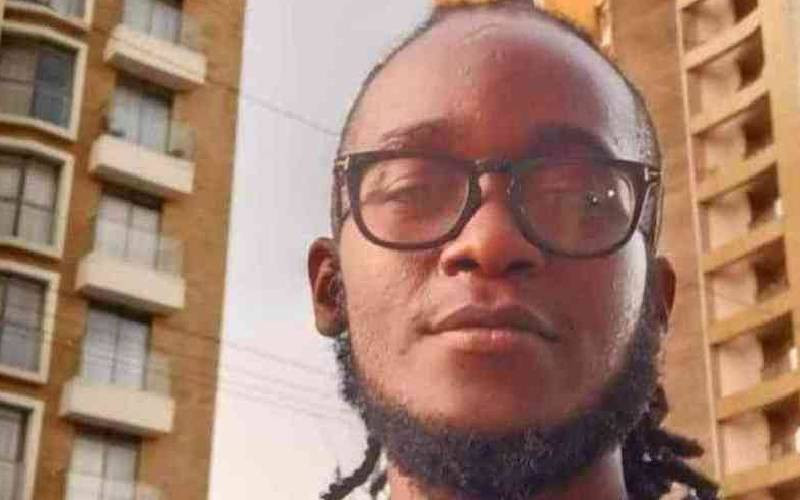
Seven months after a family in Mukurweini, Nyeri County, performed a mock burial following news of their relative killed while fighting for Russia in Ukraine, it has emerged that his recruitment is linked to a new church that has been spreading its wings in the country.
Charles Waithaka Wangari, 31, left for Russia in November 2025 and by the end of December he had been killed on the frontline of the ongoing war. Rights groups that have been investigating illegal recruitment of Kenyans into the war as combatants have told The Standard that Waithaka fell victim to a promise by a member of the Russian Orthodox church.
A consultant at the Kenya Human Rights Commission, Odhiambo Ojiro, said the new church’s clergy have been enticing jobless youths with an offer of a scholarship to study theology in Russia.
Waithaka’s family received news of his death at the end of January. His mother, Bibiana Waithaka, who has been interviewed by several international media including Al Jazeera, has said information of his killing reached her through a friend.
Registered in Kenya in February 2023, a year after Moscow declared war on Ukraine, the Russian church has grown its centres, getting 37 parishes and 100 clergy across the country. Rights groups, among them Vocal Africa, have hinted at opening investigations into information linking the church to recruitment by deception for the Russian Army.
Hussein Khalid, the rights body executive director, said allegations have been made about the involvement of the church in question. “It is a matter that I can speak officially about after an in-depth investigation”
“I am not blaming the church for the recruitment, because I don’t have information that it was involved in taking my son to Russia,” Bibiana told The Standard on Monday. “What I know is that my son was introduced to job offers in Russia by a member of the church.”
In February 2026, Vladimir Putin’s promise to conquer Ukraine in three days hit the1440-days mark, translating to 4 years with no end in sight for the war. By all accounts, the conflict is looking to compete with Adolf Hitler’s madness of 1939-1945.
The nature of the war has also, lately, started to send to Moscow interesting similarities to what it experienced during World War II. In all recent European conflicts where Russia has been at the centre, Moscow has not been hit as it is today by Ukrainian drones- that happened during World War II when Hitler’s Luftwaffe bombs rained on Moscow from 1941.
Rights groups, diplomats and observers now argue that, facing challenging times, Moscow has been working on its soft power alternative. It is expanding its Orthodox Church to phase out in the arena of public relations. But hidden underneath, observers warn, are secretive, nefarious acts. A September 2024 Jamestown Foundation investigation said African students working and living in Russia under the guise of reconstructing church monasteries in Ryazan oblast are reportedly joining the Russian Armed Forces to take part in Moscow’s war against Ukraine
Ukrainian ambassador to Kenya Yurii Tokar reads a deliberate push by Moscow to use its church for a new relations game to supplement its war effort.
“We should remember what the leadership of the Russian Orthodox Church says about Russia’s war of aggression against Ukraine,” Tokar told The Standard. “Orthodox clergy have blessed troops and military equipment used in attacks on Ukrainian cities, homes and hospitals, killing civilians, including women and children. When an institution provides religious and ideological justification for a war of aggression, blesses the instruments used to wage it, and at the same time expands its networks abroad, it is entirely legitimate to ask where pastoral activity ends and the projection of Russian state interests begins”
In early March 2024, the head of the Church in Africa, Bishop Konstantin of Zaraisk, travelled to Tanzania and administered the holy sacrament of baptism for the first time on African soil, the Church’s website reported. Later, between August 10 and 29, he travelled to Kenya, where he held a series of meetings with members of the Russian Embassy and local followers of the Orthodox creed. He also paid visits to the Russian-sponsored infrastructure in the area, such as schools and cathedrals.
Stay informed. Subscribe to our newsletter
These activities point to Moscow’s renewed focus on expanding its influence and soft power in Africa. Given its lack of economic resources as compared to other major players such as China or the European Union, the Kremlin will likely continue to act through the Russian Orthodox Church (ROC) to exert its influence through disinformation and spreading anti-Western sentiments that traditionally appeal to conservatism and anti-colonialism
“Ukraine’s experience shows that the Russian Orthodox Church can no longer be viewed simply as a religious institution operating independently from the state”, Said Tokar.
“It has become an integral part of Russia’s political and ideological machinery. It legitimises Russia’s war of aggression against Ukraine, amplifies state narratives abroad and increasingly serves as an additional channel of Russian influence alongside diplomatic, information and political activity across Africa.”
The leader of the church in Africa who holds the title Metropolitan Constantine of Cairo rejected the characterisation, calling reports linking the ROC to Russian military recruitment in Africa "lies and slander" intended to distract from the church's work.
The growth of the Russian Church is not without an immediate victim. The long-established Greek Orthodox Church has been disintegrating, losing its priests to the Russian because of better terms of employment. The Greek Church has complained about uncalled-for competition from the Russian Church.
Writing on Pennsylvania-based RealClearReligion, a well-established online publication that dissects religion and politics, Kenyan journalist Joseph Maina, who analyses religion and politics in the South and Horn of Africa, says in his latest piece that when Madagascan priest Alexey Herizo received his ordination, it did not come from the ancient Greek Orthodox Church he had long pursued. It came from the Russian Orthodox Church, an institution that barely existed in sub-Saharan Africa three years ago.
The two Orthodox churches are now competing for the same continent, said Maina. One has been there since the first century, while the other arrived in December 2021 — and has expanded with striking speed.
The Russian church has become more than just a turf battle between the two churches over the hearts and minds of local Orthodox priests and laypeople. To some observers, it’s part of a growing, concerning trend of Russia deepening geopolitical ties throughout Africa, and leveraging soft power to remake the continent in its own image.
The Greek Orthodox office of Alexandria and All Africa traces its origins back to the year 43 AD. It has historically been the church to which all Orthodox Christians in Africa belong, and among Greek Orthodox, it’s considered only second in significance after Constantinople, the spiritual and administrative centre of the church. Black African Christians now make up the majority of its faithful, while most of its bishops continue to be Greeks. It runs a Theological School in Nairobi, which has been training clergy since its opening in 1981.
The Russian Orthodox Church, by contrast, had a single congregation in sub-Saharan Africa as recently as 2022, in South Africa, with its remaining African parishes confined to Egypt, Tunisia and Morocco. On Dec. 29, 2021, the Church admitted 102 clergy, drawn from eight African countries, into the jurisdiction of the Moscow office, and simultaneously created the Patriarchal Exarchate of Africa, serving the entire continent.
A study by Dr Evangelos Thiani, an academic and Kenyan priest in the Greek Orthodox Church, found that Russians have been attracting priests with better salaries, promises of church construction, and rapid promotion. Titled The Russian Orthodox Church in Africa- For Political or Ecclesial Reasons, the paper says
“The use of religion for entering Africa is therefore an ideal form of Russian soft power… The Russian Exarchate in Africa is about their nation creating space for their involvement in African countries through religious soft power that eventually benefits their political and economic agenda.”
“Such concerns should not be dismissed”, Sais Tokar. “Given the scale of Russia’s recruitment efforts and the broader role of the ROC within Russia’s influence architecture, any credible indications deserve close attention. I am confident that the competent Kenyan authorities are already looking carefully into all relevant aspects of these recruitment networks.”
Subscribe to our newsletter and stay updated on the latest developments and special offers!


 Prefer the Standard on Google




 join
join