×

The Standard e-Paper
Kenya’s Boldest Voice
 The Standard Group Plc is a
multi-media organization with investments in media platforms spanning newspaper
print operations, television, radio broadcasting, digital and online services. The
Standard Group is recognized as a leading multi-media house in Kenya with a key
influence in matters of national and international interest.
The Standard Group Plc is a
multi-media organization with investments in media platforms spanning newspaper
print operations, television, radio broadcasting, digital and online services. The
Standard Group is recognized as a leading multi-media house in Kenya with a key
influence in matters of national and international interest.

Audio By Vocalize
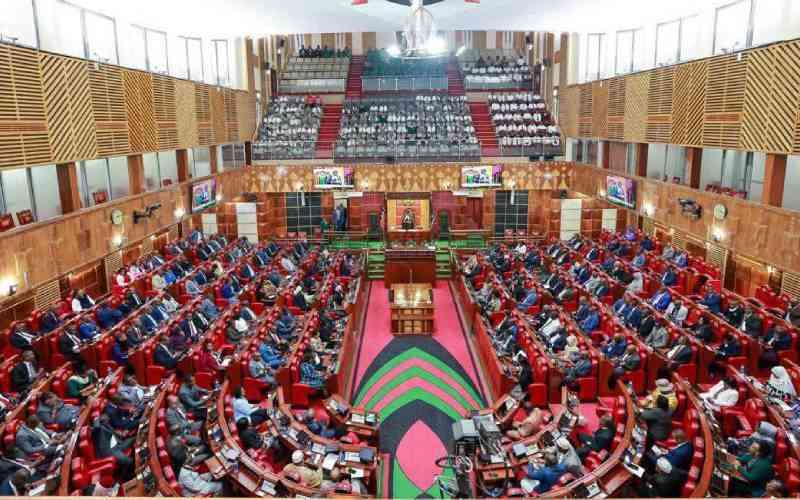
The National Assembly has passed the Kenya Roads (Amendment) Bill, 2024, a proposed law seeking to make dedicated infrastructure for cyclists, pedestrians and other non-motorised transport users a requirement on designated roads across the country.
The Bill, sponsored by Naisula Lesuuda as National Assembly Bill No. 31 of 2024, seeks to amend the Kenya Roads Act to strengthen the provision of infrastructure for non-motorised transport (NMT).
Its passage marks a significant step towards making walking and cycling safer and more accessible on Kenya’s roads.
The legislation responds to concerns over the safety of pedestrians and cyclists who often share busy roads with motor vehicles, particularly in urban areas.
NMT is widely used by Kenyans for commuting, accessing markets and transporting goods, making safe road infrastructure an important part of the country’s transport system.
At the heart of the Bill is a requirement for road authorities to incorporate dedicated facilities for non-motorised transport when designing and constructing designated roads.
The Bill introduces definitions for key terms, including “cycling lane,” “pedestrian walkway” and “non-motorised vehicles,” providing a clearer legal framework for planning and enforcing NMT infrastructure.
Under the proposed amendments, the Kenya National Highways Authority (KeNHA), Kenya Rural Roads Authority (KeRRA) and Kenya Urban Roads Authority (KURA) would be required to design and construct dedicated NMT lanes on roads under their respective control.
These facilities would include sidewalks, pedestrian crossings and cycle lanes, creating physical separation between vulnerable road users and motorised traffic.
The Bill seeks to ensure that NMT infrastructure is not treated as an optional addition to road projects but is incorporated into road design and construction.
Its provisions would also give the police a stronger role in protecting the infrastructure and enforcing its proper use.
Police would be empowered to enforce rules governing dedicated pedestrian and cycling facilities while helping ensure the safety of non-motorised transport users.
The proposed law comes against a backdrop of growing demand for safer and more inclusive transport infrastructure as Kenya’s towns and cities expand.
Increased traffic volumes have intensified competition for road space, while pedestrians and cyclists remain among the most vulnerable road users.
By requiring dedicated lanes, the legislation seeks to reduce conflicts between motor vehicles and NMT users while encouraging safer forms of mobility.
Stay informed. Subscribe to our newsletter
The Bill’s focus extends beyond bicycles. Pedestrians, cyclists and users of other non-motorised vehicles would benefit from infrastructure designed specifically for their needs.
The legislation therefore seeks to establish a more balanced approach to road planning, where road space accommodates different categories of users rather than prioritising motor vehicles alone.
The Bill’s passage by the National Assembly does not by itself mean all the proposed measures are immediately in force.
It must proceed through the remaining legislative and constitutional steps before becoming law.
If enacted, the amendments would place new responsibilities on KeNHA, KeRRA and KURA and could influence how roads are designed and constructed in urban, rural and national highway settings.
Subscribe to our newsletter and stay updated on the latest developments and special offers!


 Prefer the Standard on Google





 join
join