×

The Standard e-Paper
Kenya’s Boldest Voice
 The Standard Group Plc is a
multi-media organization with investments in media platforms spanning newspaper
print operations, television, radio broadcasting, digital and online services. The
Standard Group is recognized as a leading multi-media house in Kenya with a key
influence in matters of national and international interest.
The Standard Group Plc is a
multi-media organization with investments in media platforms spanning newspaper
print operations, television, radio broadcasting, digital and online services. The
Standard Group is recognized as a leading multi-media house in Kenya with a key
influence in matters of national and international interest.

Audio By Vocalize
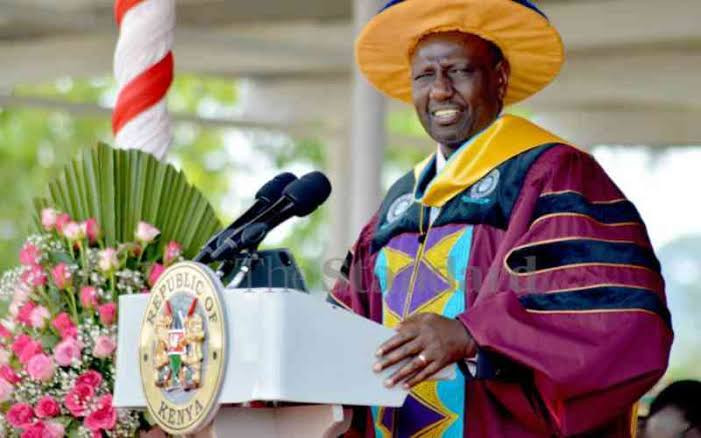
Kenyans ought to have decided whether it is one term or two terms for President William Ruto on Tuesday next week, not next year, the High Court has declared.
Justice Mugure Thande, in her verdict on when the election cycle ends and starts, said that from the 2010 Constitution, the fifth year ought to have been August 8, 2026.
She further said that the Independent Electoral and Boundaries Commission (IEBC) ought to have conducted the 2022 general election in 2021; hence, the duel was unconstitutional.
Justice Mugure was of the view that holding the next general election other than August 11,2026, will be also a violation of the Constitution and undermines the rule of law.
“Holding the said election on a date other than 11th August 2026 constitutes a violation by the second respondent of the express provisions of Article 136(2)(a) of the Constitution, and the same will be invalid. The second respondent has further contravened the provisions of Article 3 which enjoins it to respect, uphold and defend the Constitution.”
“The conduct of the second respondent also contravenes the provisions of Article 136(1) which states that the President shall be elected by registered voters in a national election conducted in accordance with the Constitution and any Act of Parliament regulating presidential elections.
Additionally, failure by the 2nd Respondent to adhere to the said provisions, undermines the rule of law, which is one of the national values and principles of governance enshrined in Article 10,” she said.
The judgment puts the Erastus Ethekon-led commission and the presidency in a limbo; as per the judgment, Dr. Ruto’s term ends next week, with his fate, either getting a fresh mandate or going home, being determined on the ballot on August 11.
She, however, suspended the judgment, saying that it would be impossible to have such an election in days.
The case was filed by lawyers Dr. Owiso Osiwo and Ashioya Biko, alongside activist Khelef Khalifa. They argued that Ethekon was wrong by declaring that the next general election ought to have been on August 8, 2027.
The trio insisted that the fifth-year cycle ought to have culminated on the second Tuesday of August, 2026.
In reply, the IEBC claimed that the court had no powers to entertain the case. It argued that this was a reserve of the Supreme Court and not a Constitutional one.
The election cycle debate has been in courts for a while now. Lawyer Willis Otieno had argued for changes in the election calendar.
Stay informed. Subscribe to our newsletter
The first of the four possible options, he said, would have the calendar begin on the day after the election, and the second would have the calendar start after the announcement of the presidential results. The two would reduce the presidential term to four years.
The third option, starting the calendar after the Supreme Court decision, and the fourth option, using the inauguration day as the start of the election calendar, would retain a five-year presidential term. In trying to convince judges either to reduce the presidential term to four years or to retain the five-year term.
Subscribe to our newsletter and stay updated on the latest developments and special offers!


 Prefer the Standard on Google






 join
join