×

The Standard e-Paper
Join Thousands Daily
 The Standard Group Plc is a
multi-media organization with investments in media platforms spanning newspaper
print operations, television, radio broadcasting, digital and online services. The
Standard Group is recognized as a leading multi-media house in Kenya with a key
influence in matters of national and international interest.
The Standard Group Plc is a
multi-media organization with investments in media platforms spanning newspaper
print operations, television, radio broadcasting, digital and online services. The
Standard Group is recognized as a leading multi-media house in Kenya with a key
influence in matters of national and international interest.

Audio By Vocalize
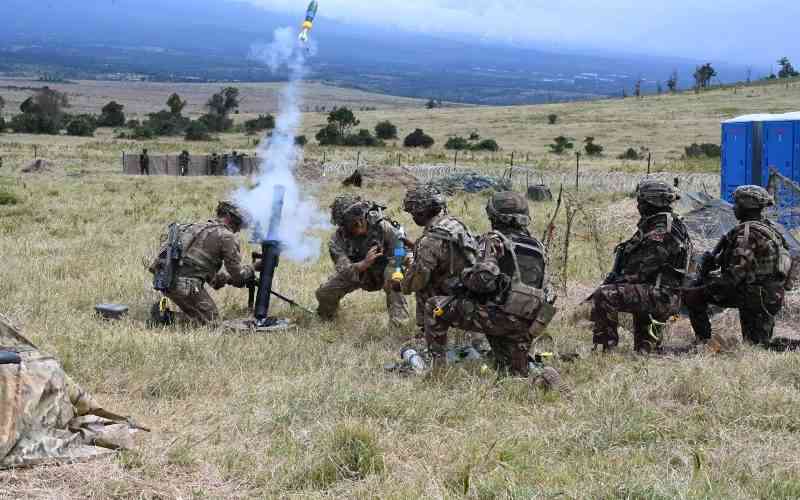
BATUK personnel conduct a joint training exercise with the Kenya Defence For. [Photo: BATUK/Facebook]
The United Kingdom has relocated a planned military training exercise from Kenya after the licences required were not approved.
Through the Ministry of Defence, the UK said the exercise dubbed 'Haraka Storm', scheduled to run in Laikipia between September and November, will instead take place at an alternative location in a neighbouring country.
“The UK highly values its relationship with Kenya, which is underpinned by mutual benefit, respect and cooperation. The UK-Kenya Defence Partnership is one of the great strengths of our relationship. Our joint training and operations with the Kenya Defence Forces (KDF) are keeping both Kenyan and British people safe,” a United Kingdom Ministry of Defence (MOD) spokesperson said in a statement shared by the Ministry of Defence spokesperson.
The statement further read, “It is with regret that the necessary licences required to allow training to take place in Laikipia later this year have not been forthcoming. As a result, the planned training will now be conducted at an alternative location outside Kenya.”
The ministry said all UK military training in the country depends on permission from the Kenyan government.
The relocation follows months of tension over the proposed Defence Cooperation Agreement (DCA), which governs the operations of the British Army Training Unit Kenya (BATUK).
Members of Parliament have delayed ratification of the agreement over concerns that British troops accused of offences while on official duty remain subject to UK jurisdiction instead of Kenyan courts.
Lawmakers and human rights groups argue the proposed agreement should align with Kenya's Constitution by allowing British troops to face trial in Kenyan courts for offences committed on Kenyan soil.
The decision also comes after a parliamentary inquiry examined allegations of sexual misconduct, environmental pollution, toxic waste dumping and injuries or deaths linked to unexploded military ordnance in BATUK training areas. The committee concluded the findings pointed to what it described as a system of impunity.
Pressure has also mounted over the unresolved 2012 murder of Agnes Wanjiru, whose body was found in a septic tank near the British military base in Nanyuki after she was last seen with British soldiers. The case has fuelled renewed calls for justice and accountability.
Earlier this month, victims' families and human rights activists petitioned the Kenyan government to end BATUK's presence unless the UK agreed to independent investigations, compensation for affected communities and child support for children allegedly fathered and abandoned by British soldiers.
The British military has also faced new restrictions on where it can conduct exercises. The KDF directed BATUK to stop using private land and conservancies in Laikipia for military training, reducing the area available for large-scale live-fire exercises.
“We recognise the disappointment this decision will cause for those who would have benefited from the economic activity generated by the exercise. All UK training activity in Kenya is dependent on the permission from the Government of Kenya.
“We remain committed to our defence partnership with Kenya and will continue to engage closely with the Kenyan Government to support the resumption of training in-country at the earliest appropriate opportunity,” the MOD spokesperson said.
Stay informed. Subscribe to our newsletter
Subscribe to our newsletter and stay updated on the latest developments and special offers!


 Prefer the Standard on Google







 join
join