×

The Standard e-Paper
Stay Informed, Even Offline
 The Standard Group Plc is a
multi-media organization with investments in media platforms spanning newspaper
print operations, television, radio broadcasting, digital and online services. The
Standard Group is recognized as a leading multi-media house in Kenya with a key
influence in matters of national and international interest.
The Standard Group Plc is a
multi-media organization with investments in media platforms spanning newspaper
print operations, television, radio broadcasting, digital and online services. The
Standard Group is recognized as a leading multi-media house in Kenya with a key
influence in matters of national and international interest.

Audio By Vocalize
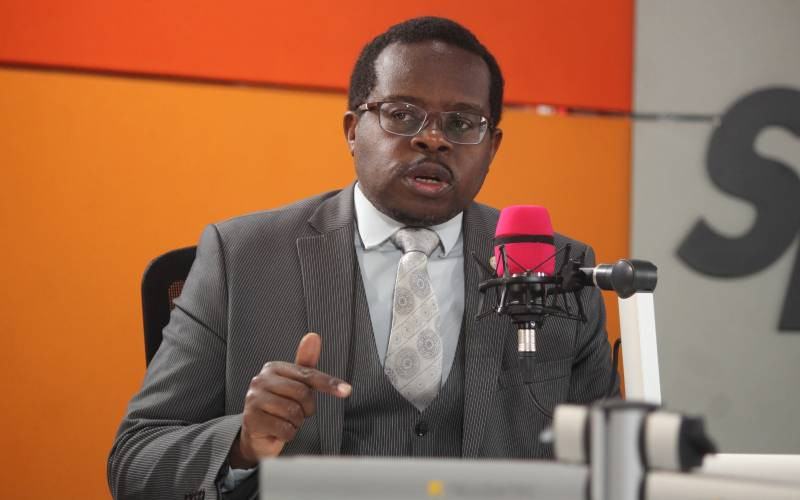
Law Society of Kenya President, Charles Kanjama, on Spice, July 21, 2026. [Benard Orwongo, Standard]
The Law Society of Kenya has explained why it plans to boycott courts nationwide, saying the action is needed to tackle corruption and improve accountability in the Judiciary.
Speaking during an interview on Spice FM, LSK President Charles Kanjama said the one-day boycott on Wednesday, July 22, will go ahead as planned because the society believes existing systems have failed to deal with corruption, misconduct and poor performance by some judicial officers.
"It is an industrial action and it is protected by the Constitution," Kanjama said.
The boycott is expected to disrupt court operations across the country as lawyers stay away from courtrooms in protest against what LSK says is the Judiciary's failure to address corruption and hold judicial officers accountable.
"We raise issues, but the progress is inadequate. There are persistent problems in the Judiciary that we need to highlight through this boycott," he noted.
Kanjama described corruption as the Judiciary's biggest problem, saying it continues to erode public confidence in the justice system.
"The biggest monster that we are trying to tackle now is corruption. Studies and perception indices have shown that the amount of corruption in the Judiciary is beyond where it should be," he observed.
He alleged that some judges have frustrated efforts to investigate complaints against them by obtaining court orders stopping the Judicial Service Commission (JSC) from handling those cases.
"When lawyers and litigants raise concerns with the institution that is meant to process those complaints, that is the JSC, some judges rush to court to stop the commission from doing its job. The LSK is saying enough," Kanjama said.
He argued that judges should be independent but also answer for their actions.
"Independence and accountability are the key elements of the Judiciary. If some judicial officers undermine the accountability structures that exist, like the JSC, and we are unable to secure accountability through court processes, then we must use other constitutional means, including protest and industrial action," he explained.
Kanjama acknowledged that the boycott would inconvenience court users but argued it was necessary to bring about change.
"A one-day temporary inconvenience to litigants is important for the sake of the greater good," he noted.
Stay informed. Subscribe to our newsletter
He added that urgent matters would still be handled.
"Mentions and applications for interim orders will proceed, but solely for the purpose of extending existing interim orders or securing fresh hearing dates so litigants are not prejudiced," Kanjama said.
He also revealed that LSK is considering an indefinite boycott of selected courts, including the Supreme Court, over unresolved complaints against some judges.
"Unfortunately, most of the judges of the Supreme Court are among the courts we are going to target for the indefinite boycott. Complaints were raised against them last year, and six of them individually obtained court orders stopping the JSC from even receiving their responses to those complaints," he alleged.
Kanjama argued that such actions have weakened accountability within the Judiciary.
"They cannot be questioned. A handful of judges are not ready to subject themselves to the JSC. That becomes one of the diseases spreading and damaging the entire infrastructure of accountability in the Judiciary," he remarked.
He said the Judiciary should address the concerns before the 2027 General Election.
"We believe this is the right time for the Judiciary to put its house in order before the 2027 General Election. We will continue to support the institution where necessary and call it out where needed," Kanjama said.
Kanjama alleged that corruption is most common in court registries, where members of the public pay bribes for services that should be free. He also claimed corruption is common in subordinate courts and tribunals, where some judicial officers are accused of taking bribes to influence bail decisions and case outcomes.
According to Kanjama, corruption involving judges of the High Court, Court of Appeal and Supreme Court is less common but involves larger sums of money.
"No corruption should be tolerated in the Judiciary. We must clear the airways, restore breathing and restore the circulation of blood within the institution," he stated.
At the same time, Kanjama cited misconduct, poor performance and delays in handling complaints as challenges affecting the justice system.
He called on the Ethics and Anti-Corruption Commission (EACC) and the Office of the Director of Public Prosecutions (ODPP) to independently investigate corruption allegations involving judicial officers.
He also urged the Judicial Service Commission to strengthen its ability to investigate and resolve complaints against judges and other judicial officers.
Subscribe to our newsletter and stay updated on the latest developments and special offers!

 Prefer the Standard on Google








 join
join