×

The Standard e-Paper
Fearless, Trusted News
 The Standard Group Plc is a
multi-media organization with investments in media platforms spanning newspaper
print operations, television, radio broadcasting, digital and online services. The
Standard Group is recognized as a leading multi-media house in Kenya with a key
influence in matters of national and international interest.
The Standard Group Plc is a
multi-media organization with investments in media platforms spanning newspaper
print operations, television, radio broadcasting, digital and online services. The
Standard Group is recognized as a leading multi-media house in Kenya with a key
influence in matters of national and international interest.

Audio By Vocalize
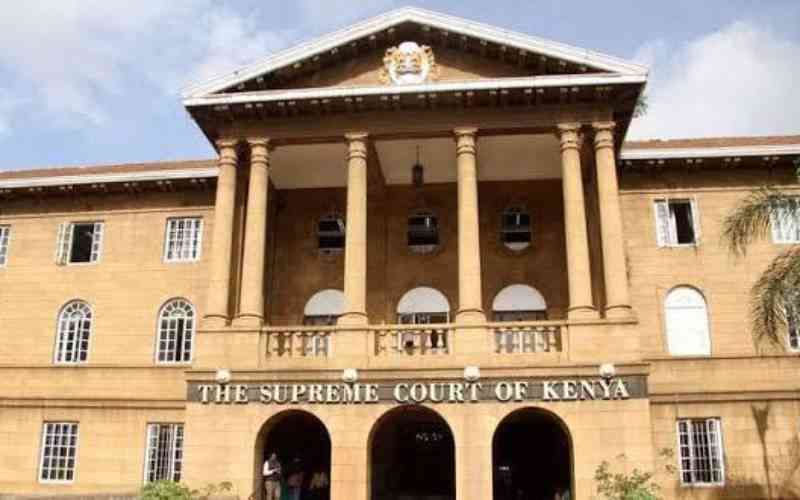
The Judiciary has dismissed the Law Society of Kenya's (LSK) planned nationwide boycott of court proceedings.
Judiciary insists that all courts across the country will operate normally on Wednesday and urging advocates to pursue their grievances through dialogue rather than disrupting the administration of justice.
In a statement issued on Monday, Judiciary Spokesperson Paul Ndemo assured litigants and the public that courts would continue hearing and determining cases as scheduled despite the one-day boycott announced by the lawyers' body.
"The Judiciary assures the public that all courts throughout the Republic will remain open and will continue hearing and determining matters as scheduled on Wednesday, July 22, 2026," Ndemo said.
The Judiciary argued that the planned boycott was neither an appropriate nor proportionate response to the concerns raised by the LSK, warning that the action would primarily disadvantage litigants whose cases are already scheduled for hearing.
"The institution does not consider a boycott of court proceedings to be an appropriate or proportionate response to the concerns raised. Such action would primarily prejudice litigants and other court users whose matters are scheduled for hearing and determination," the statement said.
The standoff follows the LSK's announcement that advocates across the country would boycott court proceedings on July 22 to protest what it describes as persistent failures in the administration of justice.
President William Ruto preside over the swearing-in of 24 Judges of the High Court and 13 Judges of the Environment and Land Court at State House on May 4, 2026. [PCS, Standard]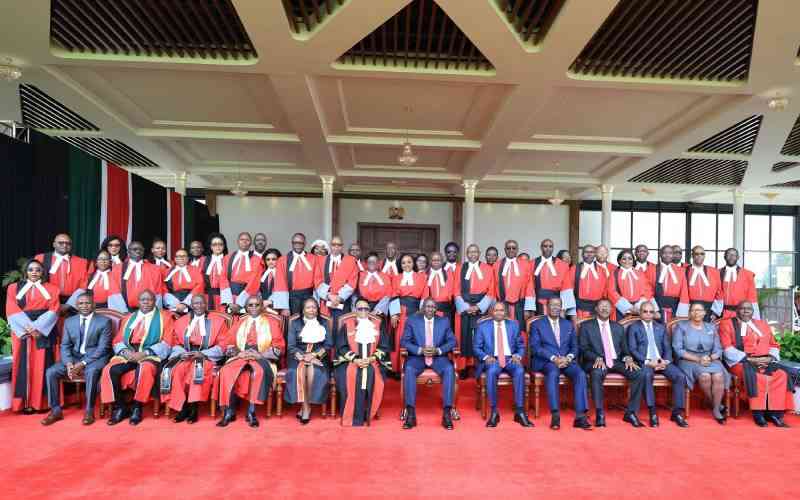
The lawyers' body has cited delays in hearing and determining cases, late delivery of rulings, inefficiencies in court registries, concerns over judicial accountability and the working environment for advocates.
LSK President Charles Kanjama said the boycott is intended to push for reforms within the Judiciary but clarified that advocates would continue filing new cases.
Matters involving mentions and applications for interim orders would also proceed solely to obtain fresh hearing dates or extend existing interim orders where necessary.
The latest dispute comes against the backdrop of growing pressure on the Judiciary to improve efficiency as the number of cases filed in courts continues to rise.
Over the years, litigants and lawyers have raised concerns over delayed judgments, frequent adjournments and administrative bottlenecks that have slowed the delivery of justice.
However, the Judiciary maintained that responsibility for delays extends beyond the courts, saying data from the 2024/2025 financial year shows that witnesses failing to attend or being unprepared accounted for 16.8 per cent of adjournments, while parties failing to attend contributed 12.3 per cent.
Advocates failing to attend or being unprepared accounted for 11.5 per cent, while courts being engaged in official duties contributed 10.9 per cent.
Stay informed. Subscribe to our newsletter
"These figures demonstrate that reducing delays requires a shared response involving all justice-sector stakeholders," the Judiciary said.
The institution also defended its recent performance, noting that it received 621,425 new cases during the 2024/2025 financial year and concluded 647,686 cases, achieving a 104 per cent case clearance rate.
According to the Judiciary, this marked the first time in several years that it resolved more cases than were filed, while reducing the case backlog by 30 per cent despite a 20 per cent increase in new filings.
On allegations of judicial misconduct and corruption, the Judiciary emphasized that constitutional mechanisms already exist to address complaints against judges, judicial officers and court staff.
"Public accusations, however serious, cannot substitute for a fair investigation or displace the constitutional and statutory procedures established for addressing complaints," the statement said.
It urged complainants to lodge complaints with the Judicial Service Commission (JSC) and the Office of the Judiciary Ombudsman, the institutions mandated to investigate allegations of misconduct and recommend disciplinary action where necessary.
The Judiciary also defended judicial independence, citing Article 160 of the Constitution, which provides that judges and judicial officers are subject only to the Constitution and the law and cannot be directed by any individual or authority in the exercise of their judicial functions.
The Judiciary said it remains committed to engaging the legal profession to address concerns affecting the justice system.
It revealed that it has held at least five consultative meetings with the LSK over the past two years and confirmed that another meeting involving the Judicial Service Commission, the LSK Council and representatives of the Senior Counsel Bar is scheduled for July 31.
The Judiciary appealed to the LSK to reconsider the boycott and instead use the existing dialogue forums to pursue reforms, saying collaboration among all justice sector players remains the most effective way to improve access to justice while protecting the rights of litigants.
Subscribe to our newsletter and stay updated on the latest developments and special offers!

 Prefer the Standard on Google








 join
join