×

The Standard e-Paper
Fearless, Trusted News
 The Standard Group Plc is a
multi-media organization with investments in media platforms spanning newspaper
print operations, television, radio broadcasting, digital and online services. The
Standard Group is recognized as a leading multi-media house in Kenya with a key
influence in matters of national and international interest.
The Standard Group Plc is a
multi-media organization with investments in media platforms spanning newspaper
print operations, television, radio broadcasting, digital and online services. The
Standard Group is recognized as a leading multi-media house in Kenya with a key
influence in matters of national and international interest.

Audio By Vocalize
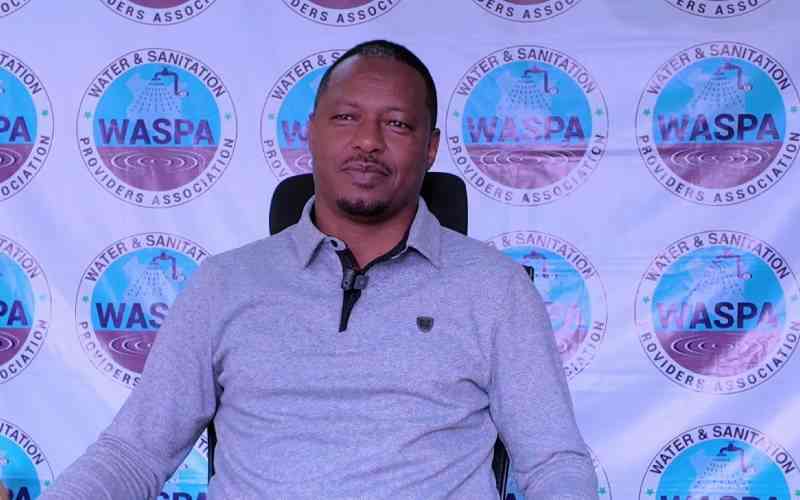
Nearly half of all treated water produced in Kenya never reaches consumers or generates revenue, exposing deep financial and infrastructure challenges that continue to undermine reliable water supply across the country.
Latest sector data contained in the Impact 18 report shows that 48 per cent of treated water produced by utilities is lost before billing, more than double the global benchmark of about 20 per cent.
The losses, known as non-revenue water, result from leaking pipes, illegal connections, faulty meters and operational inefficiencies, costing water service providers billions of shillings every year.
The findings point to a sector struggling with ageing infrastructure, rising operating costs and a widening financing gap, trends that Water Services Providers Association (WASPA) Chief Executive Officer Anthony Njaramba said have persisted for decades.
“For the last 20 years, non-revenue water has remained above 40 per cent. Now we are seeing figures closer to 48 per cent. That means we are not doing well. We are losing a lot of money,'' Njaramba said.
While ageing pipes remain a major cause of losses, sector players say illegal connections, faulty metering and unreliable electricity supply are increasingly worsening the problem.
In eastern Kenya, the Coast and northern counties, where water systems rely heavily on electric pumps, frequent power outages interrupt distribution. When electricity is restored, sudden pressure surges often burst weakened pipelines, leading to further losses.
“When pumping stops and restarts, pressure surges burst pipes and destabilise the network,” Njaramba explained.
The financial strain is compounded by soaring operational costs. Water treatment chemicals have nearly doubled in price in recent years, rising from about Sh47 to as high as Sh90 per unit, while utilities continue paying commercial electricity tariffs despite providing an essential public service.
Water sector engineer Eng Peter Kimani said many providers are now focused on maintaining ageing systems instead of expanding services.
“We are constantly repairing a system whose inputs are becoming more expensive every year,” he said.
To reduce losses, utilities are increasingly adopting smart meters, satellite mapping and digital monitoring systems that can detect hidden leaks and track water flows in real time.
“We are now able to see what is happening below the surface. It helps us identify where interventions are needed,” Njaramba said.
However, limited funding continues to slow adoption of these technologies. Kenya requires an estimated Sh1 trillion to achieve universal water access under Vision 2030 and Sustainable Development Goal Six, yet the sector receives just over Sh100 billion annually.
Stay informed. Subscribe to our newsletter
“That level of funding can only deliver incremental improvements. It cannot resolve the structural challenges we are facing,” Njaramba said.
For consumers, the impact is reflected in water rationing, unreliable supply and growing dependence on private vendors.
With nearly 480 litres lost for every 1,000 litres of treated water, utilities continue to forfeit billions of shillings that could otherwise improve service delivery and expand access.
“Water loss is not just a utility problem; it affects hospitals, schools, businesses and the dignity of citizens.”
Stakeholders are now urging the government to prioritise investment in water infrastructure and explore innovative financing models, warning that reducing non-revenue water will be critical to achieving universal access to safe and reliable water.

Subscribe to our newsletter and stay updated on the latest developments and special offers!








 join
join