×

The Standard e-Paper
Smart Minds Choose Us
 The Standard Group Plc is a
multi-media organization with investments in media platforms spanning newspaper
print operations, television, radio broadcasting, digital and online services. The
Standard Group is recognized as a leading multi-media house in Kenya with a key
influence in matters of national and international interest.
The Standard Group Plc is a
multi-media organization with investments in media platforms spanning newspaper
print operations, television, radio broadcasting, digital and online services. The
Standard Group is recognized as a leading multi-media house in Kenya with a key
influence in matters of national and international interest.

Audio By Vocalize
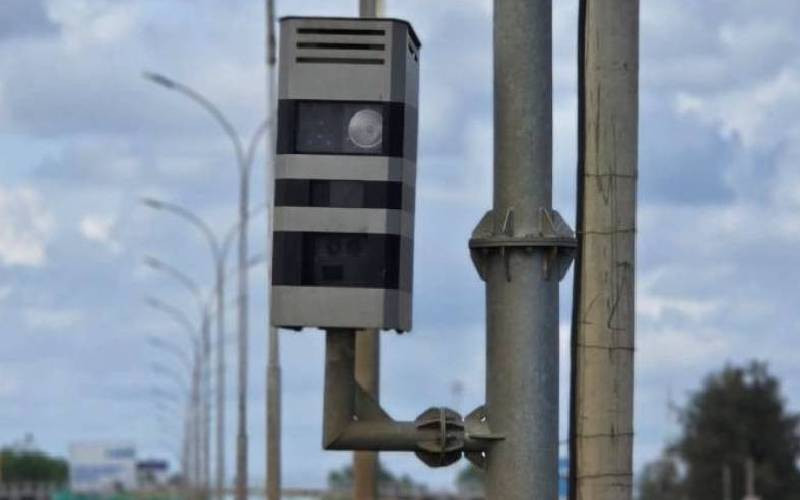
Speed enforcement camera installed by NTSA on the Thika Superhighway. [File, Standard]
As motorists begin paying fines for minor traffic offences under the NTSA’s new instant penalty system, the rollout, launched on Monday, has been dragged to court, setting up another legal showdown over automated traffic enforcement.
A ruling issued by High Court Judge Bahati Mwamuye in a case filed by Wilberforce Akello did not halt enforcement of the new framework launched on June 1, 2026. Instead, the court issued conservatory orders requiring the NTSA to maintain a detailed record of all payments made under the contested system.
“A conservatory order be and is hereby issued requiring the 1st and 2nd Respondents (NTSA and its Director) to record and maintain detailed information in a schedule with respect to each and every payment made with respect to instant or automatic fines/penalties under the impugned system,” Justice Mwamuye ordered.
Justice Mwamuye directed the parties to file and exchange their responses ahead of an inter partes hearing scheduled for today at 8.30am on the urgent application seeking interim orders to stop implementation of the instant traffic fines framework, just days after the NTSA rolled out the revised system on Monday.
The petition, filed by Akello against the NTSA and its Director, questions the lawfulness of the framework that allows motorists accused of certain traffic offences either to pay prescribed fines or contest the allegations in court.
Akello contends that the NTSA has no mandate to impose and collect penalties without due process before a court of law. Filed under a certificate of urgency, the case argues that the instant fines mechanism violates the Constitution and undermines the right to a fair hearing, as motorists are allegedly compelled to pay penalties before being given an opportunity to challenge the offences before a magistrate.
The latest legal challenge comes after the NTSA announced that motorists committing minor traffic offences would no longer be required to physically appear in court before settling fines.
Under the new framework, motorists who receive notices for specified offences may admit liability and pay the prescribed penalties within a stipulated period.
Those who dispute the allegations retain the option of challenging them in court. The notices may be served by police officers at the scene, affixed to vehicles, or transmitted electronically via SMS, email and other approved digital platforms. The framework, operating under Sections 117 and 117A of the Traffic Act (Cap. 403), targets at least 35 minor traffic offences under the Traffic (Minor Offences) Rules, 2016.
These include using a mobile phone while driving (Sh2,000), failing to obey traffic signs (Sh3,000), failing to stop when ordered by a police officer (Sh5,000), and driving on a pedestrian walkway (Sh5,000).
Higher penalties of up to Sh10,000 apply to offences such as driving without number plates, operating a vehicle without a valid inspection certificate, exceeding speed limits by 16–20km/h or more, obstructing traffic by leaving a vehicle in a manner that blocks movement, and PSV operators employing unlicensed drivers or conductors.
The offences may be detected either by police officers during routine enforcement or through electronic monitoring systems and traffic cameras.
The NTSA has defended the revised framework, saying it was developed following consultations with the National Police Service, the Judiciary, the Office of the Director of Public Prosecutions and other enforcement agencies.
Stay informed. Subscribe to our newsletter
The authority maintains that the system is designed to streamline enforcement of minor traffic offences, reduce court congestion and improve compliance.
The fresh dispute comes after another legal battle was filed earlier this year when the High Court suspended the NTSA’s initial attempt to introduce automated traffic penalties.
In March, Justice Mwamuye issued conservatory orders barring the NTSA and other agencies from issuing or enforcing penalties generated through automated or algorithm-based systems pending determination of the case.
The authority later sought to vary those orders, but the court declined, stating that the issues raised affected substantive rights and required a full hearing.
“The combination of public interest, status quo, and substantive rights necessitates that both applications be canvassed inter partes before any orders can be issued,” the judge noted.
Today’s June 4, 2026 hearing is expected to determine whether the court will allow continued implementation of the instant fines framework or impose further restrictions on the programme.
Subscribe to our newsletter and stay updated on the latest developments and special offers!


 Prefer the Standard on Google








 join
join