×

The Standard e-Paper
Join Thousands Daily
 The Standard Group Plc is a
multi-media organization with investments in media platforms spanning newspaper
print operations, television, radio broadcasting, digital and online services. The
Standard Group is recognized as a leading multi-media house in Kenya with a key
influence in matters of national and international interest.
The Standard Group Plc is a
multi-media organization with investments in media platforms spanning newspaper
print operations, television, radio broadcasting, digital and online services. The
Standard Group is recognized as a leading multi-media house in Kenya with a key
influence in matters of national and international interest.

Audio By Vocalize
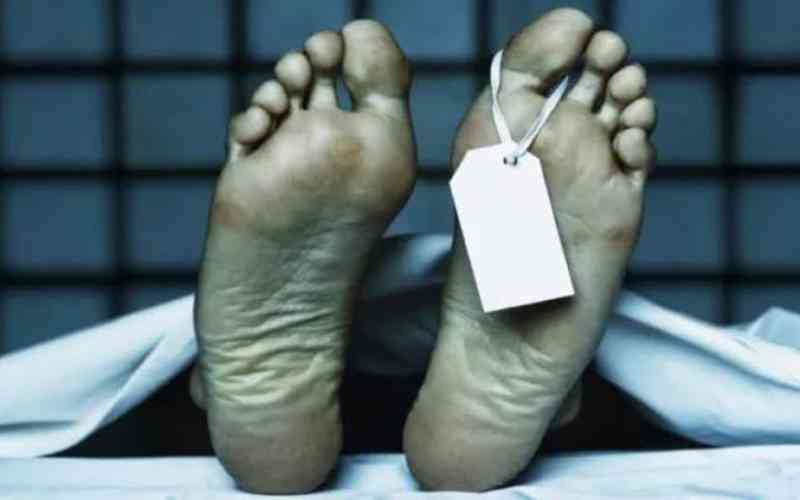
Nairobi County is set to dispose of 475 unclaimed bodies this month as public morgues in the city struggle with congestion.
In a notice to the public, the county government said some of the unclaimed bodies have been lying in the morgues since 2024.
“Pursuant to Public Health Act Cap 242 [Subsidiary; Public Health (Public Mortuaries Rules, 1991] (2), interested members of the public are asked to identify and collect the below-named bodies within 7 days,” the county said in the notice.
The Nairobi Funeral Home, formerly known as City Mortuary, is currently holding 381 bodies, nearly three times its capacity. Mama Lucy Kibaki Hospital has 59 bodies, while Mbagathi Funeral Home is holding 35.
Most of the bodies were classified as unknown after being recovered by police, who found no identification clues to help trace their relatives.
Under standard operating procedures developed by the National Coroner, mortuary officials are required to trace fingerprints from each unclaimed body through the National Registration Bureau.
Autopsies must also be conducted to determine the cause of death, including for bodies not linked to criminal investigations.
Among the bodies lying at the Nairobi Funeral Home are seven recovered from Mwingi in June.
The bodies of six men and one woman were transported from Kitui County to Nairobi following a bizarre discovery, even as detectives continued to search for leads into their deaths.
Officials at the Nairobi facility said four of the bodies were not badly decomposed, while three had decomposed beyond recognition, making identification difficult.
During the exhumation in Mwingi, it was observed that the bodies had been carefully folded at the arms and legs to fit into the small, shallow graves.
Pathologists who conducted autopsies on the bodies were unable to establish the cause of death in two cases because the bodies were completely decomposed.
They collected DNA samples for further analysis in case relatives come forward seeking to establish whether any of the bodies belonged to their missing family members.
“They can go to a chemist for matching so that now we can be able to know who these people really are. We always take samples for toxicology because we need to be sure who these people are also and whether there are any toxins involved in their death,” Chief Government Pathologist Johansen Oduor said.
Stay informed. Subscribe to our newsletter
Subscribe to our newsletter and stay updated on the latest developments and special offers!

 Prefer the Standard on Google





 join
join