×

The Standard e-Paper
Home To Bold Columnists
 The Standard Group Plc is a
multi-media organization with investments in media platforms spanning newspaper
print operations, television, radio broadcasting, digital and online services. The
Standard Group is recognized as a leading multi-media house in Kenya with a key
influence in matters of national and international interest.
The Standard Group Plc is a
multi-media organization with investments in media platforms spanning newspaper
print operations, television, radio broadcasting, digital and online services. The
Standard Group is recognized as a leading multi-media house in Kenya with a key
influence in matters of national and international interest.

Audio By Vocalize
Recent deadly protests over high fuel prices in Kenya, Comoros and Mozambique demonstrated a most unfortunate fact: That the true price of oil is sometimes paid not in shillings, but in lives. While transport strikes have been momentarily called off, unrest triggered by the worst global energy crisis in decades is just beginning to simmer across the region, and it’s likely to boil over again.
The International Energy Agency has already sounded the alarm: Oil reserves are running dangerously low. If a lasting US-Iran peace deal isn’t reached soon, it’s possible that the worst is yet to come for citizens already struggling to make ends meet. In East Africa, major economies like Kenya, Tanzania, Uganda, and Rwanda import nearly 100 per cent of their refined petroleum products. Since the region relies heavily on foreign refineries, fluctuations in global oil prices and shipping disruptions immediately trigger domestic fuel shortages and severe inflation.
For instance, oil price spikes have already cost ordinary people and businesses in Kenya an additional US$143 million to US$150 million in just the first two months of war. This major disruption to the economy has left a vast majority of the population in survival mode, forced to choose between buying food and keeping the lights on.
As dire as the current situation may be, it is not an anomaly. This is, in fact, our seventh major global oil crisis. We have been here before, except that now, solutions exist to address the roots of the crisis: Overreliance on imported, expensive, and volatile fossil fuels. With the rise of affordable clean energy technologies, the case for fossil fuels as the bedrock of economic development has not just weakened; it has collapsed.
But instead of East African economies looking towards innovation in renewable energy to boost energy accessibility and affordability, most are still leaning towards obsolete, dirty energy, as is the case with the East Africa Crude Oil Pipeline (EACOP) in Uganda, the mega LNG plant in Tanzania, and oil exploration prospects in Kenya. New fossil fuel projects, such as the Dangote Group’s crude oil refinery in Tanga, oil exploration in Nigeria, and oil and gas pipelines in Djibouti, continue to pop up across the continent.
Investors are increasingly looking to East Africa as a shiny new frontier for fossil fuel investments, luring nations with promises of prosperity and energy sovereignty. While other world leaders, such as the UK’s Keir Starmer and South Korea’s Lee Jae Myung, have recognised the urgency of accelerating the renewable energy shift for economic security, East African leaders still leap at fossil fuel deals as if they were economic lifelines, and not the sinking ships that they actually are.
Even before the current crisis, decades of fossil fuel dependency have already provided harsh lessons on who actually benefits. In the Democratic Republic of Congo, one of Africa’s oil producers, nearly half of its citizens still live below the poverty line. Oil extraction has transformed the Niger Delta into one of the most polluted places on earth, while half of Nigeria’s population remains energy poor. Indeed, around 600 million Africans remain without access to affordable, safe, reliable, clean energy, even as governments invest billions of dollars in fossil fuel projects.
If ordinary African households aren’t benefiting from fossil fuel extraction, then who is? Research shows that foreign multinational corporations own two-thirds of the projected new gas and oil production in Africa until 2050. American and European fossil fuel giants lead investors pledging their support to grow East Africa’s fossil fuel infrastructure. The Tanzania gas project, which aims to establish East Africa as an emerging LNG export hub to Asia, will be jointly operated by Equinor, Shell, and Exxon Mobil. TotalEnergies remains the largest shareholder of EACOP, a project that communities clearly never wanted, and which has already displaced thousands of families and destroyed local livelihoods and vital ecosystems.
In first-quarter profit announcements last month, these fossil fuel companies reported billions of dollars in gains, most of them from unearned or windfall profits due to the West Asia conflict. Not only are poor transport workers lining the pockets of foreign oil billionaires each time they fill up at the pump, but also African taxpayers are also inflating already scandalous profits with each dollar that the government spends for fossil fuel subsidies that drain already scarce fiscal resources.
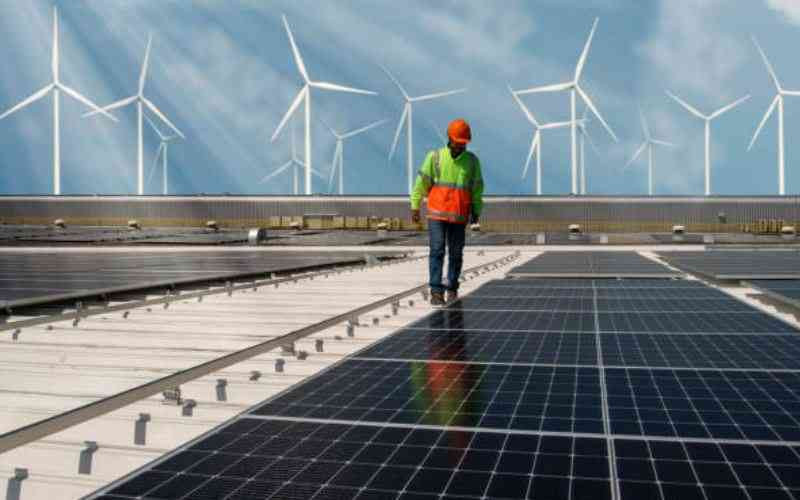
Africa cannot develop on energy that everyday people cannot afford. The current crisis must be an opportunity for African leaders to set out clear pathways to reduce our economies’ costly dependence on fossil fuels towards a phase-out. Across the globe, a better system is already taking shape. Over 90 per cent of new renewable projects are now cheaper than fossil alternatives. Gas-fired power is now three to four times more expensive than solar and wind.
If public money that goes into fossil fuel subsidies and new fossil fuel infrastructure instead goes into subsidising renewables, both affordable energy and climate resilience can be within reach. For instance, government schemes supporting electric two-wheelers in Kenya, Ethiopia and Rwanda have driven steep increases in EV adoption, creating new income streams for riders, reducing fuel import bills, and generating employment. These could be immediately expanded to provide solutions for the ailing transport industry.
The continent holds immense renewable energy potential: Tanzania alone has over 1,955 MW of solar in development and 500 MW of onshore wind announced. At the community level, off-grid solar systems and independent mini grids are expanding electricity access across Uganda, Tanzania, South Sudan, and the DRC, delivering immediate, life-saving power to health clinics, schools, and displacement camps. These systems bring light, refrigeration for medicine, internet connectivity, and new economic opportunities to communities that large fossil fuel infrastructure projects have historically bypassed entirely.

Subscribe to our newsletter and stay updated on the latest developments and special offers!









 join
join