×

The Standard e-Paper
Join Thousands Daily
 The Standard Group Plc is a
multi-media organization with investments in media platforms spanning newspaper
print operations, television, radio broadcasting, digital and online services. The
Standard Group is recognized as a leading multi-media house in Kenya with a key
influence in matters of national and international interest.

Audio By Vocalize
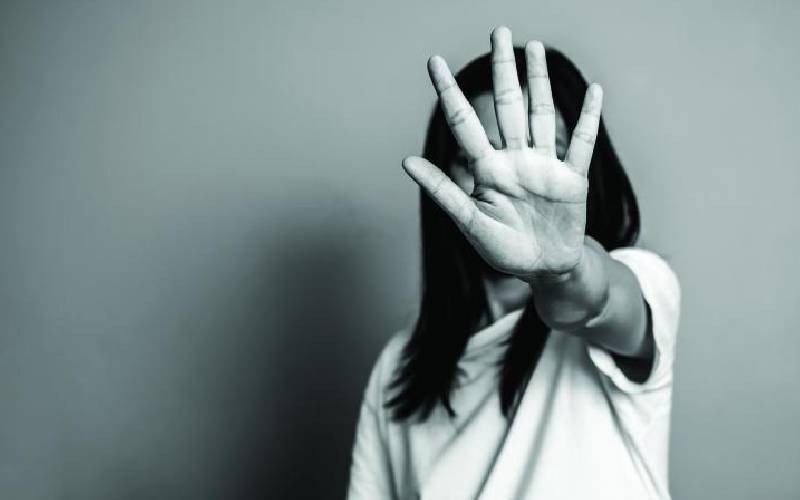
When conversations about modern-day slavery come up, the images that often come to mind are those of migrant workers trapped in abusive working conditions in Middle Eastern countries such as Saudi Arabia. It is a problem many associate with distant countries, far removed from their everyday lives.
Every Sunday, Karamojong girls living and working in Kenya gather at an open field in Nairobi’s Kamukunji area. For some, it is a chance to meet friends, speak their native language and share experiences away from their employers.
The gatherings, however, serve another purpose. They are also informal meeting points where girls without jobs encounter people looking for domestic workers. For those hoping to find employment, the meetings offer a chance to secure work.
Yet behind these seemingly ordinary encounters lies a troubling pattern of exploitation. Some girls say the promise of employment has instead exposed them to physical and sexual violence, withheld wages, long working hours and, in some cases, restrictions on their movement.
For those without proper immigration or work documentation, reporting abuse can be particularly difficult. Some fear that approaching the authorities could expose them to immigration enforcement or deportation.
Margaret* knows this reality all too well.
The 19-year-old came to Nairobi believing she would change the lives of her family back home. She had believed that the city was a land of opportunity, where securing a job would enable her to earn money and support her family.
Coming from Moroto District in Uganda’s Karamoja region, where economic opportunities were limited, the prospect of working in Nairobi appeared promising.
“A good number of girls had already travelled to Nairobi and were employed as house helps, and they were already changing their families’ lives. This made us believe that Nairobi was indeed a land of opportunity, and so we started looking for ways of coming,” she says.
“Also, the picture we had of Nairobi was that of tall, beautiful buildings and tarmacked roads, which gave us the illusion that it was a big city with big money.”
While looking for means of travel, Margaret’s neighbor in the village, who was already in Nairobi, linked her to a woman she believed was a recruitment agent.
“When the girl told me that the woman was the one who had brought her to Nairobi and even got her a well-paying job, I believed her. So I contacted her. She told me I would have to facilitate my own transport to Nairobi and also pay some amount to acquire a work permit,” Margaret says.
She did not have the money, but she was determined to pursue the opportunity.
She approached her mother, who sold a cow and gave her money to pay fare, hoping the investment would improve the family’s fortunes.
Stay informed. Subscribe to our newsletter
At 17, Margaret left her village carrying a small bag containing a few clothes and her identification documents, hoping for a better life.
When she arrived in Nairobi, the recruitment agent picked her up and took her to a house in Eastleigh, where she discovered she was not the only one waiting for employment.
The house served as temporary accommodation for girls awaiting placement with employers.
After two weeks, Margaret was informed that she had secured a job.
But the job was far from what she had imagined.
Upon arriving at the household, she says, her identification document and phone were taken away. She was also informed that she would be working in a family home occupied by nearly 10 people and would be expected to attend to their needs.
“I was not to leave the house unless permitted by the older members of the family,” she says.
Her days began early and ended late. She was expected to undertake household chores while caring for two toddlers and an elderly woman who was paralysed.
She was not alone. Another young domestic worker from Tanzania shared the workload.
But the wages were not forthcoming. By the time she realised it, five months had passed.
Whenever she asked for her money, she was told she would be paid a lump sum.
Then came the sexual harassment.
Margaret says two men in the household attempted several times to sneak into the small room where they slept, near the kitchen.
On one occasion, when the rest of the family had taken the elderly woman to hospital, she was left behind to look after the children. The two men, she says, returned home without the knowledge of the other family members.
“They found me sleeping. They held me down and took turns raping us. Once they were done, they warned me against reporting to anyone. I didn't have a phone that I could use to call someone, and being new in Nairobi, there was nowhere I could run to,” she narrates.
When she confided in her Tanzanian colleague, she says, the woman told her that such incidents were common and that there was little they could do.
She feared that her immigration status would complicate any attempt to seek help. The woman who had promised to secure her a work permit had not delivered on that assurance.
For Margaret, the combination of unpaid wages, lack of documentation, isolation and threats left her feeling trapped.
She endured the abuse until she and her colleague eventually decided to escape. They jumped over a fence and fled into the streets.
With no contacts to turn to, they could not return to the woman who had initially connected Margaret to the job. Instead, they spent nights sleeping in corridors along the streets and took up manual jobs during the day to survive.
It was there that Margaret encountered other Karamojong girls whose experiences, she says, bore similarities to her own.
Her ordeal did not end with her escape.
Another man employed her to clean the house and wash clothes but she was soon subjected to sexual abuse.
She went report the incident to the police, but the encounter left her even more afraid.
“When I went to report and the police realised I did not have any documents showing that I was in Kenya legally, they wanted to arrest me. I just sneaked out and left,” she says.
Margaret eventually secured another domestic job. Although the pay is not good, she says she is relieved that she no longer spends cold nights in the streets or faces the abuse she experienced in her previous employment.
Margaret's experience is not happening in isolation. Research by the International Labour Organisation (ILO) has documented the movement of girls from Uganda's Karamoja region into Kenya, where some end up in exploitative domestic work and other forms of forced labour.
In January 2025, the ILO published a study titled Factors and Impacts of the Trafficking of Girls from Karamoja Region, Uganda into Kenya, which examined the circumstances surrounding the movement and exploitation of girls from the region.
The study involved 347 respondents, including girls and women from Karamoja living in Nairobi's Kamkunji area. It found that 47.5 per cent of respondents were engaged in domestic work, while 15.6 per cent reported having been denied payment for their work. A further 12.1 per cent reported physical abuse, while 27.4 per cent said they had experienced verbal threats.
The findings also revealed that 94.2 per cent of respondents were unaware of the risks associated with human trafficking, leaving them vulnerable to manipulation through promises of employment and better opportunities.
Poverty and the search for a better life emerged as major drivers of migration. Some 36.4 per cent of respondents cited poverty as a contributing factor, while 37.2 per cent said they had left their places of origin because of promises of work or education.
The study further found that 75.9 per cent of the purposively selected respondents from Karamoja had no formal education, a disadvantage that can limit access to decent employment and increase vulnerability to exploitation.
The age profile was particularly concerning. Among the respondents specifically selected from Karamoja, 19.9 per cent were aged between 10 and 14, while 46.1 per cent were aged between 15 and 17.
The research also indicated that 38.6 per cent of respondents said a family member had facilitated their movement to Kenya, while 20.7 per cent identified a stranger or trafficker. Another 36.6 per cent said they had organised their own migration.
These findings were consistent with those published by the ENACT Africa project in July 2021. Its investigation, Girls from Karamoja Sold for US$5 and Trafficked to Nairobi, documented how girls from Moroto District were moved through Kampala and Busia before arriving in Nairobi, where they were placed in domestic work.
The investigation identified poverty, weak social protection mechanisms, family referrals and peer influence as factors contributing to the movement of girls. It also described the involvement of relatives, transporters, boda boda operators and other intermediaries in the recruitment and transportation networks.
The report cited an estimate by the Eastern Africa Child Rights Network of more than 3,000 Karamojong girls working as domestic workers in Eastleigh at the time.
The exploitation of Karamojong girls in Kenya has also featured in investigations by the Directorate of Criminal Investigations (DCI).
In its October 2024 magazine, the DCI identified an increasing trend in the trafficking of Karamojong girls through the Busia and Malaba border routes into Kenya.
According to the publication, investigations had established that some of the girls ended up in Eastleigh, Kaloleni and Kariokor in Nairobi, where they were subjected to cheap labour and sexual abuse.
The Directorate said at the time that investigations aimed at apprehending those involved in trafficking Karamojong girls were at an advanced stage.
In 2021, the Ugandan government also acknowledged the problem.
In its National Report on Countering Trafficking in Persons, Uganda's Ministry of Internal Affairs reported that groups of young Karamojong girls had been rescued in Kenya and returned to Uganda, where they were reunited with their families after receiving psychosocial support and counselling.
The report said their alleged traffickers were facing charges under Uganda's Prevention of Trafficking in Persons Act, 2009.
The ILO study has since called for stronger cooperation between the two countries, including better border surveillance, improved victim identification, access to shelters, medical care, psychological support and legal assistance.
For girls who have experienced abuse, however, accessing these protections remains a challenge.
Wangeci Muturi, the coordinator of psychosocial support for gender-based violence victims in Kamukunji Sub-County, says the abuse of young women and girls working in the informal sector is not limited to Karamojong girls. Other foreign nationals working in domestic service are also vulnerable, particularly those without proper documentation or secure employment arrangements.
She says many are drawn to Kenya by promises of employment and an opportunity to support their families back home, only to end up in exploitative situations.
According to Muturi, fear of arrest or deportation often prevents survivors from reporting abuse or seeking medical assistance.
“When they are abused, they cannot report because they might be arrested for being illegally in Kenya. They cannot go to hospitals because they are not registered with SHA, and they cannot go to private hospitals because they do not have money,” she says.
She adds that public health facilities often try to assist, but the absence of resources and support systems leaves some survivors in difficult circumstances.
“There are cases where some of the girls have given birth and they just took off because they cannot pay the bills and they do not have a place to take the child. The facility is then left with the burden of caring for that child until we find a shelter for it,” she says.
Willis Oluga, an advocate specialising in labour laws, says fear of deportation is a major obstacle preventing migrant workers in the informal sector from reporting abuse, despite the fact that Kenyan law protects people regardless of their immigration status.
He argues that a person's lack of legal documentation should not prevent them from seeking justice when they have been assaulted, exploited or subjected to other forms of abuse.
“When someone is abused, the law does not discriminate against them because of their immigration status. The first step should be to arrest and charge the perpetrator. Once the survivor has given their testimony, authorities can then consider how to facilitate their safe return home,” Oluga says.
However, he says this is not always how cases are handled. “What our officers do first is arrest the survivor and deport them to their country. That means even a case that has been filed cannot continue because the main witness is no longer there,” he says.
Beyond enforcement, Oluga identifies another challenge: Kenya's work-permit framework, which he argues does not adequately accommodate foreign nationals seeking employment in low-paying and informal occupations.
Kenya's immigration laws require foreign nationals seeking employment in the country to obtain the appropriate authorisation, with employers bearing the responsibility of securing the necessary permits before engaging them.
However, the application of these requirements raises questions about the accessibility of the system to foreign nationals seeking low-paying jobs in the informal sector.
Labour advocates argue that the availability of a permit category does not necessarily mean that vulnerable migrant workers can afford or navigate the application process.
Oluga says the government and regional authorities need to consider how low-income migrant workers can access affordable and practical registration mechanisms.
He argues that a more accessible system would enable authorities to account for foreign nationals working in informal occupations while making it easier to protect them against exploitation.
Subscribe to our newsletter and stay updated on the latest developments and special offers!


 Prefer the Standard on Google