
 The Standard Group Plc is a multi-media organization with investments in media
platforms spanning newspaper print
operations, television, radio broadcasting, digital and online services. The
Standard Group is recognized as a
leading multi-media house in Kenya with a key influence in matters of national
and international interest.


More than 14,000 children living with HIV in Kenya remain undiagnosed, while another 21,908 who know their status are not receiving treatment, the 2026 Kenya HIV Estimates show.
According to the estimates by the National Syndemic Diseases Control Council (NSDCC), 69,330 children aged below 15 are living with HIV, but only 79 per cent know their status. Of those diagnosed, 60 per cent are receiving treatment, while 52 per cent of children on treatment have achieved viral suppression.
The figures highlight the persistent gap between progress in controlling HIV nationally and the challenges facing children, who continue to lag behind adults in accessing diagnosis and treatment.
Children aged below 15 accounted for 3,396 of the 13,936 new HIV infections recorded in 2025. Together with adolescents and young people aged 15 to 24, they accounted for 55 per cent of new infections.
The estimates further show that children account for 11.5 per cent of AIDS-related deaths despite making up 4.7 per cent of people living with HIV in the country.
Their AIDS-related death rate stands at 32.1 per 1,000, compared with 12.2 among adults, with Nairobi, Homa Bay and Kisumu recording the highest child AIDS mortality.

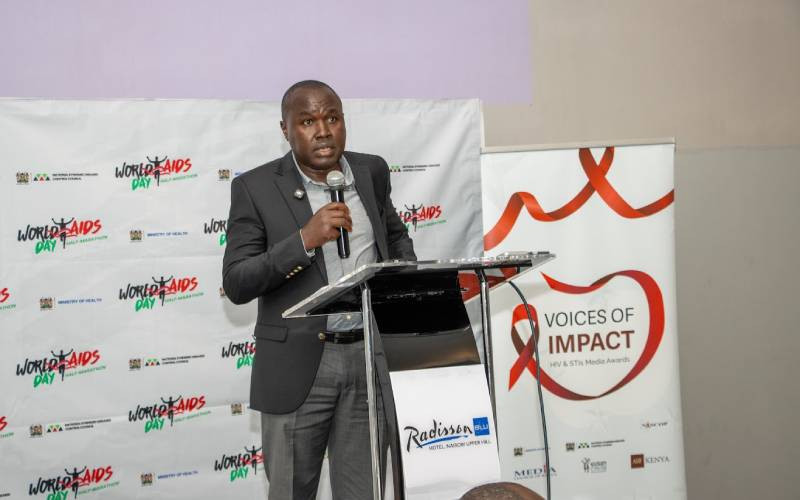
Speaking during the launch of this year's World AIDS Day programme, Country Director of AIDS Healthcare Foundation (AHF) Kenya, Dr Samuel Kinyanjui, said Kenya has the medical knowledge and interventions needed to prevent children from dying of AIDS-related illnesses, but implementation gaps remain a challenge.
"A child born with HIV in Kenya today has every reason to live a full life. Whether she does is now a question of logistics and attention, not of science," he said.
- New rapid tests fight deadly infections in Africa
- Alarm over rising HIV cases among Kenyan youth
- University students warned against risky behaviour as new HIV infections fall
- NSDCC, women leaders concerned over increasing HIV infection cases
Keep Reading
Echoing his remarks, NSDCC Chief Executive Officer Douglas Bosire said to reduce the gap, the government was placing children, adolescents and young people at the centre of its HIV response.
"The 56 per cent fall in new infections since 2021 is a hard-won gain, but it will not hold if we lose our children. The Kenya AIDS Strategic Framework is being executed with children, adolescents and young people at the centre, and with the counties as co-owners of the response," he said.
According to Bosire, county governments will now be required to account for their progress in addressing paediatric HIV during the World Aids Day on December 1.
The government is also seeking to reduce mother-to-child transmission, which stood at 8.04 per cent in 2025, above the global elimination target of less than five per cent.
Dr Andrew Mulwa, Head of NASCOP, said the government was scaling up early infant diagnosis and strengthening treatment retention among mothers living with HIV.
"We cannot accept a vertical transmission rate above 5 per cent, and we will not. We are scaling early infant diagnosis, strengthening retention for mothers on treatment and rolling out long-acting prevention, including the twice-yearly injectable PrEP now moving through 15 priority counties," he said.
This year's World AIDS Day theme is "Protect, Prevent, Empower: Ending AIDS Among Children, Adolescents and Young People."
The national commemorations will begin with a half marathon at Nyayo National Stadium on November 29, with participants also expected to access HIV testing, medical screening and linkage to care.
The activities will extend to all 47 counties on December 1, where county governments and partners will hold community dialogues, memorial vigils, candle-lighting ceremonies and public accountability forums.










 join
