
 The Standard Group Plc is a multi-media organization with investments in media
platforms spanning newspaper print
operations, television, radio broadcasting, digital and online services. The
Standard Group is recognized as a
leading multi-media house in Kenya with a key influence in matters of national
and international interest.
The Standard Group Plc is a multi-media organization with investments in media
platforms spanning newspaper print
operations, television, radio broadcasting, digital and online services. The
Standard Group is recognized as a
leading multi-media house in Kenya with a key influence in matters of national
and international interest.

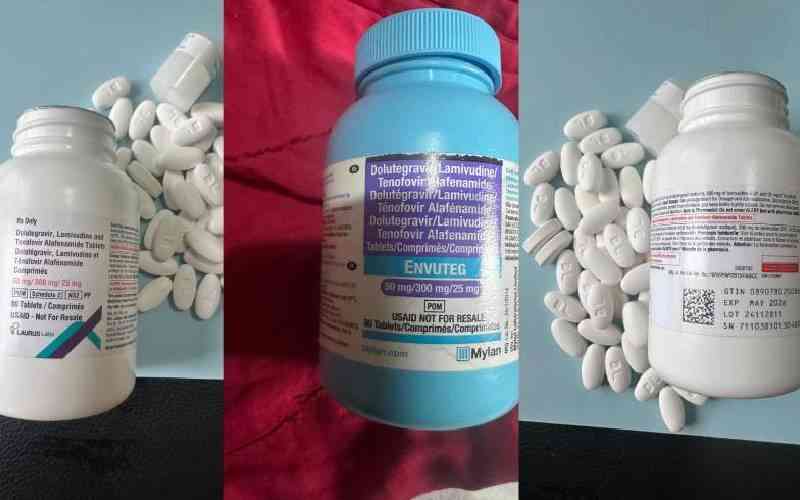
A section of expired ARVs dispensed to people living with HIV. [Benard Orwongo, Standard]
People living with HIV are demanding answers over how expired antiretroviral (ARV) medicines got to be distributed in public hospitals.
Through their network, National Empowerment Network of People Living with HIV/Aids in Kenya (NEPHAK), they are also questioning why facilities have continued to dispense the drugs to users. The drugs, it says, should have been mopped up, and not dispensed to users.
Their concerns follow reports that expired ARVs are being dispensed to patients across the country, including newborns.
HIV advocates warn that the practice could increase the risk of new infections, more so among newborn, Aids-related death and drag efforts of eliminating new HIV infections.
In one disturbing case in Rongai, Kajiado county, a community health provider told The Standard that newborns are given expired zidovudine at birth. Sadly, the health provider working with community shared an incident of one-month-old baby who was put on nevirapine that had expired 26 days earlier.
Asked why the medicine was still being dispensed, he said, “It is better to administer expired drugs than to have none.”
- Senator raises concerns overshortage of family planning commodities
- Outcry as people living with HIV receive expired ARVs amid acute drug shortages
- Newborns at risk of acquring HIV as the country runs out of preventive drugs
- People living with HIV demand supply of quality ARVs
Keep Reading
The worker attached to a public hospital, alleged that clinicians had instructed health workers to continue dispensing the medicine. “Doctors say even after expiry, so long as the drugs are used within two months, they are still safe.”
At birth, newborns are put on zidovudine and nevirapine (prophylaxis) drugs that prevent transmission of HIV from mother to child.
A mentor mother in Kajiado said she is reluctant to give a baby expired ARVs. “They told us to continue giving babies expired zidovudine, but our conscious can’t allow this to happen.”
The expired drugs were supplied in April, two week to expiry dates. The drugs have since been locked in respective hospitals for collection.
“Normally, we dispense zidovudine and nevirapine to a newborn, however, we are only giving zidovudine because this other treatment line has expired,” she added, saying the same had been communicated to the National Aids and STIs Control Programme (NASCOP) for action.
NPEHAK executive Director Nelson Otwoma accused authorities for silence as expired drugs continue being dispensed to patients.
“Expired drugs getting to patients is not hard to unravel,” said Otwoma. “Why does Kenya have expiring ARVs?”
The Kenya Medical Supplies Authority (KEMSA) has since dismissed supply of expired drugs to users.
In an interview, the authority’s Chief Executive Officer Dr Waqo Ejersa said KEMSA does not distribute health products that have a shelf life of less than six months.
The responsibility he said shifts to facilities and counties once they leave KEMSA stores. He maintained that specific facilities should explain how the ARVs got to them because ARVS at KEMSA stores are still in-date.
“Drugs and health products we receive at KEMSA must have a minimum of at least 75 per cent of the life to be admitted to the stores,” he said, adding that KEMSA only supplies what NASCOP requests to be supplied on time.
Head of NASCOP Andrew Mulwa said supply of expired drugs is a quality issue, and that the programme was not aware. Quality issue, he said, is regulated space by Pharmacy and Poisons Board (PPB).
Nevertheless, KEMSA maintained there are enough ARVs at its stores.













 join
join