
 The Standard Group Plc is a multi-media organization with investments in media
platforms spanning newspaper print
operations, television, radio broadcasting, digital and online services. The
Standard Group is recognized as a
leading multi-media house in Kenya with a key influence in matters of national
and international interest.
The Standard Group Plc is a multi-media organization with investments in media
platforms spanning newspaper print
operations, television, radio broadcasting, digital and online services. The
Standard Group is recognized as a
leading multi-media house in Kenya with a key influence in matters of national
and international interest.

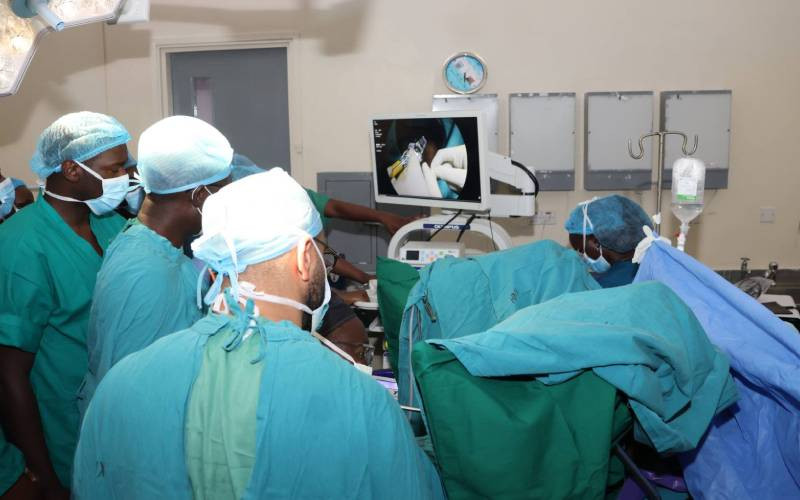
Kenyatta National Hospital (KNH) has marked a major milestone in specialised surgical care after successfully performing haemorrhoids treatment on two patients.
The surgery was undertaken using the advanced Transanal Hemorrhoidal Dearterialization (THD) technology, a modern minimally invasive procedure that doctors say could transform management of the condition in Kenya.
The breakthrough procedures, conducted by the hospital in partnership with Pentaprism Medical Africa, form part of a collaborative learning and skills transfer programme aimed at strengthening minimally invasive surgery in the country’s largest referral facility.
According to KNH, the introduction of THD technology represents a shift from conventional haemorrhoid treatments such as open surgery, stapling, banding, laser procedures and medication-based management. The new method is expected to significantly reduce patient discomfort and improve recovery outcomes.
Speaking on Thursday, KNH Director of Surgical Services Dr Kennedy Ondede said haemorrhoids remain a common but often misunderstood condition affecting many Kenyans.
“Although generally benign, haemorrhoids can cause significant discomfort and negatively affect quality of life,” Dr Ondede said.
He explained that the condition involves swollen veins in the lower rectum or around the anus and may be caused by chronic constipation, straining during bowel movements, prolonged sitting, pregnancy, obesity, low-fibre diets and heavy lifting.
Dr Ondede noted that the THD procedure uses Doppler-guided technology to identify arteries supplying blood to haemorrhoids and then ties them off, reducing blood flow and allowing the swollen veins to shrink without extensive tissue removal.
- KNH unveils new technology in treatment of haemorrhoids
- New procedure cuts pain, recovery time for haemorrhoids patients
- Free heart surgery at KNH as global medical professionals collaborate with regional physicians
Keep Reading
“This technique allows us to treat the condition with minimal tissue disruption, which translates to less pain and faster healing for the patient,” he said.
According to the hospital, patients who undergo the procedure are expected to benefit from reduced post-operative pain, minimal bleeding, fewer complications, shorter hospital stays and quicker return to normal daily activities.
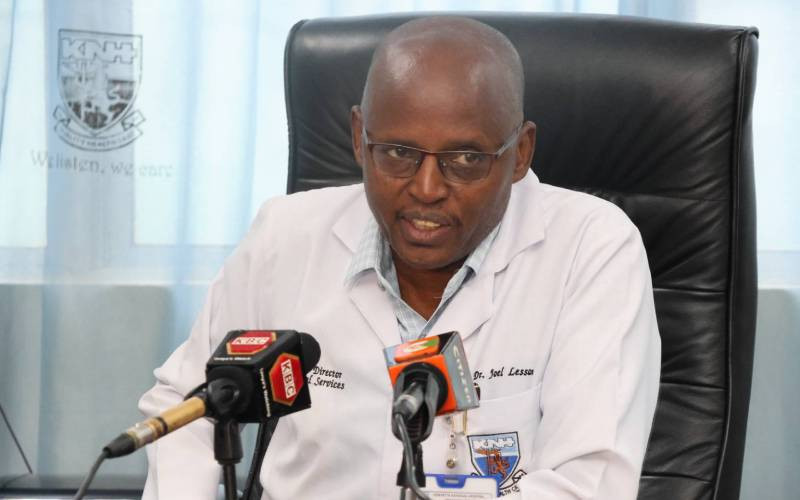
KNH Senior Director for Clinical Services Dr Joel Lessan said the development is a significant step forward in improving patient-centred care at the facility.
“The adoption of THD technology is expected to improve patient outcomes through shorter hospital stays, quicker recovery and enhanced overall patient experience,” Dr Lessan said.
He added that the hospital handles a high volume of patients requiring surgical intervention for haemorrhoids, making the introduction of less invasive options both timely and necessary.
Medical experts have increasingly advocated for minimally invasive procedures globally, citing reduced risk of infection, lower hospital costs and improved quality of life for patients compared to traditional surgery.
The partnership between KNH and Pentaprism Medical Africa is also expected to enhance training opportunities for local surgeons, enabling more specialists to acquire advanced skills in modern surgical techniques.
Hospital officials said the successful treatment of the two patients signals KNH’s growing capacity to adopt cutting-edge medical technologies and strengthen specialised healthcare services in Kenya and the wider region.
The milestone is also seen as part of a broader effort by KNH to modernise surgical care and expand access to safer, more efficient treatment options for common but often painful conditions.











 join
join