×

The Standard e-Paper
Home To Bold Columnists
 The Standard Group Plc is a
multi-media organization with investments in media platforms spanning newspaper
print operations, television, radio broadcasting, digital and online services. The
Standard Group is recognized as a leading multi-media house in Kenya with a key
influence in matters of national and international interest.

Audio By Vocalize
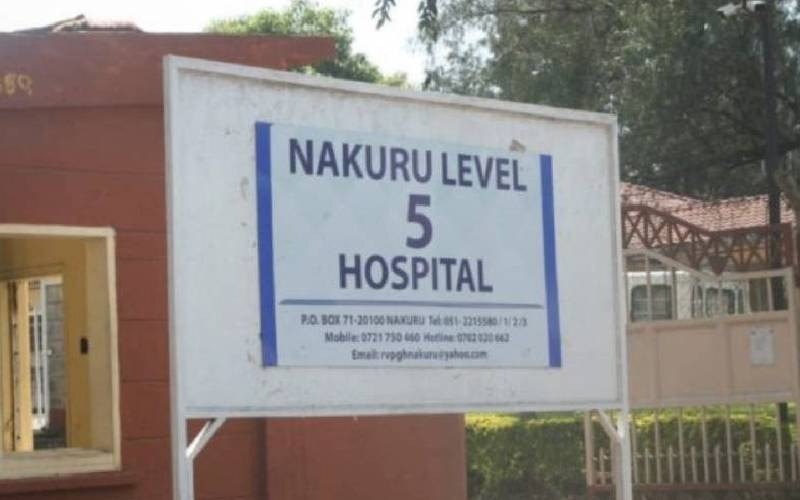
Renal patients at Nakuru Level Five Hospital have raised concerns over their health following the breakdown of dialysis machines.
The hospital management has been forced to reduce treatment sessions from four hours to three, leaving patients worried about the impact on their health.
The facility has nine dialysis machines in its upper renal unit, but only three are currently operational.
This has forced the hospital to work with limited equipment as it serves a growing number of people requiring the life-saving treatment.
Patients say the reduced treatment hours have added to their suffering, with some reporting fatigue and other health concerns.
Gilbert Muremi, who travels from Subukia to Nakuru to access dialysis services, said patients were also struggling with the cost of other medical services, even though they are covered by the Social Health Authority (SHA).
“SHA does not seem to be helping us, as we are forced to pay for laboratory tests and X-rays whenever we are asked to undergo them. SHA only pays 10,650 for dialysis twice a week, while at times we are also forced to go for months without getting the medicines we require due to lack of medicines at the facility,” said Muremi.
He also alleged that a doctor is never readily available to attend to renal patients, saying those requiring medical attention sometimes wait up to two weeks.
Muremi further questioned the quality of medicines issued at the facility, claiming that some patients receive drugs whose expiry dates fall within the same month .
“How can we be given medicines that expire in the same month they are issued? That clearly highlights a gap,” he said.
John Munya, who has been undergoing dialysis for six years, said the shortage of functional machines had significantly affected patients' treatment schedules.
He lamented that the upper renal unit has nine machines, but only three are operational, forcing patients to undergo three-hour sessions instead of the four hours they say they require.
Munya also raised concerns about the alleged physical condition of the dialysis unit, citing a damaged ceiling and dust in the treatment room.
He said the reduced treatment hours had also placed additional pressure on nurses, who were being forced to work beyond their normal schedules to accommodate patients.
Stay informed. Subscribe to our newsletter
Munya appealed to the county government to urgently intervene by repairing the faulty machines and renovating the dialysis unit.
Sylvia Wanjiru, a patient who travels from Gilgil for treatment, said the reduced dialysis hours had disrupted her routine and left her exhausted.
Wanjiru, who undergoes dialysis during the 3 pm to 6 pm shift, said she often arrives home late after the demanding treatment schedule.
She also questioned the additional costs patients incur for laboratory tests, saying many struggle to cover these expenses despite relying on regular hospital visits.
Wanjiru described kidney disease as a progressively disabling condition, noting that some patients who were previously able to move around independently eventually experience difficulties with mobility.
The pressure on the available equipment has also led patients to report treatment schedules beginning as early as 5am, as the facility attends to more than 70 patients daily, according to Wanjiru.
Patients further raised concerns over the number of machines available in the hospital's renal units, saying the breakdowns have disrupted treatment schedules and pushed some sessions into late hours.
Despite the challenges, Wanjiru commended the renal nurses for continuing to care for patients under demanding working conditions and tight schedules.
The hospital Director Santosh Devaraj had not responded to calls and text messages by the time of going to press.
Subscribe to our newsletter and stay updated on the latest developments and special offers!


 Prefer the Standard on Google