×

The Standard e-Paper
Home To Bold Columnists
 The Standard Group Plc is a
multi-media organization with investments in media platforms spanning newspaper
print operations, television, radio broadcasting, digital and online services. The
Standard Group is recognized as a leading multi-media house in Kenya with a key
influence in matters of national and international interest.

Audio By Vocalize

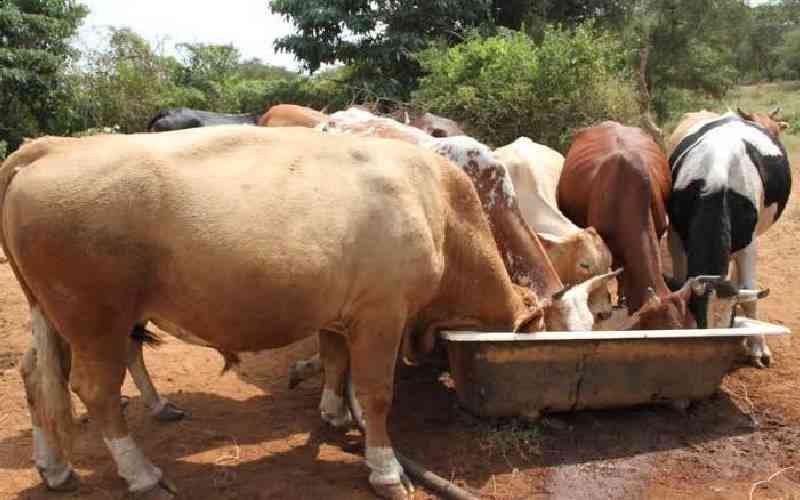
Dairy farmers are upbeat after the Kenya Agriculture and Livestock Research Organisation (Kalro) introduced new fodder varieties to increase milk production.
The new varieties come at a time when dairy production has been affected by the high cost of fodder, which accounts for 70 per cent of production.
Paul Leparmarai, a senior research scientist at Kalro, said new foliage-based systems, including Napier varieties, lucerne and sweet potatoes, had proved to boost milk production and animal weight.
Leparmarai revealed that the varieties have high protein levels and energy content, promising high returns for farmers by doubling animal milk production from 7 litres a day to 15 litres.
“Kalro research has yielded new Napier varieties including Kakamega 1 and 2, energy-rich lucerne and sweet potatoes as well as drought-resilient sorghum that promises farmers high returns by boosting animal milk and meat production,” said Leparmarai.
Speaking at Kalro in Naivasha, he said the new foliage technologies have attracted tens of farmers from Nakuru and Nyandarua counties, and there are plans to spread them to other regions.
Leparmarai said Kalro was introducing new animal breeds and fodder varieties that were climate-resilient amid growing climate-change threats in the livestock sector, including drought.
Josephine Mwabili, a research scientist in the goat breeding section, said Kalro had introduced high-quality goat breeds with high milk and meat production to meet high market demand.

She revealed that researchers at Kalro moved to address low milk yields, high feeding costs, and limited information on the most productive dairy goat breeds
This was done by studying dairy goat breeds kept in different regions of the country, the feeds farmers use, and how feeding affects milk production.
“Through feeding trials, Kalro scientists established that supplementing lactating dairy goats with 300 grams of dairy meal per day increased milk production by 55 per cent compared to un-supplemented animals,” she said.
Mwabili said the goat breeds included Saanen, Alpine and Toggenburg.
She said that they had partnered with farmers across the counties to educate them on best farming practices to enhance their animal production and boost their returns.
“Beyond increased productivity, researchers found that milk from supplemented goats contains higher levels of beneficial fatty acids associated with human health benefits,” she said.
Stay informed. Subscribe to our newsletter
Subscribe to our newsletter and stay updated on the latest developments and special offers!


 Prefer the Standard on Google