×

The Standard e-Paper
Fearless, Trusted News
 The Standard Group Plc is a
multi-media organization with investments in media platforms spanning newspaper
print operations, television, radio broadcasting, digital and online services. The
Standard Group is recognized as a leading multi-media house in Kenya with a key
influence in matters of national and international interest.
The Standard Group Plc is a
multi-media organization with investments in media platforms spanning newspaper
print operations, television, radio broadcasting, digital and online services. The
Standard Group is recognized as a leading multi-media house in Kenya with a key
influence in matters of national and international interest.

Audio By Vocalize

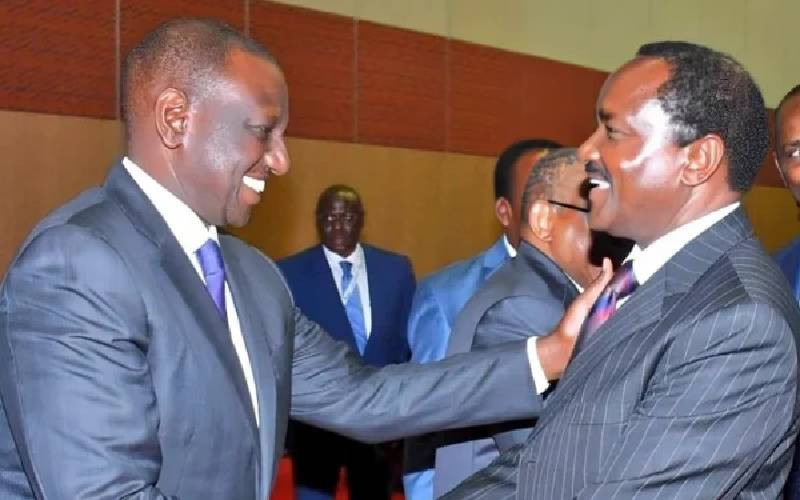
Head of the Public Service Felix Koskei at St Michael’s Catholic Church, Nandi on September 6, 2026. [Peter Ochieng, Standard].
Chief of Staff and Head of the Public Service Felix Koskei has challenged oral health professionals to move beyond treating disease and become stronger advocates for prevention, equity and better health planning.
Koskei urged Oral Health Association of Kenya (OHAK) to become not only the voice of its profession but also “the conscience of the oral health system”, insisting that professionals must defend their members while protecting the interests of patients who often have no voice in policy discussions.
“Let this, then, be the covenant we carry from this conference: That oral health shall no longer be treated as an afterthought in Universal Health Coverage,” Koskei said.
The concerns emerged during the 32nd scientific conference of the OHAK, saying oral health system is facing a twin challenge of rising preventable dental disease and an unevenly deployed workforce.
The experts warning that thousands of Kenyans continue to suffer conditions that could be prevented or treated early.

His concerns come as OHAK raises the alarm over increasing cases of dental fluorosis, particularly in urban areas where residents are increasingly relying on borehole water.
Speaking during a free dental clinic at Mirera Primary School in Naivasha, OHAK President Beatrice Achieng said fluorosis was becoming increasingly common in different parts of the country.
“Fluorosis is on the rise not only in Nakuru County but in other counties because most people are now using borehole water which has high levels of fluoride,” Achieng said.
Naivasha and surrounding areas have historically experienced high fluoride levels in drinking water, but Achieng said the problem was no longer confined to the lakeside region. She cited estates in Nairobi and Ngong where residents have turned to underground water sources.
The condition, which can cause white, yellow or brown discolouration and, in severe cases, damage to teeth, is particularly concerning among children exposed to excessive fluoride while their teeth are developing.
Achieng also pointed to another growing concern—dental cavities among children, including pupils from informal settlements around Naivasha.
The crisis highlights a broader problem: oral healthcare remains under-covered and under-utilised despite the availability of services.
Koskei said Kenya’s shortage of dentists makes it impossible to depend on dentists alone to meet the country’s oral health needs. With approximately 0.27 dentists for every 10,000 people, he said the country needed a wider, better-integrated workforce.
He singled out Community Oral Health Officers, noting that Kenya began training the cadre in 1985 and now has about 1,800 officers.
Stay informed. Subscribe to our newsletter
“A qualification without deployment is deferred service. Deployment without equipment is frustrated service. Equipment without supplies is idle capacity. And policy without implementation is only a promise made elegant on paper,” Koskei said.
He called for comprehensive mapping of oral health workers across all 47 counties, including where they work, the populations they serve and the facilities and equipment available to them.
He further proposed integrating Community Oral Health Officers throughout the health system, particularly at Levels 2, 3 and 4, where prevention, early diagnosis, basic treatment and referral can reach communities before conditions become severe.
He argued that Kenya must rethink how oral healthcare is delivered, shifting from a system that predominantly responds to pain and advanced disease to one that prioritises prevention, early detection and community-based services.
“For too long, oral healthcare has occupied the margins of public health policy that is noticed when pain becomes unbearable, funded when disease has advanced, and sought when prevention has already failed,” he said.
Koskei said this approach must change, noting that oral health affects some of the most basic aspects of life, including eating, speaking, learning and working.
“We must now reverse that order. Prevention must come before crisis. Early detection must come before disability. Primary care must come before expensive intervention,” he said.
Oral Health Officer Chege Ndunu said excessive fluoride in drinking water remained a major contributor to fluorosis, although the situation was improving in some areas because of increased use of rainwater and water purification machines.
“Teenagers were the most affected but advances in dental technology now make treatment possible,” Ndunu said.
“We are now able to offer treatment for fluorosis at Naivasha Sub-County Hospital and in many public hospitals, and those with discoloured teeth should come for that treatment,” he said.
The challenge, however, is ensuring Kenyans can access these services before preventable conditions become serious.
Koskei said oral healthcare must be incorporated more firmly into health financing as Kenya pursues Universal Health Coverage through the Social Health Authority.
“Preventive services, screening, early intervention and basic restorative care must be treated not as optional additions, but as essential protections against disease and financial hardship,” he said.
Subscribe to our newsletter and stay updated on the latest developments and special offers!


 Prefer the Standard on Google