×

The Standard e-Paper
Join Thousands Daily
 The Standard Group Plc is a
multi-media organization with investments in media platforms spanning newspaper
print operations, television, radio broadcasting, digital and online services. The
Standard Group is recognized as a leading multi-media house in Kenya with a key
influence in matters of national and international interest.
The Standard Group Plc is a
multi-media organization with investments in media platforms spanning newspaper
print operations, television, radio broadcasting, digital and online services. The
Standard Group is recognized as a leading multi-media house in Kenya with a key
influence in matters of national and international interest.

Audio By Vocalize
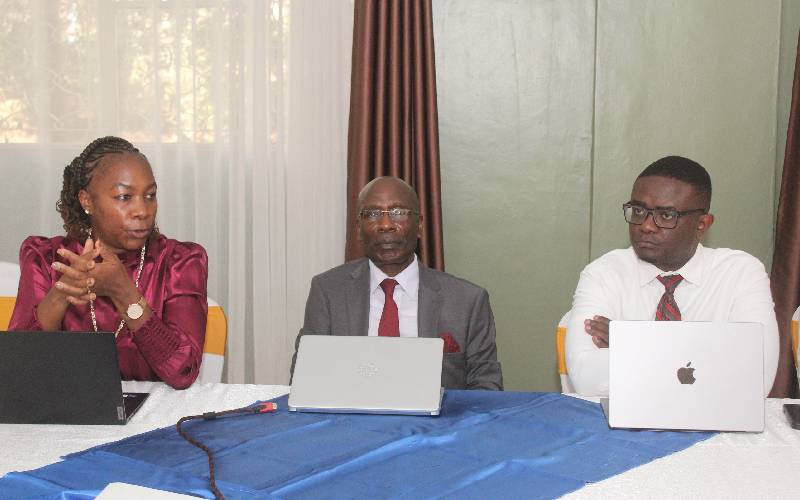
UNICEF Kenya health specialist Dr.Laura Ayiengo, End PPH lead Prof Julius Ogengo, and End PPH initiative project lead Prof.Moses Obimbo address a media briefing in Nairobi on August 25, 2026. [Benard Orwongo, Standard]
One in three women die every day because of postpartum haemorrhage, as maternal health experts warn that the numbers are likely to surge with the ongoing health workers strike.
In Kenya, at least 15 women die every day because of birth-related complications, with postpartum haemorrhage (PPH), being the major contributor.
Prof Moses Maridadi Obimbo, End PPH Initiative Project Lead, said the strike has left pregnant women due for delivery vulnerable.
"We are scared about the strike because services are paralysed. It is a concern," said Prof Obimbo.
"It is very sad and concerning. We are likely to lose gains on maternal and child health," he added.
Many health cadres are on strike crippling essential servicew provision including maternal health.
Health workers on strike include clinical officers, nurses, laboratory technicians and public health officers among others.
Maternity wings in public health facilities across the country are closed, with women forced to seek deliveries in private and faith based that are struggling with high volumes and capacity.
Kenya losses high number of women giving birth because of majorly three causes which is PPH, Sepsis and obstetric.
According to Ministry of Health, hotspot counties for PPH data include Homa Bay, Machakos, Murang’a, West Pokot, Migori, Garissa, Tana River, Turkana, Elgeyo-Marakwet, Siaya, Wajir, Kilifi and Nairobi.
Prof Julius Ogeng'o of Human Anatomy at the University of Nairobi and End PPH co-lead said Nairobi informal settlements are among the most affected with PPH.
"Nairobi has low cases of PPH, but informal settlements records more largely due to poor infrastructure and limited access to essential health amenities," said the researcher.
The urban poor living in informal settlements bear a disproportionate burden of PPH, he added.
Stay informed. Subscribe to our newsletter
"Lack of water, hygiene and sanitation contributes to the negative outcomes which contributes to more cases of sepsis (infections) and deaths," said Prof Ogeng'o.
The researcher further called on Kenyans to volunteer donation of blood to save mothers at birth.
"Pregnant women should get blood at the bedside while seeking delivery, so that they can be transfused instantly on a need basis, saving lives," he said.
Unfortunately, in Kenya, there has been a shortage of blood, forcing mothers to wait for blood, even at emergency cases leading to preventable deaths.
Kenya requires at least 500,000 pints of blood annually to save lives, but only 400,000 is collected.
To avert deaths caused by by PPH, End PPH Foundation has come up with the roaming blood community initiative to mobilise blood for mothers during delivery.
On her last, UNICEF Kenya health specialist Dr Laura Oyiengo said that while PPH remains the leading cause of death in Kenya and globally, attention must also be paid to the other complications that account for the remaining maternal deaths.
“PPH is the leading killer of mothers in Kenya and globally. At least 50 per cent of deaths,” said Dr Laura.
She, however, pointed to pregnancy-related hypertension as another major cause of maternal deaths, saying the condition can cause organ damage and stroke if not well managed.
Infections are also a major threat, particularly when a woman’s waters break and she delays seeking treatment.
Obstructed labour is another significant cause of maternal deaths, particularly where a facility lacks the capacity to perform an emergency Caesarean section.
But experts warn that underlying conditions can make women even more vulnerable to complications.
Anaemia is one such risk.
Kenya Demographic and Health Survey data shows that about one in three women has anaemia.
Laura said anaemia can leave a woman with little reserve to withstand blood loss during childbirth.
“If there’s no blood for transfusion, they’re likely to die,” she said.
Women with underlying conditions such as heart disease and sickle cell disease may also face increased risks during pregnancy and childbirth.
The problem, however, extends beyond what happens inside the delivery room, with experts pointing to failures across the health system that can delay women from receiving lifesaving care.
The delays are particularly concerning in informal settlements, where women may struggle to make timely decisions to seek care, while poor roads and inadequate transport can prevent them from reaching health facilities quickly.
“There is delay in access. This is where politicians come in. Roads need to work, because ambulances need to reach a facility. It is a matter of life and death,” added Dr Laura.
Once at a health facility, she said, another delay can occur if the facility lacks the staff, equipment, medicines, blood or capacity needed to manage an obstetric emergency.
Subscribe to our newsletter and stay updated on the latest developments and special offers!


 Prefer the Standard on Google







 join
join