×

The Standard e-Paper
Kenya’s Boldest Voice
 The Standard Group Plc is a
multi-media organization with investments in media platforms spanning newspaper
print operations, television, radio broadcasting, digital and online services. The
Standard Group is recognized as a leading multi-media house in Kenya with a key
influence in matters of national and international interest.
The Standard Group Plc is a
multi-media organization with investments in media platforms spanning newspaper
print operations, television, radio broadcasting, digital and online services. The
Standard Group is recognized as a leading multi-media house in Kenya with a key
influence in matters of national and international interest.

Audio By Vocalize
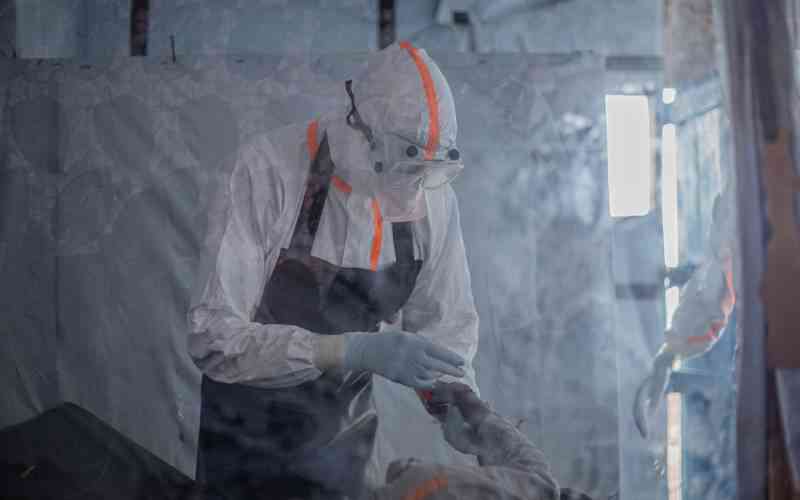
The United States has maintained stringent travel measures for people departing the Democratic Republic of the Congo (DRC) as authorities work to prevent the importation of Bundibugyo Ebola while the country battles its largest recorded outbreak of the virus.
Under a joint initiative by the U.S. Centers for Disease Control and Prevention (CDC) and the Department of Homeland Security (DHS), some travellers leaving the DRC may be placed on a Do Not Board (DNB) list if they are considered at risk of transmitting Ebola.
The CDC says the measures are intended "to reduce the risk of Ebola importation into the United States," adding that some American citizens departing the DRC "may be subject to a Do Not Board (DNB) order." The agency further states that U.S. citizens can return "21 days after leaving the DRC," reflecting the virus's maximum incubation period.
The travel restrictions come as an American physician infected with Bundibugyo Ebola while working in the DRC continues receiving treatment in Germany after being evacuated to a specialised high-containment isolation unit.
German health authorities have sought to reassure the public that the transfer poses no risk to the wider community.
"The transport and treatment of the patient are taking place under the highest safety standards."
The evacuation has renewed attention on international preparedness for highly infectious diseases and the race to find effective treatments against the Bundibugyo strain.
At the same time, scientists have launched three major clinical studies aimed at improving survival and preventing further transmission of the virus.
The first is the PARTNERS trial, coordinated by the World Health Organization (WHO) in collaboration with the DRC's National Institute for Biomedical Research (INRB), the Institute of Tropical Medicine Antwerp, the University of Oxford and Africa CDC. The study is evaluating whether the combination of the monoclonal antibody MBP134 and the antiviral remdesivir can improve survival among patients with Bundibugyo Ebola.
The second is the EBO-PEP trial, the world's first study investigating whether post-exposure prophylaxis (PEP) medicine given shortly after exposure but before symptoms appear can prevent people exposed to Bundibugyo Ebola from developing the disease.
Researchers say the trial could transform outbreak response by protecting high-risk contacts, including healthcare workers and family members.
The third is a WHO-led vaccine trial assessing the safety and effectiveness of candidate vaccines against the Bundibugyo strain. Unlike the Zaire strain, which has approved vaccines, there is currently no licensed vaccine specifically targeting Bundibugyo Ebola, making the study a critical step toward expanding protection against all Ebola virus species.
WHO Director-General Dr Tedros Adhanom Ghebreyesus has described research during outbreaks as essential.
"Research is a fundamental part of every outbreak response. We cannot stop outbreaks with yesterday's tools."
Stay informed. Subscribe to our newsletter
The WHO Regional Director for Europe, Dr Hans Kluge, has also urged calm following imported Ebola cases outside Africa.
"The confirmation of an Ebola case can understandably attract attention, but the risk to the wider public remains low."
He said robust surveillance systems, rapid diagnosis and strict infection prevention measures significantly reduce the likelihood of wider transmission.
The current Bundibugyo Ebola outbreak has been centred in the DRC, with limited cross-border spread into Uganda and one imported case previously reported in France. Health authorities continue to rely on rapid case detection, isolation, contact tracing and infection prevention to contain the outbreak.
According to WHO, Ebola spreads through direct contact with the blood or other bodily fluids of an infected person or contaminated materials, and infected individuals do not transmit the virus before symptoms begin.
Subscribe to our newsletter and stay updated on the latest developments and special offers!


 Prefer the Standard on Google







 join
join