×

The Standard e-Paper
Smart Minds Choose Us
 The Standard Group Plc is a
multi-media organization with investments in media platforms spanning newspaper
print operations, television, radio broadcasting, digital and online services. The
Standard Group is recognized as a leading multi-media house in Kenya with a key
influence in matters of national and international interest.
The Standard Group Plc is a
multi-media organization with investments in media platforms spanning newspaper
print operations, television, radio broadcasting, digital and online services. The
Standard Group is recognized as a leading multi-media house in Kenya with a key
influence in matters of national and international interest.

Audio By Vocalize
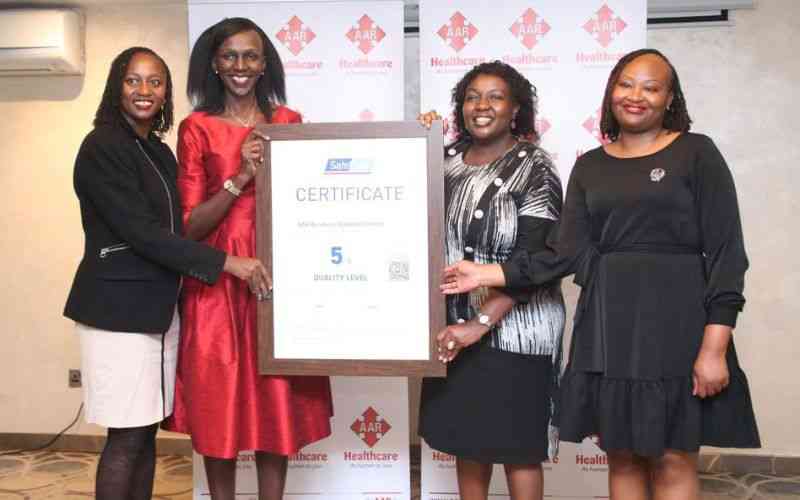
As demand for safe, consistent and accountable healthcare services intensifies in Kenya’s private healthcare sector, outpatient centres are increasingly turning to international accreditation systems to strengthen patient safety and quality standards amid growing public concern.
Quality improvement and certification programmes such as SafeCare assess healthcare facilities on areas including infection prevention, patient handling, staff training, leadership systems, clinical accountability and service delivery.
The process is designed to measure whether facilities are meeting defined standards and continuously improving how care is delivered to patients.
The growing focus on accreditation comes as more Kenyans rely on outpatient clinics for primary healthcare services, placing greater attention on how care is delivered outside major hospitals.
With outpatient centres managing growing patient volumes and increasingly complex care needs, structured quality systems are becoming critical in ensuring safe, consistent and accountable healthcare delivery.
At the same time, questions around patient safety, clinical consistency and trust continue to shape discussions around healthcare delivery in both public and private facilities.
Speaking during the certification award ceremony for AAR Healthcare in Nairobi, PharmAccess Regional Director Millicent Olulo said quality standards were increasingly influencing how patients choose healthcare providers.
“Patients vote with their feet, meaning their choices of where to seek care increasingly reflect trust, perceived quality and safety standards,” she said.
Olulo noted that SafeCare operates in 28 countries globally, adding that fewer than 25 facilities within the East African Region have attained Level Five certification, the highest ranking under the programme, a milestone achieved by all the 7 AAR Healthcare clinics audited during the latest certification cycle.”
Dr Peris Njoga-Kagotho, Quality Assurance Manager at AAR Healthcare, said sustainable quality improvement requires strong leadership commitment, continuous staff engagement and the integration of quality standards into everyday healthcare delivery.
“Accreditation is not the destination, but part of a continuous journey towards strengthening patient safety, clinical accountability and operational excellence,” she said.
Dr Kagotho added that continuous audits and quality improvement processes had helped strengthen governance systems, improved documentation and accountability, while supporting safer, more consistent and patient-centred care across AAR Healthcare’s outpatient centres.
She noted that the successful certification and recertification of the seven outpatient centres had raised the number of AAR Healthcare’s SafeCare Level Five accredited facilities to 13, reflecting the growing adoption of structured quality systems within outpatient healthcare delivery.
Elizabeth Wasunna, General Manager at AAR Kenya, said quality had become a key differentiator in healthcare delivery, noting that it is one of the few aspects that cannot easily be replicated.
"Healthcare is very easy to copy. You need a signboard, staff, drugs and a license," she said. "But there is one thing you cannot copy and that is quality."
Stay informed. Subscribe to our newsletter
The certification and recertification exercise covered seven outpatient centres, including City Centre, Rongai, Ngong, Buruburu, Syokimau, Kisumu United Mall and Kisumu Al Imran.
The audits were conducted between October and November 2025 as part of a broader quality improvement process.
The ceremony also highlighted the contribution of nurses and frontline healthcare teams in strengthening patient safety, quality improvement and standards-driven care across AAR Healthcare facilities, in line with the recent International Nurses Week celebrations.
The certification process is part of a wider push across the healthcare sector to standardise quality and improve patient safety outcomes as competition and demand for outpatient services continue to grow.
Subscribe to our newsletter and stay updated on the latest developments and special offers!


 Prefer the Standard on Google






 join
join