Please enable JavaScript to view advertisements.
×
App Icon
The Standard e-Paper
Fearless, Trusted News

★★★★ - on Play Store
Download App

MPs pledge to push for improved care of patients with bleeding disorder

Vocalize Pre-Player Loader

Audio By Vocalize

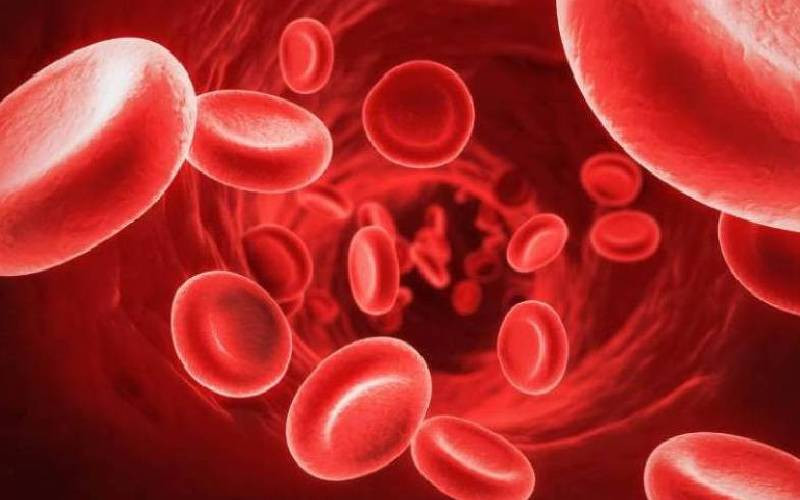
Haemophilia is a rare inherited condition that affects the body’s ability to form blood clots, leading to prolonged bleeding. [Courtesy]

Parliament has pledged to push for urgent reforms to improve the management of haemophilia in Kenya, following a petition highlighting severe gaps in access to care and treatment. 

Haemophilia is a rare inherited condition that affects the body’s ability to form blood clots, leading to prolonged bleeding. 

The National Assembly’s Departmental Committee on Health said it will engage the Ministry of Health and other stakeholders to address challenges faced by people living with the bleeding disorder. 

Committee Vice Chairperson Patrick Munene announced the move during a meeting with officials from the Haemophilia Association of Kenya. 

The association is seeking policy and health system changes. 

“We will put the Ministry of Health to task and offer the necessary support to address the challenges faced by individuals living with haemophilia and other bleeding disorders,” said Munene, who is also the MP for Chuka Igambang’ombe. 

The concerns were presented by the association’s treasurer, James Kago, who is also living with haemophilia. 

Kago told lawmakers that children and adults suffer frequent and sometimes life-threatening bleeding episodes, significantly affecting their quality of life. 

He explained that the condition can lead to joint damage, chronic pain, missed school or work, and reduced life expectancy. 

Further, Kago cited Article 43(1)(a) of the Constitution, which guarantees every Kenyan the right to the highest attainable standard of health, including access to healthcare services. 

Despite the struggle, petitioners noted that treatment remains out of reach for many patients due to its high cost and limited availability. 

Haemophilia care, particularly preventive treatment known as prophylaxis, is highly specialised and expensive, with advanced therapies costing between $30,000 (Sh3.8 million) and $230,000 (Sh29.6 million) per patient annually, according to Ministry of Health reports. 

This is due to shortage of clotting factor concentrates, the key medicines used in treatment, which forces many patients to rely on less effective options such as whole blood transfusions or cryoprecipitate. 

These alternatives often require hospital admission and carry additional risks. 

Despite financial struggle, haemophilia treatment is not covered under the Social Health Authority, leaving families to shoulder the cost or depend on charitable support. 

The association warned that this has placed a heavy burden on families and caregivers, making it difficult to access consistent and effective care. 

Haemophilia affects about one in every 10,000 people globally. 

In Kenya, an estimated 4,500 people are living with the condition, but only 1,265 have been formally diagnosed, pointing to major gaps in detection and reporting. 

The petition also raises concern over the lack of reliable data, calling for the establishment of a national patient registry to improve planning and service delivery. 

A major concern highlighted is the country’s heavy reliance on donor-funded treatment supplies. Currently, clotting factor concentrates are largely obtained through donations, which meet only about 30 per cent of the required need. 

The donor-supported programme is also facing a 70 per cent shortfall and is expected to end by 2028, raising fears of a looming treatment crisis, particularly for children who depend on preventive therapy. 

Without sustainable funding, patients may be forced to rely on blood-derived products, which are less effective and may expose them to complications. 

Although the Ministry of Health, in collaboration with the Haemophilia Association of Kenya and county governments, has established 16 treatment centres across 15 counties and 11 primary care centres offering supportive services, access remains limited. 

Clotting factor concentrates are largely unavailable in most facilities, while diagnostic services are mainly confined to Kenyatta National Hospital (KNH) and Moi Teaching and Referral Hospital (MTRH). 

Other hospitals lack the necessary equipment and reagents for diagnosis, and there is no structured national screening programme, contributing to low awareness and late detection. 

Despite a 2023 memorandum of understanding with the World Federation of Haemophilia to supply factor concentrates worth about $20 million annually, current donations still meet only a fraction of patient needs. 

To address these challenges, the association is urging Parliament to recognise clotting factor concentrates as essential medicines to ensure their consistent availability in the healthcare system. 

It is also calling for the expansion of treatment centres, improved diagnostic capacity, and enhanced training of healthcare workers, including paediatric specialists. 

Other proposals include integrating haemophilia management into medical training curricula, increasing public awareness, and introducing early childhood screening programmes. 

The petition also seeks to have haemophilia recognised as a disability, enabling patients to register with the National Council for Persons with Disabilities and access additional support. 

Support Independent Journalism

Stand With Bold Journalism.
Stand With The Standard.

Journalism can't be free because the truth demands investment. At The Standard, we invest time, courage and skills to bring you accurate, factual and impactful stories. Subscribe today and stand with us in the pursuit of credible journalism.

Pay via
M - PESA
VISA
Airtel Money
Secure Payment Kenya's most trusted newsroom since 1902

Follow The Standard on Google News