×

The Standard e-Paper
Home To Bold Columnists
 The Standard Group Plc is a
multi-media organization with investments in media platforms spanning newspaper
print operations, television, radio broadcasting, digital and online services. The
Standard Group is recognized as a leading multi-media house in Kenya with a key
influence in matters of national and international interest.
The Standard Group Plc is a
multi-media organization with investments in media platforms spanning newspaper
print operations, television, radio broadcasting, digital and online services. The
Standard Group is recognized as a leading multi-media house in Kenya with a key
influence in matters of national and international interest.

Audio By Vocalize
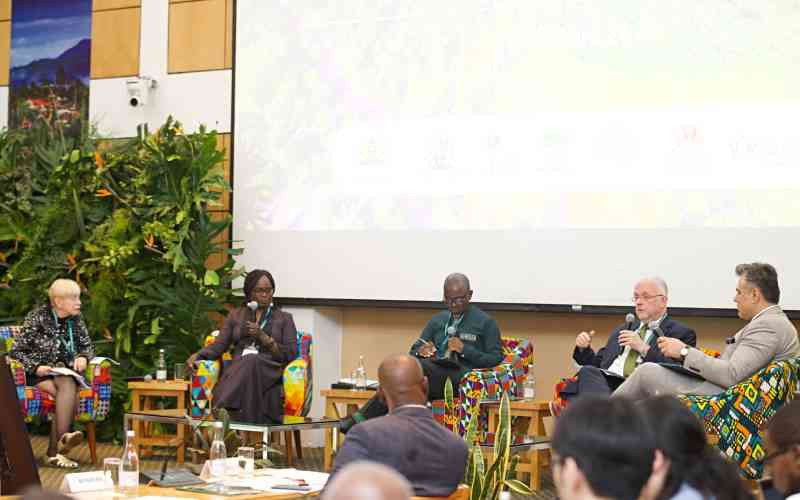
International legal scholars have called for a comprehensive review of international law to address the evasion of accountability by the world’s historical polluters.
While delivering the inaugural Bonaya Godana Distinguished Lecture at Kabarak University, Judge Abdulqawi Yusuf, President Emeritus of the International Court of Justice (ICJ), argued that the legal frameworks established after the World War II era often serve to sideline African voices while allowing developed nations to sidestep the environmental consequences of their industrial history.
Judge Yusu’s lecture centred on the International Rule of Law and the Global South, where he emphasised that the Global South must utilise international adjudication to claim its seat at the table of global equity.
“The rule of law is not only for developed nations. Seeking justice through the courts is how we ensure that every nation gets a fair deal in a changing world,” Yusuf said.
He addressed the environmental crisis in Africa while critiquing the evasion of climate accountability by historical polluters.
He advocated for a global system that not only represents the Global South but also grants them tangible influence over international climate justice.
“Today, the nations of Africa find themselves on the frontlines of a global disaster for which they bear the least responsibility. We are witnessing the evasion of climate accountability by historical polluters who have built their prosperity at the expense of our planet’s stability,” Yusuf said.
The jurist connected the lived reality of those on the continent, noting how environmental shifts disrupt traditional life.
He spoke on legal frameworks and the loss of seasonal predictability that African farmers and pastoralists depended on.
“The traditional calendar of Africa was once predictable, but it isn’t anymore. It is being rewritten by a climate crisis that Africa did not author, yet it is being forced to pay the heaviest price through the erosion of livelihoods and heritage,” Yusuf added.
The lecture comes at a critical moment when the continent is grappling with the intensifying impacts of climate change, which have led to displacement, destruction, loss, and death.
The judge noted that despite the happenings, the current international system often fails to hold those most responsible for carbon emissions legally liable for the damage caused to developing nations.
The lecture also served as a tribute to the late Dr Bonaya Godana, a pioneer in international law.
Stay informed. Subscribe to our newsletter
Subscribe to our newsletter and stay updated on the latest developments and special offers!


 Prefer the Standard on Google









 join
join