×

The Standard e-Paper
Join Thousands Daily
 The Standard Group Plc is a
multi-media organization with investments in media platforms spanning newspaper
print operations, television, radio broadcasting, digital and online services. The
Standard Group is recognized as a leading multi-media house in Kenya with a key
influence in matters of national and international interest.
The Standard Group Plc is a
multi-media organization with investments in media platforms spanning newspaper
print operations, television, radio broadcasting, digital and online services. The
Standard Group is recognized as a leading multi-media house in Kenya with a key
influence in matters of national and international interest.

Audio By Vocalize
Kenya is looking to deepen its capital markets and attract more domestic and regional investment into infrastructure and businesses as African countries seek alternatives to external borrowing.
The issue took centre stage at the inaugural Africa Capital Week held in Nairobi from September 7 to 11, bringing together more than 500 delegates from over 20 African countries, including government officials, regulators, investors, financial institutions and regional business leaders.
Held under the theme “Deepening Capital Markets to Advance Africa’s Economic Sovereignty”, the five-day forum focused on ways of increasing investment through African capital markets and creating more opportunities for pension funds, insurers, banks and other institutional investors to finance long-term projects.
The discussions came as Kenya continues to face high public debt and rising debt-servicing costs.
Public debt stood at about Sh12 trillion, with the debt-to-GDP ratio at around 69.5 per cent as of February 2026. The government spent Sh1.72 trillion servicing its debt in the last financial year.
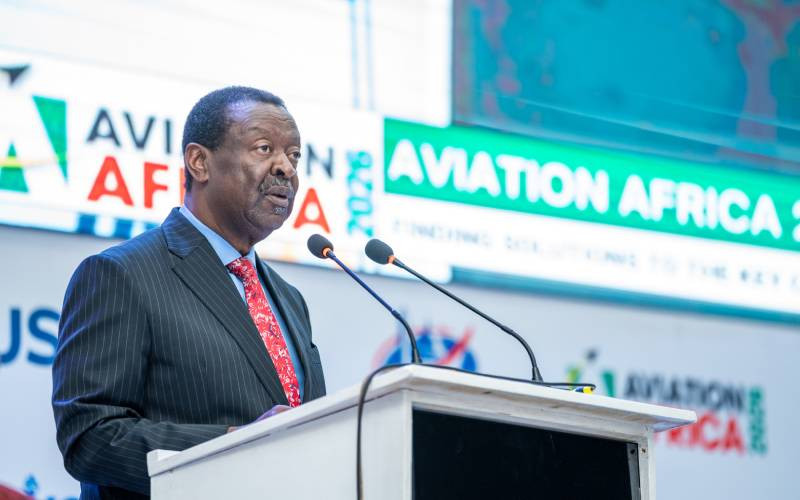
Opening the forum, Prime Cabinet Secretary Musalia Mudavadi said African countries had the capacity to mobilise resources from within the continent.
“We have the capacity, the tenacity, and the human capital to be able to marshal all those resources that we need to do what we have to do,” he told delegates. Mudavadi also emphasised the importance of linking development plans to available financing.
“A vision without financing is simply an aspiration, but a vision connected directly to capital becomes executable economic policy,” he said.
Kenya has one of the largest institutional investment pools in the region, with pension assets now exceeding Sh3 trillion. Pension funds, insurers and other institutional investors are among the potential sources of long-term capital for infrastructure and businesses. A significant share of institutional investment, however, remains in government securities.
The question of how to direct more of this capital into productive investment featured prominently during the Nairobi meeting, particularly as African governments seek to expand infrastructure without relying entirely on public borrowing.
The issue also coincided with the appointment of Dr James Mworia as the first chief executive of the National Infrastructure Fund.
Mworia, the former chief executive of Centum Investment Company, took up the position on September 7 as the forum opened.
The fund is expected to mobilise close to Sh5 trillion over the next decade through a model that will use existing government assets to help raise capital for new infrastructure projects, alongside private investment.
Under the proposed model, investments can eventually be transferred to private ownership or capital markets, allowing capital to be recycled into other projects.
The National Infrastructure Fund is part of a wider government effort to develop alternative ways of financing infrastructure as the cost of public borrowing remains high.
Stay informed. Subscribe to our newsletter
Kenya’s private sector also featured in the discussions, particularly the challenge of accessing long-term financing.
President William Ruto has previously estimated the financing gap facing micro, small and medium enterprises at about Sh3 trillion. The government has introduced initiatives such as the Hustler Fund and National Credit Score as part of efforts to expand access to credit.
Capital markets offer another potential source of financing, through instruments such as corporate bonds, equity and investment funds.
Pierre Celestin Rwabukumba, chief executive of the Rwanda Stock Exchange and President of the African Securities Exchanges Association, said African markets needed more investment opportunities to attract institutional capital.
“We can’t deepen African capital markets without enough investable projects,” he said. “Our exchanges need more companies, more corporate bonds, more infrastructure instruments, more green and sustainability-linked products, and more opportunities for institutional investors.”
His remarks highlighted one of the challenges discussed at the forum, with investors seeking more projects and financial products through which they can deploy long-term capital.
The discussions also focused on the role of local currency markets.
Dr Heike Harmgart, Managing Director for Sub-Saharan Africa at the European Bank for Reconstruction and Development, said stronger local capital markets would help channel domestic savings into long-term investment.
“We really believe that channelling private capital and domestic savings into long-term investments is core, and local currencies are core,” she said. “That’s why local domestic currencies and local capital markets are the best conduits to channel this into the market.”
The issue is particularly relevant to African countries that have accumulated significant foreign currency debt.
Kenya issued a $2.25 billion dual-tranche Eurobond in February 2026, with part of the proceeds used to refinance existing obligations. Borrowing in foreign currency exposes governments to exchange-rate movements because the debt has to be repaid in the currency in which it was issued.
The development of local bond and equity markets was therefore among the issues discussed by regulators, investors and financial institutions during the forum.
The Nairobi meeting also brought together business leaders and financial-sector executives from across the region, alongside representatives of African stock exchanges, development finance institutions and regulators.
Subscribe to our newsletter and stay updated on the latest developments and special offers!


 Prefer the Standard on Google








 join
join