×

The Standard e-Paper
Join Thousands Daily
 The Standard Group Plc is a
multi-media organization with investments in media platforms spanning newspaper
print operations, television, radio broadcasting, digital and online services. The
Standard Group is recognized as a leading multi-media house in Kenya with a key
influence in matters of national and international interest.
The Standard Group Plc is a
multi-media organization with investments in media platforms spanning newspaper
print operations, television, radio broadcasting, digital and online services. The
Standard Group is recognized as a leading multi-media house in Kenya with a key
influence in matters of national and international interest.

Audio By Vocalize
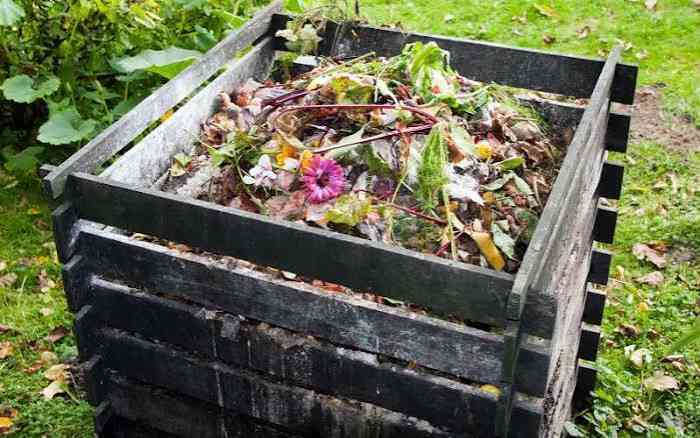
The growing push by county governments to transform agricultural waste into valuable economic resources has been hailed as a major step towards strengthening Kenya's agricultural sector, creating jobs and protecting the environment.
A recent partnership between the counties of Meru, Embu and Tharaka Nithi has brought renewed attention to the untapped potential of agricultural waste.
The three counties have signed a Memorandum of Understanding (MoU) to jointly establish a regional waste recycling plant that will process organic agricultural waste into useful products such as fertiliser, clean energy and other value-added products.
The initiative seeks to tackle one of the biggest challenges facing Kenya's agriculture sector - poor waste management - while promoting the principles of the circular economy, where waste is treated as a valuable resource rather than discarded.
The proposed facility will be located in Tharaka Nithi County owing to its strategic location and availability of land to support the regional project.
The counties intend to work closely with development partners to establish the processing plant, which is expected to serve farmers across the region.
Speaking during the signing of the agreement, Tharaka Nithi Governor Muthomi Njuki said the three counties collectively generate about 1,350 tonnes of waste every day, with about 57 per cent of it being organic waste that can be converted into useful agricultural inputs.
"80 per cent of our economic activity is agriculture. Turning organic waste into fertiliser will reduce the cost of commercial inputs and improve productivity," Njuki said.
He said the project will also create employment opportunities, particularly for young people involved in waste collection, transportation, sorting and processing.
Agriculture remains the backbone of the economies of the three counties, producing crops such as coffee, tea, miraa, bananas, avocado, maize, beans and horticultural produce.
However, significant quantities of crop residues and organic waste often go to waste through open dumping or burning, practices that contribute to environmental pollution and greenhouse gas emissions.
Experts argue that recycling agricultural waste can significantly lower production costs by reducing dependence on expensive commercial fertilisers while improving soil health through organic manure.
The initiative also mirrors successful private sector investments already taking place in Kenya.
One notable example is Del Monte Kenya, which has invested heavily in agricultural waste recycling by converting pineapple waste into textile-grade fibre, nutrient-rich compost and eco-friendly briquettes using modern decortication technology.
Stay informed. Subscribe to our newsletter
The company's recycling programme currently benefits Murang'a and Kiambu counties and forms part of its broader sustainability strategy aimed at achieving full circularity in its operations.
By the end of the year, Del Monte plans to commission a briquette manufacturing and feedstock facility that will utilise 100 per cent pineapple waste.
The success of the Del Monte model demonstrates that agricultural waste can become an important economic resource instead of an environmental burden.
Beyond environmental conservation, experts say agricultural waste recycling has the potential to stimulate rural industrialisation by creating new enterprises involved in compost production, renewable energy, livestock feed manufacturing and fibre processing.
The initiative is also expected to attract green investment into Kenya as investors increasingly seek sustainable business models that address climate change while generating economic returns.
The collaboration aligns with Kenya's National Climate Change Action Plan as well as the United Nations Sustainable Development Goals (SDGs), particularly those promoting responsible consumption and production, climate action, decent work and sustainable economic growth.
Analysts argue that county governments should encourage farmers to process crop residues and livestock waste individually or through farmer cooperatives instead of disposing of them through burning.
They also recommend adopting successful models from other African countries.
In Ghana, biochar technologies convert agricultural waste into soil-enhancing materials that improve crop yields while capturing carbon.
In Côte d'Ivoire, mobile biodigesters transform farm waste into renewable energy and organic fertilisers, offering practical examples of circular agriculture that could be replicated in Kenya.
The national government's commitment to strengthening Public-Private Partnership (PPP) frameworks is also expected to enhance implementation of such projects by attracting financing, technology transfer and technical expertise from the private sector.
Stakeholders believe that county governments can unlock substantial economic value by investing in agricultural waste management infrastructure, reducing environmental degradation while increasing farm productivity.
They argue that value addition remains one of the most effective ways of transforming Kenya's agricultural sector, improving farmers' incomes and increasing agriculture's contribution to the country's Gross Domestic Product (GDP).
The Meru-Embu-Tharaka Nithi partnership is therefore being viewed as more than a waste management project.
It represents a broader shift towards sustainable agriculture, climate resilience and green industrialisation.
If implemented successfully, the initiative could provide a model for other counties whose economies depend heavily on agriculture, demonstrating that what has long been regarded as waste can instead become a valuable source of fertiliser, renewable energy, industrial raw materials and employment.
Ultimately, experts say Kenya's future agricultural competitiveness will depend not only on increasing production but also on ensuring that every part of the harvest - including what is traditionally discarded - is converted into economic value.
Turning agricultural waste into wealth, they argue, is no longer an option but a necessity for achieving food security, environmental sustainability and inclusive economic growth.
Subscribe to our newsletter and stay updated on the latest developments and special offers!


 Prefer the Standard on Google