×
App Icon
The Standard e-Paper
Stay Informed, Even Offline
★★★★ - on Play Store
Read on the App

Timely capitation boosts public schools reopening

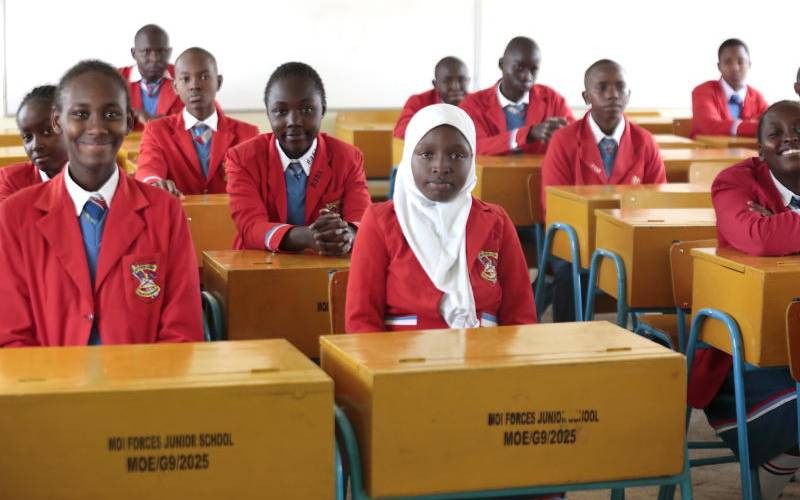
Moi Forces Academy Grade 9 students during the launch of Grade 9 classrooms at the school on January 30, 2025. [Boniface Okendo, Standard]

Since the introduction of school capitation two decades ago, the government for the first time has released funds to public schools, days before schools reopen on Monday, January 5.

The Ministry of Education on January 2 disbursed Sh44.25 billion in capitation funds for Term One of the 2026 academic year, Sh3.7 billion has been allocated to Free Primary Education, Sh14.46 billion to Free Day Junior Secondary Education and Sh26.08 billion to Free Day Secondary Education.

Education Cabinet Secretary Julius Ogamba said the early release was deliberate and aimed at ensuring a smooth reopening of schools.

 “The release of capitation funds will facilitate the seamless conduct of school activities in the new term, starting on January 5, 2026, with Grade 10 learners expected to report to their respective senior schools from January 12, 2026,” Ogamba said.


The funds are meant to cover operational costs, including learning and teaching materials, utilities, co-curricular activities, maintenance of facilities and support services.

The move will also support the seamless transition of the first cohort under the Competency-Based Curriculum (CBC), with Grade 10 learners reporting to senior schools from January 12.

 “This is part of the government’s unwavering commitment to ensuring that no learner is left behind,” he said.

In previous years, delays in capitation disbursement forced principals to accumulate debts, delay payments to non-teaching staff and suppliers, or turn to parents for extra levies, despite the government’s free education policy.

This move education stakeholder say is a sharp departure from the past, and could restore stability, confidence and accountability in the sector.

Kenya Secondary School Heads Association (KESSHA) chairman Willie Kuria described the move as historic, saying it reflects improved planning and leadership within the Ministry of Education.

“This is a historic moment for school managers. Receiving capitation before the term begins allows principals to budget, prioritise and manage resources prudently. It reduces unnecessary debts and ensures schools operate smoothly from day one,” Kuria said.

Kuria added that predictable and timely funding is critical to improving education outcomes. “When schools are stable financially, teachers can teach, learners can learn, and administrators can manage without crisis mode.”

The government has also reaffirmed that fees payable by learners in senior schools will remain unchanged, despite rising education costs.

Approved annual capitation rates remain Sh1,420 per learner for primary schools, Sh15,042 for junior secondary schools and Sh22,244 for senior secondary schools.

“School heads must not impose extra levies or fees. The ministry will deal firmly with any verified cases of misappropriation or illegal charges,” Ogamba warned.

School principals have welcomed the move, saying timely funding allows them to plan both academic and operational activities more effectively.

Anthony Thuo, Principal of Ofafa Jericho High School in Nairobi, said the early release was a major relief to school administrators.

“With the funds arriving before the term starts, we can now plan properly. We are able to pay non-teaching staff on time, clear pending bills, service essential facilities and procure learning materials without disrupting learning. This is a big relief,” Thuo said.

Machakos School principal Benson Manoo said delayed capitation in the past had undermined school management and strained relations with parents.

“When funds delay, parents think schools are mismanaging money, yet the problem is beyond our control. Timely capitation restores trust and allows us to focus on teaching and learning,” he said.

Parents, who have often borne the indirect burden of delayed government funding, have also expressed relief.

National Parents Association chairman Silas Obuhatsa said late disbursement previously translated into pressure on parents to contribute informally to cover operational gaps in schools.

“This is the first time we are seeing government funds released before schools open. It shows seriousness. If schools are funded on time, parents will not be pushed to make unnecessary contributions,” Obuhatsa said.

Anthony Mudekere, a parent with a Form Three learner at Lenana School, said timely capitation would help learners settle quickly and concentrate on their studies.

“Children suffer most when schools are broke. Classes are disrupted, services are cut and morale goes down. This move gives hope,” he said.

Teachers’ unions Kenya Union of Post Primary Education Teachers (Kuppet) Secretary General Akelo Misori attributed the improved funding discipline to a recent nationwide audit.

“The improved funding discipline can be attributed to a recent nationwide audit that weeded out  ghost learners and non-existent schools, which had previously drained billions of shillings from the education budget,” Misori said.

He added that the timely release of funds is expected to significantly improve education outcomes by restoring confidence in school financing and strengthening accountability.

“The early disbursement sends a powerful signal. It tells schools, parents and teachers that the government has learnt from past mistakes and is ready to run the education system more transparently,” Misori said.

Basic Education Principal Secretary Julius Bitok said the ministry has concluded a comprehensive verification exercise to clean up enrolment data and ensure public funds reach only genuine learners and institutions.

“We are cross-checking the data and deploying teams on the ground to validate the figures,” Prof Bitok said.

“There are significant discrepancies between earlier capitation numbers and the current findings. The ministry is refining the data to ensure the report tabled in the National Assembly is accurate.”

Last year, the Auditor-General uncovered at least 87,000 fictitious learners in public schools, an anomaly estimated to have cost taxpayers nearly Sh1 billion in a single year.

A special audit further revealed that falsified enrolment figures had cost the country more than Sh4 billion in free basic education funds over the past four years.

Lawmakers demanded accountability, calling for disciplinary action against officers involved in the fraud.

To seal loopholes, the Ministry of Education is retiring the National Education Management Information System (NEMIS) and replacing it with the Kenya Education Management Information System (KEMIS), beginning on January 9.

“KEMIS is a comprehensive, integrated system that will track learners from early childhood through higher education. It will help eliminate ghost learners, identity theft, examination irregularities and fake certificates,” Ogamba said.