×

The Standard e-Paper
Join Thousands of Readers
 The Standard Group Plc is a multi-media organization with investments in media
platforms spanning newspaper print operations, television, radio broadcasting,
digital and online services. The Standard Group is recognized as a leading
multi-media house in Kenya with a key influence in matters of national and
international interest.

Audio By Vocalize
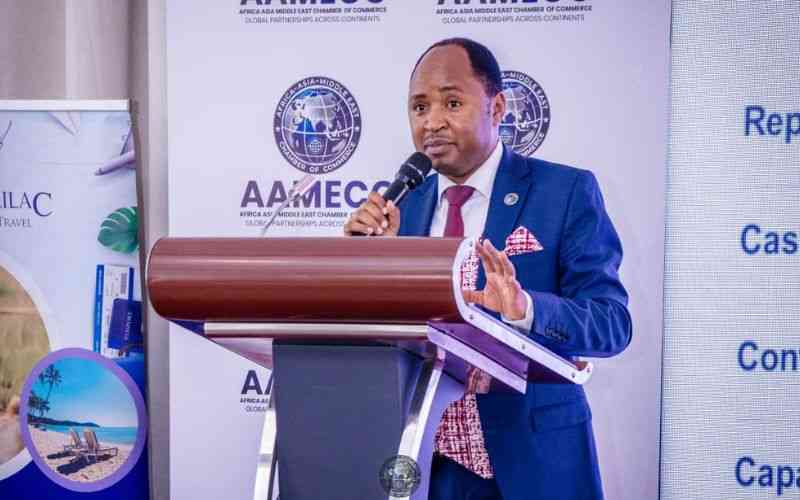
Delayed payments by government institutions are undermining the survival and growth of small and medium-sized enterprises (SMEs), with women-owned businesses particularly vulnerable to cash flow constraints that limit their ability to meet contractual obligations, pay workers and pursue new business opportunities.
The Africa, Asia, Middle East Chamber of Commerce (AAMECC) has now challenged government agencies to prioritise the settlement of pending bills, warning that prolonged payment delays are weakening the entrepreneurial ecosystem and threatening the contribution of SMEs to Kenya's economic growth.
AAMECC President Peter Mutinda said businesses that supply goods and services to government institutions often find themselves financially strained when payments are not made within agreed timelines, leaving them unable to meet operational expenses or execute subsequent contracts.
Speaking during the Women, Trade and Capital Forum 2026 organised by AAMECC, Mutinda said poor cash flow management, compounded by delayed payments, was among the major challenges confronting entrepreneurs, including women seeking to establish and scale their enterprises.
"Cash flow is the king, we say, because if you're not able to manage your cash flow, maybe because of delayed payments, it affects the cycle of everything, and that's a great challenge for all entrepreneurs, including women entrepreneurs," he said.
He challenged government institutions to take responsibility for ensuring suppliers receive their payments in good time, noting that delayed payments have consequences that extend beyond individual businesses to employees, their families and the wider economy.
"You are expecting a contract payment on 30th of June, but December, you are still fighting for it. January, you are still fighting for it. The ripple effect of that is very big," he said.
He warned that some businesses eventually collapse because they cannot sustain operations while waiting for payments, while others lose the capacity to take up new contracts despite having the technical ability and market opportunities.
"They will not be able to supply the next contract. They will not be able to pay their bills. Their financial planning is confused just from the fact that you're expecting a contract payment," he said.
He observed that the consequences of delayed payments were particularly significant for SMEs, which depend on regular cash flows to finance daily operations, purchase supplies and maintain their workforce.
"I can boldly say that the growth of our economy has a lot to depend and to benefit from the stability of SMEs. And much of it has to do with cash flows. And the government has an opportunity to play that role. First hand," he said.
He, however, challenged entrepreneurs to strengthen their financial management practices and anticipate possible payment delays, particularly when entering into contracts with government institutions and other large organisations.
He said business owners needed to understand their cash flow cycles and ensure they had sufficient financial buffers to meet their obligations when expected payments were delayed.
Mutinda noted that many enterprises struggle to survive beyond their first three years, with poor cash flow management being one of the major challenges contributing to their difficulties.
The forum, held under the theme of moving beyond empowerment, brought together entrepreneurs, business leaders and other stakeholders from Kenya and different countries to explore opportunities for expanding women's participation in trade, investment and enterprise development.
Stay informed. Subscribe to our newsletter
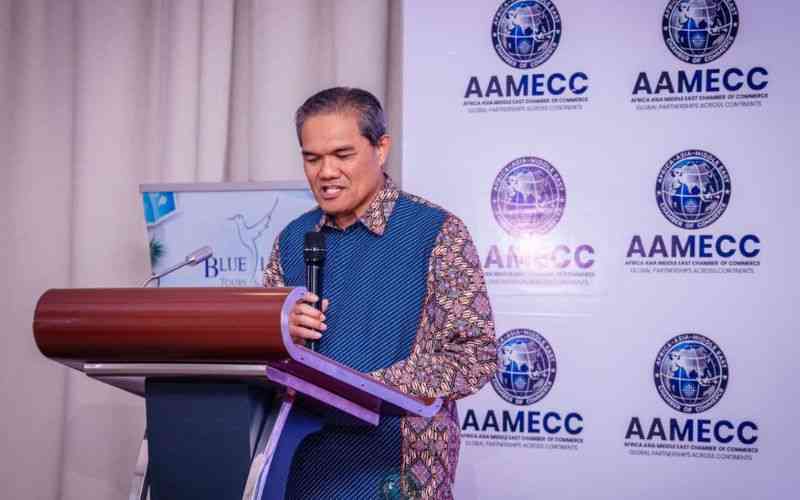
Also at the event was Malaysia's High Commissioner to Kenya and AAMECC patron, HE Ruzaimi Mohamad, who called for stronger commercial partnerships between Kenya, Malaysia and the wider African continent, saying women-led enterprises had significant potential to drive economic growth and create employment.
He said that while diplomatic relations between Kenya and Malaysia had gained momentum, businesses needed to translate the growing bilateral cooperation into tangible trade and investment opportunities.
"The diplomatic bridge is built. Now we must cross it together with purpose and ambition," he said. "Women-led enterprises can be the backbone of both our Malaysian and African economies. They drive job creation, community resilience, and remarkable grassroots innovation."



Subscribe to our newsletter and stay updated on the latest developments and special offers!