×

The Standard e-Paper
Home To Bold Columnists
 The Standard Group Plc is a
multi-media organization with investments in media platforms spanning newspaper
print operations, television, radio broadcasting, digital and online services. The
Standard Group is recognized as a leading multi-media house in Kenya with a key
influence in matters of national and international interest.

Audio By Vocalize
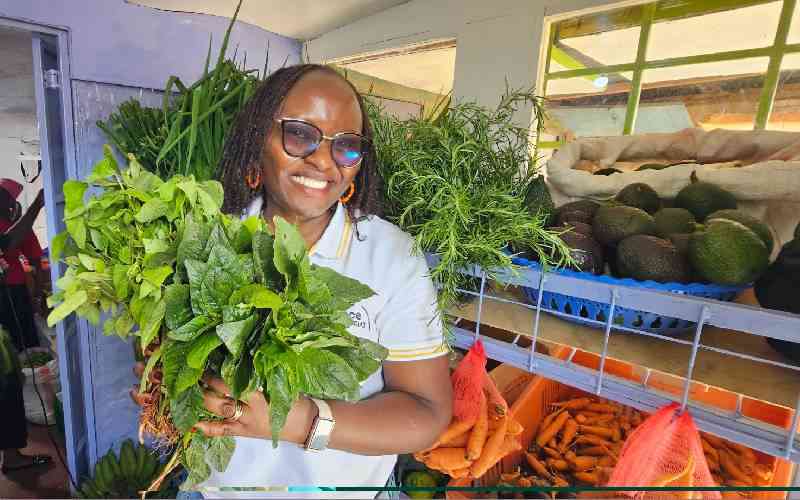
Every meal tells a story. The food on a family’s table has passed through many hands and has been shaped by decisions made on farms, in markets, in government offices and in households.
Yet these connections are often missing from the way agriculture is reported.
Journalists are being challenged to look beyond farming activities and tell stories that connect food production with nutrition, markets, climate change, livelihoods and public policy.
This was one of the key messages during a media training session on food systems reporting organised by the Alliance of Bioversity International and CIAT.
The training was facilitated by, among others, Dr Boaz Waswa, a soil-health researcher, Dr Christine Chege, a food systems scientist, and Rachel Kibui, a strategic communication and media consultant.
Their message was that food should not be treated simply as a product that moves from a farm to a market. Its journey involves many people and decisions, and a change at one point can affect the rest of the chain.
Kibui encouraged journalists to start with simple questions about the food they eat. Who produced it? Who transported it? Who earned an income from selling it? What shaped its price? And what happened to the food that was not eaten? These questions, she explained, can help reporters uncover the wider story behind an ordinary meal.
For example, poor rainfall can reduce harvests and affect the supply of food in markets. When supply falls, prices may rise, making it harder for families to afford what they need.
Farmers may also earn less and have fewer resources to invest in the next season. A report that follows these links can tell audiences much more than a story that only announces a poor harvest.
Food systems are under pressure from several directions. Population growth and urbanisation are increasing demand for food.
Changes in income are influencing what people buy and eat, while climate change and extreme weather continue to disrupt production and supply. Land degradation and the loss of biodiversity also weaken the natural resources that farming depends on.
These challenges show why agricultural reporting must connect farming to the environment, the economy and public health.
Food systems are affected by environmental pressures, but some activities within the systems can also add to those pressures. The way land is used, food is produced, processed and moved all matter.
Waswa and Chege used examples from the Alliance’s research to show how science can help people make better decisions. The Alliance brings together two research organisations: the International Centre for Tropical Agriculture, established in 1967, and Bioversity International, whose origins date back to 1974. The two joined forces in 2019 to work on issues linking agriculture, the environment and nutrition.
Stay informed. Subscribe to our newsletter
The Alliance’s 2026–2030 strategy, Resilient Futures, sets out five connected areas of work. These include making better use of agricultural biodiversity, building farms and landscapes that can withstand climate pressures, supporting inclusive food economies, improving access to healthy diets and attracting investment to expand solutions that work.
The presenters stressed that these areas cannot be treated separately. More diverse crops and healthier landscapes can support farming, while fairer markets can create better opportunities for farmers and make food more accessible. Investment is also needed to help useful approaches reach more communities.
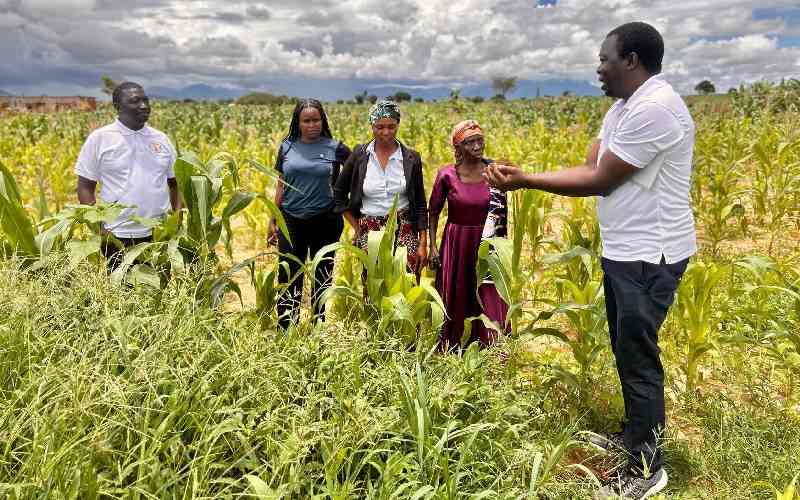
One example came from Kongwa District in Tanzania, where the Growing Together initiative is bringing farmers, researchers, extension officers and businesses together to demonstrate practical farming methods. The work includes improved seed, soil management and planting practices.
Sesilia Kusalula, a farmer from IDUO Village, says “soil testing helps us use the right inputs and avoid wasting money".
Her comment points to a challenge faced by many small-scale farmers. With limited money, buying fertiliser and other inputs without knowing what the soil needs can lead to unnecessary costs.
Soil testing can help farmers understand their land and make more informed choices. The demonstrations also look at the use of manure and crop residues, seed selection, spacing and mechanised planting. Farmers can compare different practices and discuss what may work in their own fields.
The initiative works with partners including the Tanzania Agricultural Research Institute, extension services and Kibaigwa Flour Supplies.
A field day attracted 62 participants. However, the number of people attending a demonstration does not, on its own, prove that yields have increased or that farms have become more resilient. Those changes need to be checked over time with farmers and technical partners.
That is an important lesson for us journalists covering development projects and agricultural research. A launch, training session or field day is an activity; it is not proof of impact.
We need to ask whether farmers have adopted the practices, whether costs have changed and whether the results can be supported by evidence.
Chege focused on food waste and nutrition in Nairobi. While some nutritious food goes to waste, schools and other institutions serving vulnerable people may struggle to provide balanced meals. Through a partnership with FoodBanking Kenya, safe surplus food is recovered and redistributed to institutions such as schools and children’s homes.
The work also looks at what happens after the food is delivered. At Waithaka Special School, for example, the interest is in understanding how donated food contributes to pupils’ nutrition.
The Alliance is supporting efforts to track donated food and its use through digital tools. The aim is to estimate the food’s nutritional contribution, its role in dietary diversity and possible savings for institutions.
This work is still being assessed, so it would be premature to claim that it has already improved the health of pupils. But it raises useful questions for journalists: how much food is recovered, what types of food are supplied, how is food safety maintained, and are institutions able to provide better meals as a result?
The training also examined work to strengthen agroecology in Kiambu, Vihiga, Makueni and Nairobi counties. The initiative is supporting Participatory Guarantee Systems, building links between agroecological farmers and markets, and supporting county-level agroecology policies.
For farmers, producing food using agroecological practices is only one part of the challenge. They also need reliable buyers.
Consumers, on the other hand, need food that is safe, nutritious and affordable. Linking farmers to markets, including schools, could help bring producers and consumers closer, but the practical results need to be examined.
A good question from agricultural journalists is whether farmers are finding dependable markets, whether consumers can afford the produce and what prevents schools from buying directly from local growers. They can also examine whether county policies are helping farmers overcome these barriers.
A recurring message during the training was the need to give a voice to people who are often missing from stories about agriculture and food.
Farmers, women, young people, workers, traders and consumers should not be reduced to background figures while officials and experts dominate the coverage. Their experiences help explain whether a policy or project is making a difference in everyday life.
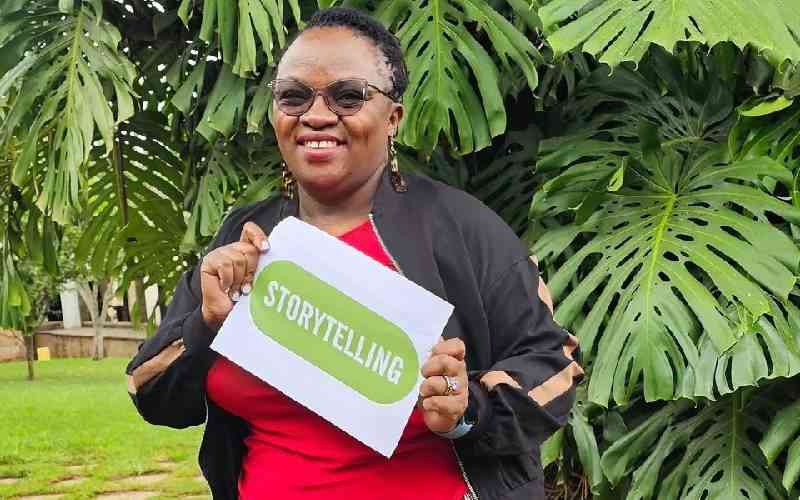
A good food systems story also needs a clear focus. Kibui highlighted the importance of choosing a specific angle, finding the human experience behind the issue, checking facts and scientific claims, and including different points of view. "Journalists should not rely on one source or repeat the claims of a project without checking them," she adds.
A story about a new seed variety, for instance, should establish whether farmers can get the seed on time, whether it is affordable and whether it performs well under local conditions. A report on food prices should consider what consumers pay, what farmers receive and the costs involved in getting produce to the market.
The presenters also urged journalists to follow the evidence and listen to the people affected. The training’s closing message was direct: “Activity is not impact.” Reporters were encouraged to ask what has changed, what data are available and what remains uncertain.
They should also consider whose voices are missing and question whether the benefits are reaching the people a project is meant to serve.
Before submitting a story, journalists should check facts, follow up with sources where necessary, use photographs that accurately represent the issue and ensure that women and young people are included. These steps are especially important in science and agriculture reporting, where claims can easily be overstated or taken out of context.
The challenge, ultimately, is to stop treating agriculture as an isolated beat. A story about soil can also be a story about the cost of food. Food waste can lead to questions about nutrition, public spending and distribution. A farming policy can be judged not only by what it promises, but by whether it improves the lives of the people it is meant to support.
For journalists, the task is to follow food through the whole system: from the soil where it grows, to the farmer who produces it, the trader who sells it and the household that prepares it. The most useful questions are not only what happened, but what changed, who benefited, who was left out and what evidence supports the claims.
Subscribe to our newsletter and stay updated on the latest developments and special offers!


 Prefer the Standard on Google