×

The Standard e-Paper
Smart Minds Choose Us
 The Standard Group Plc is a
multi-media organization with investments in media platforms spanning newspaper
print operations, television, radio broadcasting, digital and online services. The
Standard Group is recognized as a leading multi-media house in Kenya with a key
influence in matters of national and international interest.
The Standard Group Plc is a
multi-media organization with investments in media platforms spanning newspaper
print operations, television, radio broadcasting, digital and online services. The
Standard Group is recognized as a leading multi-media house in Kenya with a key
influence in matters of national and international interest.

Audio By Vocalize
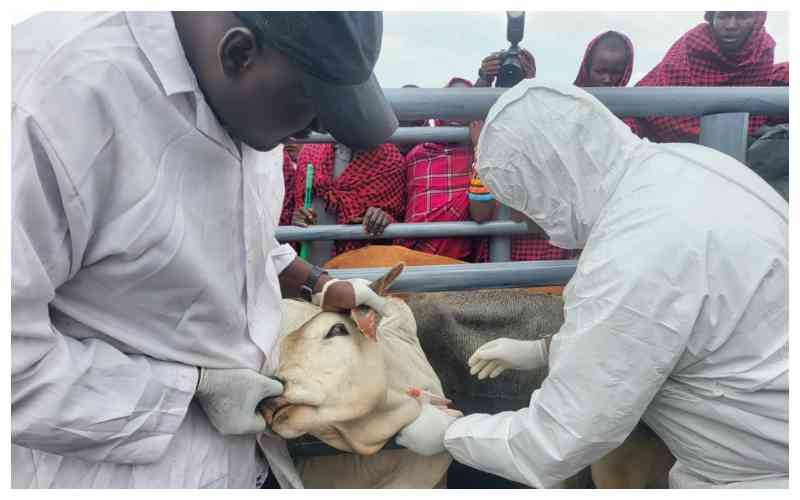
In the sprawling plains of Laikipia County, Peter Nderitu still remembers the year he lost half his dairy herd to a mysterious illness that swept through his neighbourhood like wildfire.
“I had called someone who claimed to be a vet, but he had no papers, no licence, and no proper medicines,” the father of four recalls, shaking his head at the memory.
“He gave my cows injections that did nothing, and by the time a licensed veterinarian from the county arrived, it was too late.”
Today, Peter is one of thousands of farmers who know exactly who to call, pointing to the registration certificate and licences mounted on his farm office wall.
“The Board’s Compliance and Market Surveillance team came to our town, taught us what to look for, and gave us a list of licensed vets. Last year, when my prize bull got sick, the vet arrived armed with his licence, proper drugs, proper records, and proper training. My bull survived, and my milk production is back to what it was before the disaster.”
Peter’s farm now supplies a local processor that exports yoghurt to regional markets.
Behind every safe meal on Kenyan dining tables and every animal product exported to international markets lies a robust regulatory system that safeguards animal health, public health and the national economy.
At the heart of this system is the Kenya Veterinary Board (KVB), the statutory regulator established under the Veterinary Surgeons and Veterinary Paraprofessionals Act of 2011, which has undergone a remarkable transformation over the past two years. The board has embraced innovation, strengthened compliance and expanded its engagement with stakeholders, resulting in measurable improvements in professional regulation, service delivery and public confidence. Nowhere is this more evident than in the dramatic surge in practitioner retention, which increased from 2,906 in 2024 to 9,013 in 2025, representing more than a three-fold growth.
“The 210 per cent growth in retention numbers has had a significant impact on ensuring accessibility of qualified professionals across the country,” said the board’s chief executive, Dr Mary Agutu, attributing the growth to the widely acclaimed “Know the Board” initiative, continuous sensitisation forums across the country and bold compliance initiatives.
“These engagements enhanced awareness of professional obligations under the VSVP Act, fostered stronger collaboration between the regulator and veterinary practitioners and ensured compliance with the law.”
Licensing uptake has risen even more sharply, experiencing a 489 per cent growth from 419 per cent to 2,469 per cent, a nearly six-fold increase that Agutu said demonstrates improved compliance among practitioners.
“Ultimately, this translates into better animal healthcare, improved disease surveillance and safer food of animal origin,” she added, reinforcing that the milestone also bolsters public confidence that veterinary services are being delivered by duly licensed professionals.
For farmers across Kenya, these numbers translate into something far more personal: the difference between losing livestock and building a future.
Across Laikipia’s vast ranches, Mary Wanjiru runs a sheep and goat enterprise that supplies meat to hotels in Nanyuki and beyond. She recalls the anxiety of trying to export her animals to a neighbouring country two years ago, only to be turned back at the border because her health certificates were not recognised.
Stay informed. Subscribe to our newsletter
“The buyer lost patience, and I lost a whole season’s income,” she says. That changed with the board’s digital transformation, migrating licensing and certification services onto online platforms that reduced processing times and enhanced transparency.
“Now I am able to check compliant professionals’ key to issuing me movement permits and health certificates,” Mary says with a smile.
With faster access to certified veterinary services, Mary has since secured contracts with two export agents. Her flock has grown from 200 to over 600 animals, and she now employs three young people from her village.
“The board’s enforcement against unqualified practitioners has also meant that I am no longer undercut by people who operate without training or fake medicines,” she adds.
“We are all playing by the same rules now, and that is good for serious farmers like me.”
The board has substantially strengthened field inspections of veterinary practices nationwide, with inspections recording a 270 per cent increase from 497 in 2023 to 1,840 in 2024.
With the strengthened compliance and enforcement division, the board is set to inspect and carry out geo-mapping of more than 2,200 veterinary practices annually.
This achievement enabled the regulator to assess compliance with professional standards, licensing requirements, access of prescription medicines using prescription notes, medicine handling and ethical practices.
Dr Benson Kibore, the director of compliance and enforcement at the Kenya Veterinary Board, noted that the capacity building of inspectors to process suspects pursuant to Decision to Charge Guidelines 2019 has enhanced convictions. “We have recorded immense conviction rates owing to better working relationships with the police, Directorate of Criminal Investigations, Office of the Directorate of Public Prosecutions and Judiciary,” Kibore says.
CEO Agutu emphasised that regulation is effective only when supported by fair and consistent enforcement. Following the implementation of the Decision to Charge Guidelines of 2019, the board has recorded increased successful prosecutions of offenders operating contrary to the VSVP Act.
“This has enhanced accountability, discouraged illegal practice and protected the public from unqualified individuals offering veterinary services,” she says.
“The strengthened enforcement framework reinforces the principle that professional standards exist to protect both practitioners and the public.”
The board has continued to modernise its operations through migration of key regulatory services onto digital platforms, which Agutu said had improved access to licensing services, reduced processing times, enhanced transparency and enabled more efficient monitoring of compliance across the country.
“The integration of digital systems with enhanced enforcement mechanisms positions the Board to become a modern, responsive and data-driven regulator capable of meeting the evolving needs of Kenya’s livestock sector,” she states.
In the coastal county of Kwale, where livestock keeping is often overshadowed by tourism and fishing, Juma Mwinyi has turned his small goat herd into a thriving business that supplies meat to Mombasa’s growing hospitality industry.
Juma’s turning point came through county visits and professional meetings, bringing veterinary services closer to remote communities like his.
“For years, we had no one to call when our animals fell sick,” he says, gazing at his healthy flock grazing under coconut palms.
“The nearest ‘vet’ was a man who sold unknown veterinary drugs from the back of his motorcycle. I lost so many goats that I nearly gave up.”
After attending a sensitisation forum in Kwale town, Juma learnt how to identify licensed professionals and report illegal practitioners.
Kibore, the director of compliance, spoke about the decision to charge guidelines and how the board worked with police to prosecute offenders.
“That gave me hope,” he says. Today, Juma works with a licensed veterinarian who visits his farm monthly, maintains proper records, and advises him on disease surveillance and antimicrobial stewardship. His herd has grown from 30 to 150 healthy goats, and he now sells directly to a hotel chain that requires proof of veterinary certification.
“My children are in school because of those goats,” he says, his voice thick with emotion.
“The Board’s work has saved my livelihood, and I know that every animal I sell has been checked by a qualified professional. That is peace of mind no amount of money can buy.”
Beyond professional regulation, the board plays a critical role in protecting public health through disease surveillance; prevention and control of zoonotic diseases; meat inspection; food safety assurance; antimicrobial stewardship; and emergency preparedness. “By ensuring that veterinary services are delivered by competent and licensed professionals, the Board directly supports safer food systems, healthier livestock and stronger national security and biosecurity,” Agutu says.
As Kenya seeks to expand its livestock exports and contribution to GDP from the current 12 per cent to 20 per cent, the role of the Kenya Veterinary Board continues to grow in importance.
Subscribe to our newsletter and stay updated on the latest developments and special offers!


 Prefer the Standard on Google









 join
join