×

The Standard e-Paper
Stay Informed, Even Offline
 The Standard Group Plc is a
multi-media organization with investments in media platforms spanning newspaper
print operations, television, radio broadcasting, digital and online services. The
Standard Group is recognized as a leading multi-media house in Kenya with a key
influence in matters of national and international interest.

Audio By Vocalize
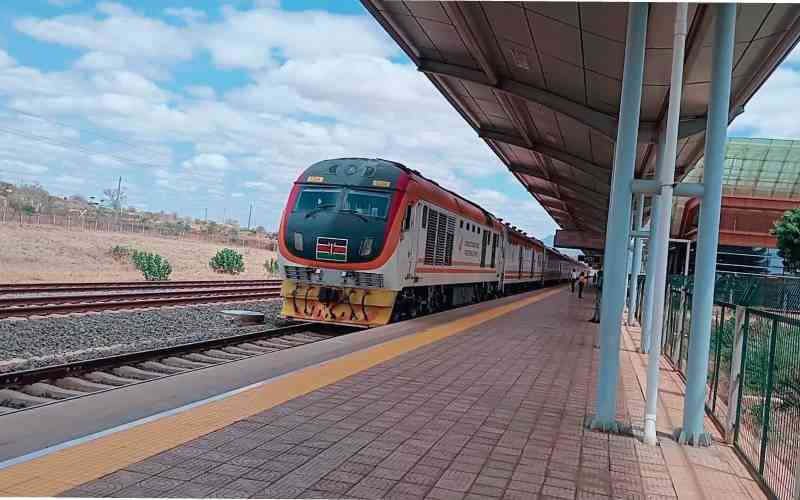
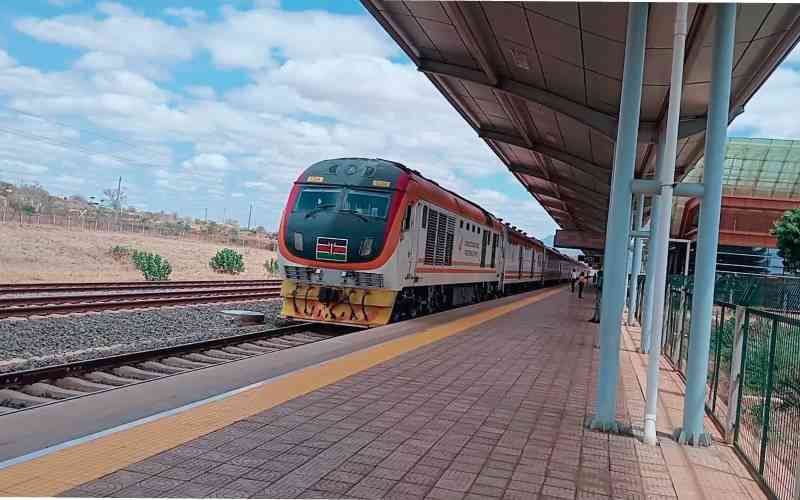
President William Ruto has hit back at opposition leaders over allegations of corruption in the construction of the Standard Gauge Railway (SGR), accusing them of selectively interpreting a World Bank report to politically attack his administration while ignoring the circumstances under which the project was undertaken.
Speaking in Narok during a church service at St Mary’s Girls High School, the President challenged opposition politicians to read the entire World Bank report rather than rely on sections highlighting procurement irregularities and governance failures in the construction of the Mombasa-Nairobi railway.
Ruto maintained that the first phase of the SGR, which has been at the centre of renewed corruption concerns, was constructed under a previous administration and questioned why his government was being blamed for alleged irregularities surrounding the project.
“I have heard some leaders saying that the World Bank report said there was some corruption in procurement in government. What they are not saying is that the SGR was built under a different regime,” Ruto said.
He went further to suggest that some opposition leaders could have benefited from the controversial procurement arrangements, warning them against criticising the government while potentially benefiting from proceeds linked to the railway contracts.
“It could be that part of the money sponsoring your campaigns are proceeds of the SGR tenders. Don't read part of the report and give us a lecture. Read the whole report,” he added.
The President's remarks follow growing criticism from opposition leaders following the release of the World Bank's November 2026 Kenya Economic Update, which raised concerns over corruption, non-competitive procurement and questionable land compensation practices in major infrastructure projects, using the SGR as a key example.
Opposition politicians have seized on the findings to renew their calls for accountability over the cost of major government projects, arguing that the report reinforces longstanding concerns about the management of public resources.
Nairobi Senator Edwin Sifuna has been among the vocal critics, arguing that the findings expose weaknesses in government transparency and the limited disclosure of information surrounding public procurement.
Sifuna questioned why, despite public procurement accounting for approximately 10 per cent of Kenya's Gross Domestic Product, only Sh410 billion worth of procurement information had been published for the 2024/25 financial year.
He also pointed to the even smaller amount of procurement information available to the public on contract values and successful bidders, with the World Bank indicating that detailed information was accessible for only Sh186 billion.
The senator's concerns centre on the need for stronger accountability institutions and transparent government transactions, arguing that infrastructure development should not come at the expense of proper oversight of public expenditure.
The World Bank report estimates that Kenya could have saved up to US$900 million, equivalent to approximately Sh117 billion, in the initial construction of the Mombasa-Nairobi SGR had it been delivered at the same cost per kilometre as Tanzania's Dar es Salaam-Dodoma railway.
It puts Kenya's railway construction cost at approximately Sh988 million per kilometre, compared with Sh741 million for Tanzania's electrified railway and Sh689 million for the Djibouti-Addis Ababa line.
According to the report, at least 30 per cent of the potential savings could have been realised by addressing governance weaknesses, including direct contracting instead of competitive tendering, land speculation and alleged fraud involving land ownership, valuation and compensation.
Stay informed. Subscribe to our newsletter
However, Ruto argued that the report should also be appreciated for recognising reforms undertaken by his administration to address corruption and improve public financial management.
He cited the rollout of the electronic government procurement system, the expansion of government services through the eCitizen platform and the enactment of the Conflict of Interest law as some of the measures aimed at sealing loopholes that previously facilitated the misuse of public resources.
The President also defended his administration's efforts to revive the stalled SGR extension, saying the World Bank had acknowledged plans to extend the railway from Narok towards Bomet, Kisii and Malaba.
Ruto maintained that his government had demonstrated commitment to fighting corruption and improving accountability, accusing critics of ignoring these achievements while focusing on historical procurement failures.
Subscribe to our newsletter and stay updated on the latest developments and special offers!

 Prefer the Standard on Google