×

The Standard e-Paper
Home To Bold Columnists
 The Standard Group Plc is a
multi-media organization with investments in media platforms spanning newspaper
print operations, television, radio broadcasting, digital and online services. The
Standard Group is recognized as a leading multi-media house in Kenya with a key
influence in matters of national and international interest.
The Standard Group Plc is a
multi-media organization with investments in media platforms spanning newspaper
print operations, television, radio broadcasting, digital and online services. The
Standard Group is recognized as a leading multi-media house in Kenya with a key
influence in matters of national and international interest.

Audio By Vocalize
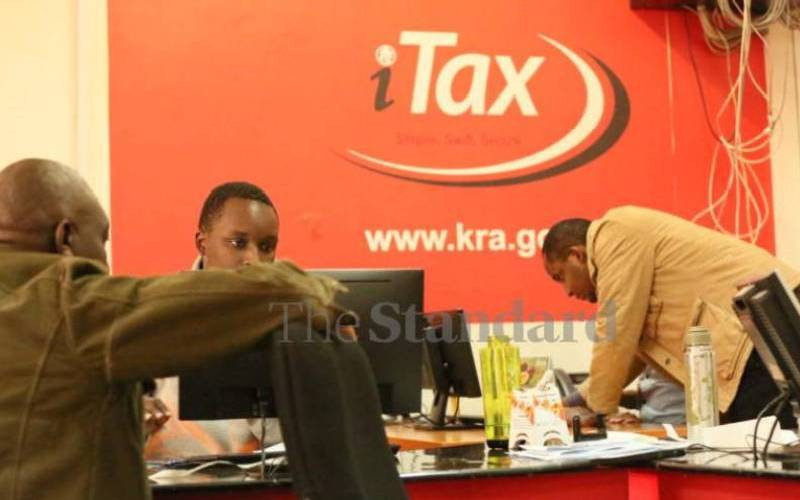
KRA staff assist clients in filing returns at its Nyeri office. [File, Standard]
If you’ve ever filed on iTax, you probably have a story to tell. A payment that ‘disappeared’ and reappeared as an outstanding balance. A penalty notice for a return you know you filed. A portal that logged you out mid-submission and left you to start over, unsure if the first attempt went through or not.
For most people, these are just frustrations; the cost of doing business with a government system that isn’t always reliable. But then what happens when one of these glitches doesn’t just waste your afternoon, but actually costs you money you don’t actually owe? Simply because the system, not you, made a mistake?
That question sits at the heart of several cases, including the one between Kenya Revenue Authority and Export Trading Company Limited (Petition 20 of 2020, [2022] KESC 31 {Supreme Court, 17/06/22}).
Allow me to focus on the answer given by Kenya’s highest Court.
Export Trading Company Limited, a company importing rice from Pakistan, was charged by KRA a tax rate of 35 per cent on its imports. This rate was applied automatically by KRA’s own computer system (Simba), which is supposed to charge different tax rates depending on which country goods are imported from.
The problem was that KRA’s system had a fault. It failed to correctly separate Pakistan, which qualified for the lower 35 per cent rate, from other countries that should have paid a higher rate of 75 per cent. This wasn’t something the company did but was an error inside KRA’s own technology.
Four years later, KRA came back and said: Our system made mistakes, so now you owe us the difference (about Sh500 million). The company refused and the case eventually reached the Supreme Court. KRA lost. Twice at the lower courts and again at the Supreme Court.
The court’s decision rested on a few legal ideas. I will explain them to you in a way you could easily follow.
In short, the court said KRA cannot build the system, let it make an error, allow years to pass and then quietly turn around and expect the taxpayer to pay for a fault that was never theirs to begin with.
It is very tempting to read this as a story about a single company and a technical customs dispute without understanding that the principle underneath applies to anyone who has ever dealt with a government digital system, which if we were to be honest, today is almost everyone.
iTax, eCitizen, NHIF, you name them, have really made life easier in many ways. But they’ve also created a new kind of risk: When a computer system is the only way to comply with the law, a fault in that system becomes, in effect, a fault in how the law gets applied to you.
The Export Trading Company case tells us how the courts think about this: When a government system makes a mistake, the person who relied on that system in good faith should not automatically be the one who pays for it. Fairness and accountability sit with the institution that built and controls the system, not just with the citizen who trusted it.
You need not be a rice importer, or run a business at all, for this to be relevant to you. The same reasoning actually applies to eCitizen payments that don’t register, NHIF contributions that vanish, or any government portal that takes your details, your time or your money and gives you an error message in return.
It’s a binding law by our courts that, when the system fails, the taxpayer shouldn’t be the one left holding the bill. So, the next time your instinct is to blame yourself for a glitch in a government portal, it's worth remembering the law may already be on your side.
Stay informed. Subscribe to our newsletter
The law is beginning to ask a question ordinary Kenyans have been asking for years now: If the system fails, why should you pay for it?
- Joy Wangari Gachu is a LLB student at the University of Nairobi and a legal intern at Havi & Company Advocates, with an interest in making the Law more accessible to the public
Subscribe to our newsletter and stay updated on the latest developments and special offers!


 Prefer the Standard on Google







 join
join