×

The Standard e-Paper
Home To Bold Columnists
 The Standard Group Plc is a
multi-media organization with investments in media platforms spanning newspaper
print operations, television, radio broadcasting, digital and online services. The
Standard Group is recognized as a leading multi-media house in Kenya with a key
influence in matters of national and international interest.
The Standard Group Plc is a
multi-media organization with investments in media platforms spanning newspaper
print operations, television, radio broadcasting, digital and online services. The
Standard Group is recognized as a leading multi-media house in Kenya with a key
influence in matters of national and international interest.

Audio By Vocalize
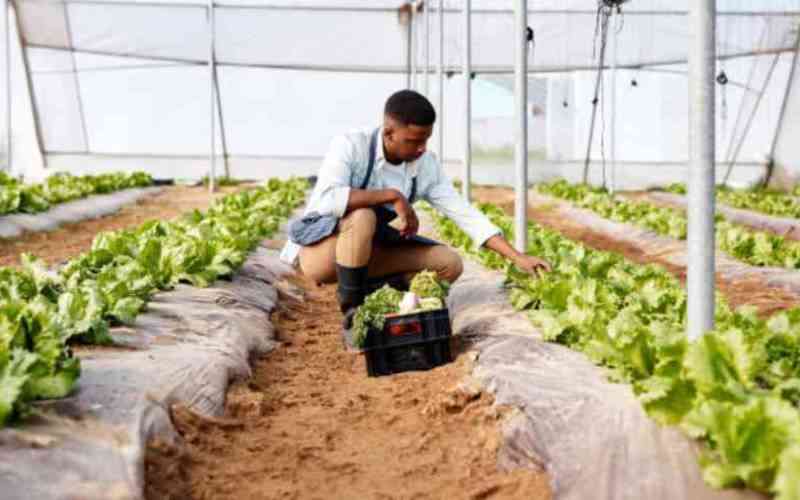
Kenya’s youth employment challenge requires the government to look beyond the number of jobs being created and ask a more pertinent question: are young people accessing productive and sustainable opportunities to create value, build enterprises and participate meaningfully in the economy?
Agriculture could be an important part of that answer. We, at the Kenya Radical Economic Transformation Initiative (KRETI), believe in an approach that seeks to connect youth development with commercial agriculture, technology, finance, mechanisation and markets.
Rather than treating agriculture as subsistence farming, this model proposes to approach it as a new-and-better jobs-creating opportunity for youth with commercial and industrial value chains, linking production to processing, marketing and exports. The timing is significant. Agriculture, forestry and fishing accounted for more than 20 per cent of Kenya’s economy in 2025, according to the 2025 Economic Survey, while the agricultural sector grew by 3.1 per cent. At the same time, food-security challenges and increased food-import dependency point to the importance of strengthening domestic production, enhancing aggregation, reducing post-harvest losses, exploring new food opportunities and developing competitive value chains.
The 2025 Economic Survey reported that 782,300 new jobs were created in 2024, with many of the new and better jobs outside small-scale agriculture occurring in the informal sector. The issue, therefore, is not simply how many jobs are created, but whether those opportunities provide sustainable incomes, productivity and prospects for growth. This should be addressed by positioning young people as participants in productive enterprises rather than merely beneficiaries of short-term training.
This distinction is important. Training without a pathway into productive economic activity can leave young people with certificates but few opportunities to apply their skills. A commercial agricultural model could instead connect training to actual enterprises. The opportunity also extends beyond farming itself. Agro-processing and value addition can create employment for machinery operators, disruptive digital technologists, technicians, transporters, aggregators, processors, accountants, marketers, digital service providers and exporters. Mechanisation and disruptive digital technology can further support farm management, production, weather information, logistics, financial management, traceability and market access. Agriculture can, therefore, become an economic ecosystem rather than simply an occupation.
A county-based approach could also allow different agricultural models to be tested according to local conditions. A pilot could help establish which commodities, technologies, processing arrangements and market linkages are most appropriate in different locations in the counties before wider expansion. The immediate priority should be to move from aspiration to evidence. Before significant resources are committed to this kind of initiative, there is a need for credible baseline data, clear implementation arrangements, environmental and social safeguards, procurement systems, financial controls and transparent monitoring and evaluation. Potential donors and partners also need to be roped in with clear implementation responsibilities.
If properly implemented, this initiative could propel a broader model of economic transformation in which land, youth, technology, finance, processing and markets are treated as interconnected components. It could lead to food security, while processing could generate additional businesses.
-The writers are founders of the Kenya Radical Economic Transformation Initiative (KRETI)
Subscribe to our newsletter and stay updated on the latest developments and special offers!

 Prefer the Standard on Google








 join
join