×

The Standard e-Paper
Smart Minds Choose Us
 The Standard Group Plc is a
multi-media organization with investments in media platforms spanning newspaper
print operations, television, radio broadcasting, digital and online services. The
Standard Group is recognized as a leading multi-media house in Kenya with a key
influence in matters of national and international interest.
The Standard Group Plc is a
multi-media organization with investments in media platforms spanning newspaper
print operations, television, radio broadcasting, digital and online services. The
Standard Group is recognized as a leading multi-media house in Kenya with a key
influence in matters of national and international interest.

Audio By Vocalize
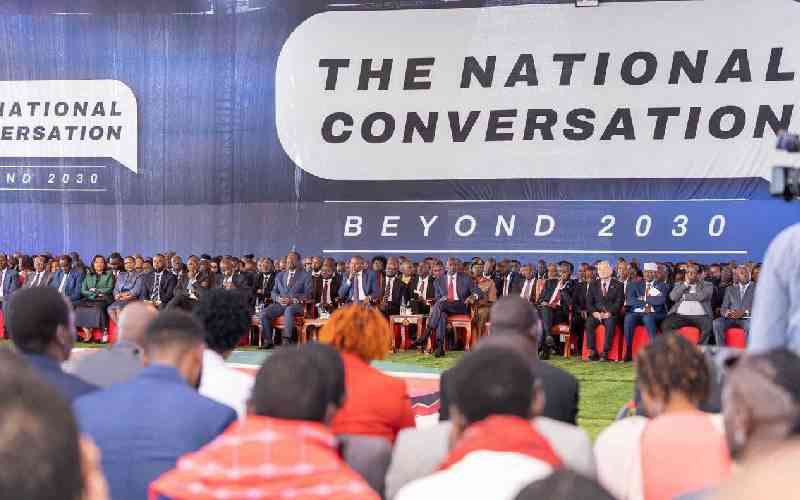
President William Ruto and other leaders during the launch of the national conversation on Vision 2060 at KICC, Nairobi. [PCS]
A child born in Kenya this year will be 37 in 2063. Before then, the country will have held eight general elections and been governed by several administrations. Each will arrive with its own manifesto, coalition, flagship projects and slogans. What will prevent Kenya’s long-term vision from being rewritten, renamed or abandoned every five years?
That question matters as much as the vision’s content. National transformation takes decades, but political incentives operate within electoral cycles.
A president wants achievements to claim before the next election. Ministers and governors favour programmes associated with their administration.
Successors often gain more political credit from launching something new than from completing what others began.
Vision 2030 provides both encouragement and warning. Developed under President Mwai Kibaki, it was adopted by the Grand Coalition after the disputed 2007 election.
Former political rivals accepted it as a shared national direction. Its implementation through successive five-year Medium-Term Plans was intended to connect changing governments to an enduring destination.
Although Vision 2030 formally remained the national blueprint, administration-specific programmes increasingly became the dominant political reference points. A vision can therefore survive as a document while losing authority as the country’s governing compass.
Vision 2063 must distinguish between national ends and political means. Kenya should sustain agreement on the country we want: productive employment, quality education and healthcare, integrity, security, equal opportunity, environmental responsibility and dignity for every citizen.
Political parties should remain free to disagree about taxation, financing, priorities and methods of delivery.
Governments should compete over how best to achieve the national vision, not over whether to abandon it.
Citizens must also be able to see, debate and defend it, because continuity cannot be secured indefinitely by government institutions and political elites alone.
Every Medium-Term Plan, County Integrated Development Plan and annual budget should demonstrate how it advances the long-term vision.
When an administration changes priorities or discontinues a major programme, it should explain publicly why. Independent progress reports should measure changes in citizens’ lives, not merely money spent, projects launched or kilometres constructed.
Continuity does not mean rigidity. Economic shocks, new technologies, climate risks and lessons from implementation will require adjustment.
Stay informed. Subscribe to our newsletter
Periodic reviews should update the route without casually changing the destination.
The real test of Vision 2063 is not whether the present government can launch it enthusiastically. It is whether future governments, including those formed by today’s opposition, will recognise it as their obligation.
Kenya will know the vision is genuinely national when a government that did not draft it still feels bound to deliver it. Presidents and parties will change.
The country’s long-term purpose must not.
The writer is a consultant in policy and governance.
joshua@joshuawathanga.com
Subscribe to our newsletter and stay updated on the latest developments and special offers!


 Prefer the Standard on Google









 join
join