×

The Standard e-Paper
Join Thousands Daily
 The Standard Group Plc is a
multi-media organization with investments in media platforms spanning newspaper
print operations, television, radio broadcasting, digital and online services. The
Standard Group is recognized as a leading multi-media house in Kenya with a key
influence in matters of national and international interest.
The Standard Group Plc is a
multi-media organization with investments in media platforms spanning newspaper
print operations, television, radio broadcasting, digital and online services. The
Standard Group is recognized as a leading multi-media house in Kenya with a key
influence in matters of national and international interest.

Audio By Vocalize
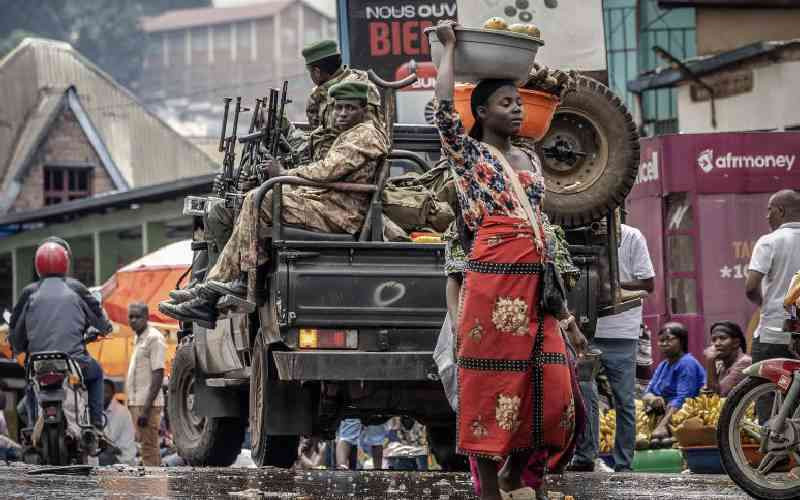
For decades, the conflict in eastern Democratic Republic of the Congo (DRC) has been explained through a narrow lens that emphasises mineral resources, foreign interference, and military confrontation while overlooking people's rights and the political failures that have repeatedly driven communities back to war.
That emphasis has led to botched remedies, with peace remaining elusive for over three decades. If Africa is to find a solution to one of the continent's longest-running conflicts, it must confront its underlying causes. In other words, it must move beyond simplistic narratives and rewrite that story.
The M23 maintains that it resumed armed struggle after the Congolese government failed to implement the March 23, 2009 Peace Agreement. The peace deal contained commitments on the protection of Congolese Tutsi communities, citizenship and identity rights, the return of refugees, and the integration of former combatants.
Whether one accepts the AFC/M23's justification or not, it is difficult to ignore that many of these issues remain unresolved more than fifteen years later. The persistence of these grievances suggests that the conflict is fundamentally political rather than resource-driven, as is often suggested.
The conflict is not about territory either, or simply restoring state control. Since re-emerging, the AFC/M23 has taken control of significant parts of North Kivu and South Kivu provinces. Kinshasa, backed by several international partners, has consistently insisted that the rebels withdraw from the territories they administer. Yet the more fundamental question remains unanswered: would such withdrawals, by themselves, produce security and, eventually, lasting peace for the people of eastern DRC?
The AFC/M23 has consistently argued that its objective is not the conquest of territory, but to compel meaningful political negotiations. On several occasions, the movement has withdrawn from areas under its control, describing these decisions as confidence-building measures intended to create space for dialogue.
However, these withdrawals have often been followed by renewed violence against civilians, particularly Congolese Tutsi and Banyamulenge communities who are frequently accused of sympathising with the rebels.
The events in Walikale in March 2025 illustrate this recurring pattern. Then, the AFC/M23 announced its withdrawal from the strategic mining town only days after capturing it, citing its desire to facilitate peace talks. The town was subsequently reoccupied by the Congolese army (FARDC) and its coalition partners, including Burundian forces, Wazalendo militias, and the FDLR genocidal forces. Alas, reports of widespread looting, reprisals, and attacks against civilians followed almost immediately.
A similar sequence unfolded following the deployment of the East African Community Regional Force in 2022. Territories vacated by the AFC/M23 were reoccupied by government-aligned forces, triggering renewed displacement and violence. In Nturo, Masisi Territory, more than 300 homes belonging to Congolese Tutsi were burned after the rebels withdrew, reinforcing fears among local communities that territorial handovers alone do not guarantee civilian protection.
What happened in Uvira further illustrated the dilemma. Following the withdrawal of AFC/M23 fighters in January 2026, Human Rights Watch documented abuses committed by Wazalendo militias against civilians, including widespread looting targeting Banyamulenge communities. The organisation warned that the mere presence of government forces would not adequately protect civilians if abusive militias continued to operate with impunity or with official tolerance.
These developments challenge the assumption that an AFC/M23 withdrawal automatically translates into security for civilians. Instead, they expose a deeper governance crisis in which vulnerable communities continue to fear persecution regardless of who controls their territory. Military victories may alter the map temporarily, but they have done little to resolve the political questions that continue to fuel instability.
President Félix Tshisekedi has consistently presented himself before regional and international audiences as a champion of peace and dialogue. At the same time, his government has prioritised military offensives while portraying the AFC/M23 primarily as a foreign-backed invasion, even going as far as calling into question the citizenship of its members.
This approach may have generated diplomatic sympathy, but it has also diverted attention from unresolved domestic grievances that lie at the heart of the conflict. Peace processes cannot succeed if dialogue is embraced rhetorically while political engagement is avoided in practice.
This is where Africa has an opportunity to rewrite its own story. Rather than simply endorsing the narrative promoted by Western media and governments, African leaders should seek to understand why the AFC/M23 rebellion exists and persists despite previous peace agreements and repeated military campaigns against it. After all, understanding the movement's stated grievances is not endorsing armed rebellion, but it certainly is a prerequisite to finding a lasting solution to the conflict.
-The writer is a media consultant
Stay informed. Subscribe to our newsletter
Subscribe to our newsletter and stay updated on the latest developments and special offers!

 Prefer the Standard on Google





 join
join