×

The Standard e-Paper
Kenya’s Boldest Voice
 The Standard Group Plc is a
multi-media organization with investments in media platforms spanning newspaper
print operations, television, radio broadcasting, digital and online services. The
Standard Group is recognized as a leading multi-media house in Kenya with a key
influence in matters of national and international interest.
The Standard Group Plc is a
multi-media organization with investments in media platforms spanning newspaper
print operations, television, radio broadcasting, digital and online services. The
Standard Group is recognized as a leading multi-media house in Kenya with a key
influence in matters of national and international interest.

Audio By Vocalize
For decades, Kenya has viewed Somalia principally through the lenses of insecurity, migration and political tension. Those concerns are real. Yet an exclusive focus on them has obscured an equally important reality: Somalia is also one of Kenya's most significant, yet least appreciated, economic partners. Measured by trade, investment, employment, regional integration and private enterprise, the relationship is far more consequential than conventional narratives suggest.
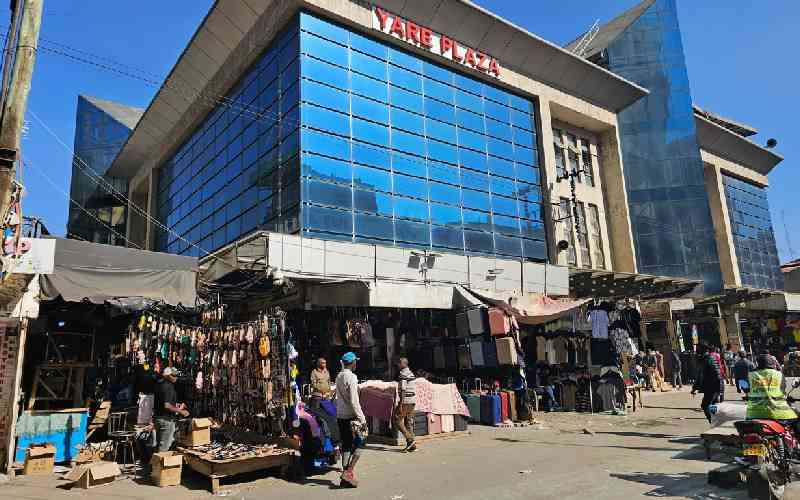
The clearest illustration of Somalia's economic footprint in Kenya is Eastleigh. The district contributes an estimated 30 per cent of Nairobi County's revenue, making it one of the city's most vibrant commercial centres, with annual trade worth hundreds of billions of shillings. Somali entrepreneurship and diaspora capital have transformed what was once a modest residential estate into a Town within a City and critical trading gateway linking Kenya with the region, the Gulf, China, and Turkey, creating livelihoods not only for Somali-owned businesses but also for Kenyan architects, engineers, contractors, transporters, accountants, warehouse operators, retailers, security firms, clearing agents, financial institutions, and logistics providers. The same pattern is evident in agriculture. According to the Ministry of Agriculture and Livestock Development, Somalia remains Kenya's largest export market for miraa, importing 13–17 tonnes daily. Since trade resumed in 2022, Kenya has exported more than 17 million kilograms, generating over Sh12 billion in foreign exchange. The Miraa Council estimates that the industry directly supports approximately 110,000 farmers and indirectly sustains more than 1.4 million Kenyan livelihoods. More broadly, KNBS data shows Kenya's exports to Somalia reached Sh16.77 billion during the first nine months of 2023, a 51.4 per cent increase over the same period in 2022, making Somalia Kenya's sixth-largest export destination in Africa. Somalia's accession to the East African Community (EAC) provides further opportunities to deepen regional integration, with intra-EAC trade accounting for roughly 15–20 per cent of member states' total trade.
Compared with Kenya's other East African partners, Somalia's relationship is uniquely broad-based. Although Uganda remains Kenya's largest export market within the EAC and Tanzania surpasses Somalia in total merchandise trade, no other neighbour combines such diverse economic linkages. Somalia supports one of Nairobi's largest commercial districts through diaspora investment, sustains an export value chain supporting more than 1.4 million Kenyan livelihoods, strengthens Kenya's humanitarian and diplomatic services economy, sends thousands of fee-paying students to Kenyan institutions, contributes billions of shillings through medical tourism, and reinforces Nairobi's position as the principal aviation gateway to the Horn of Africa. Nairobi also serves as the region's diplomatic and humanitarian hub, hosting more than 30 UN agencies, donor missions, and international NGOs coordinating Somalia-related operations. According to KEPSA, this ecosystem generates substantial revenue for hotels, conference venues, airlines, office buildings, banks, ICT firms, consulting companies, law firms, accountants, caterers, and numerous SMEs, while Kenya's financial sector benefits from trade finance, cross-border payments, foreign exchange transactions, and diaspora investment linked to Somalia's commercial networks. The aviation, education, and healthcare sectors also benefit significantly, with Nairobi serving as the primary transit hub for diplomats, investors, humanitarian workers, journalists, and the Somali diaspora, while thousands of Somali students support Kenyan universities, private accommodation, and local businesses, and Somali patients seeking medical care generate substantial demand for private healthcare, hospitality, transport, and retail services.
Taken together, these contributions extend well beyond what official statistics can capture. While available data measure formal indicators such as exports, permits, tax revenues, and recorded employment, they do not fully reflect the wider economic effects of diaspora investment, informal trade, financial flows, property development, consumer spending, and the extensive network of businesses embedded in the Kenya–Somalia economic relationship. The figures presented here should therefore be regarded as a conservative estimate—a baseline rather than the full extent of Somalia's contribution to Kenya's economy.
Encouragingly, recent policy signals suggest that parts of government are beginning to recognize these opportunities. The President has announced plans to upgrade airport infrastructure to facilitate travel and trade, including easing restrictions on gifts carried by visitors. At the same time, the government continues to encourage overseas employment for Kenyans—a vision already being realised in Somalia, where tens of thousands of Kenyan professionals are building careers and sending remittances home, arguably more than those working in Uganda and Tanzania combined. These initiatives align with the economic realities of the bilateral relationship but remain insufficiently integrated into broader national strategy.
None of this diminishes legitimate security concerns. A secure border remains essential. But security and prosperity reinforce one another rather than compete. Modern geopolitics is increasingly driven by markets, investment, supply chains and strategic economic partnerships. If Washington can identify strategic and economic opportunities in the Democratic Republic of Congo despite persistent instability, and continue to calculate its interests even amid tensions with Iran, Kenya should be equally capable of looking at Somalia and seeing more than risk. Effective policy therefore requires managing genuine security risks while maximizing economic opportunity. To borrow the famous maxim from Bill Clinton's 1992 presidential campaign, 'it's the economy, stupid.' Coined by strategist James Carville as an internal campaign reminder, the phrase has since become shorthand for a broader truth: governments ignore economic fundamentals at their peril. Kenya should heed the same lesson. Security considerations will always matter, but they should not eclipse the economic evidence. When judged by trade, investment, employment and regional integration, Somalia is not merely a security challenge to be managed but a strategic economic partner to be cultivated.
Yet this partnership continues to be undermined by a persistent disconnect between policy and practice. Kenya spends billions marketing itself as a destination for investors, tourists, students, and international organisations, only for many legitimate investors, traders, and visitors to encounter harassment, arbitrary enforcement, and demands for bribes from lower-level officials. Such experiences erode investor confidence, weaken Kenya's competitiveness, and undermine the very objectives those promotional campaigns seek to achieve. This is more than a corruption problem; it reflects a failure to recognize and protect one of Kenya's most valuable economic relationships.
Public administration scholars have long observed that policy is ultimately experienced not through legislation but through the conduct of 'street-level bureaucrats'—the frontline officials who exercise discretion in implementing government policy. Their decisions determine whether a country is perceived as welcoming or hostile to investment. When these officials treat legitimate traders, investors and visitors as opportunities for rent extraction rather than partners in economic growth, they inadvertently encourage capital flight. Investors rarely abandon a market because of a single encounter; they leave because repeated interactions create the perception that the costs and uncertainties of doing business outweigh the returns. At a time when Kenya competes aggressively for regional investment, the behavior of frontline officials can either reinforce or undermine the country's economic strategy.
A striking irony lies at the heart of Kenya's approach. The government invests roughly Sh17 billion annually in promoting tourism and commits significant resources to attracting foreign investors, international conferences, students, and multinational organizations. Policymakers rightly recognize the economic dividends these sectors generate billions of shillings promoting tourism, courting foreign investors, attracting international conferences and positioning Nairobi as a regional hub. Yet for decades Somalis from Somalia and the global diaspora have generated many of those same economic benefits through trade, investment, education and commerce—often despite suspicion rather than because of official encouragement. This paradox borders on the absurd. The state spends billions promoting Kenya as an investment destination while allowing everyday administrative practices to undermine that objective, effectively putting the cart before the horse and shooting itself in the foot.
The policy choice is therefore clear. Kenya can continue allowing outdated assumptions to define one of its most important regional relationships, or it can adopt an evidence-based strategy that treats Somalia as both a security partner and an economic partner. The Somalia dividend is already visible in Eastleigh's skyline, on the farms of Meru, in Kenya's universities and hospitals, and across Nairobi's diplomatic and commercial economy. The greatest cost of stereotypes is not merely that they misread a neighbor; it is that they misprice opportunity. If Kenya seeks sustained growth, jobs and regional influence, sound economics should sit at the center of its Somalia policy.
- The writer is a Governance and Communication Expert
Subscribe to our newsletter and stay updated on the latest developments and special offers!


 Prefer the Standard on Google









 join
join