×

The Standard e-Paper
Kenya’s Boldest Voice
 The Standard Group Plc is a
multi-media organization with investments in media platforms spanning newspaper
print operations, television, radio broadcasting, digital and online services. The
Standard Group is recognized as a leading multi-media house in Kenya with a key
influence in matters of national and international interest.
The Standard Group Plc is a
multi-media organization with investments in media platforms spanning newspaper
print operations, television, radio broadcasting, digital and online services. The
Standard Group is recognized as a leading multi-media house in Kenya with a key
influence in matters of national and international interest.

Audio By Vocalize
There is an old story about a king who wanted to appear before his people in the finest garment ever made. A tailor promised him cloth of rare quality, the kind only the wise could recognise. The king saw nothing. His courtiers also saw nothing, but no one wanted to be first to admit the obvious. So they praised the garment. The people looked on, unsure whether to trust their own eyes. Then one plain voice said what others had been avoiding: The king was naked.
The story has lasted because it says something true about power. What is obvious in the street can become difficult to say in the palace. A leader may have advisers, strategists and loyalists, yet still lack the one thing leadership needs most: Honest speech.
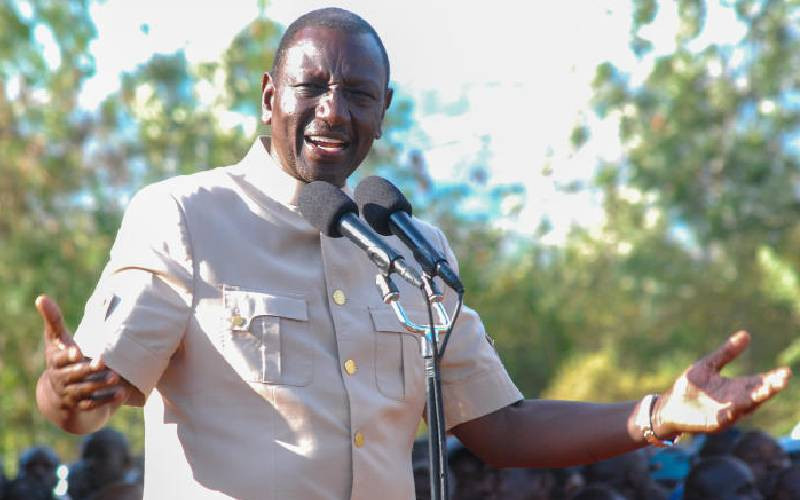
Kenya has had a week that brings that old story close. The exchange between President William Ruto and The Standard was not just another disagreement. It became more telling when it moved to X where the President accused the newspaper of “extortionist propaganda” and dared it to try “eight days a week.”
Those words carried more than irritation. They revealed the pressure that comes when power is questioned in a season of impatience. A Head of State is best served by calm facts, not public annoyance. When those in authority appear wounded by scrutiny, they risk confirming the very questions they are trying to resist. Mr President, answer the facts, not the newspaper. The office you hold is too weighty to be defended in the tone of a street quarrel.
Leaders can be misrepresented. Headlines can be unfair. Reports can omit context. Journalists can get things wrong. But in a democracy, the answer to contested reporting is not to make scrutiny look illegitimate. The remedy is evidence, correction where necessary, and a willingness to let the public examine both the claim and the response.
That matters because many Kenyans are tired. The cost of living remains a daily burden. Young people are restless. Promises made in public are being measured against conditions in homes, markets and workplaces. Institutions are under strain. Public trust is thin. In such a climate, leaders must not treat hard questions as betrayal.
The media has a duty to be fair and accurate. It must report with care and resist the temptation to turn public anger into easy drama. Yet newspapers also give public form to questions citizens are asking in matatus, churches, markets, offices and homes. To dismiss the questioner is different from answering the question. When newspapers ask uncomfortable questions, they are not always attacking the State.
The Bible gives an older example in 1 Kings 22. King Ahab wanted to go to battle. Around him were prophets who gave the answer he preferred. Their message was confident: Go, and victory will come. It was counsel a powerful man enjoys when he has already decided what he wants to do.
Micaiah was different. He was summoned reluctantly because he would not simply echo the royal mood. Ahab’s complaint was telling: “I hate him, for he never prophesies good concerning me, but evil.” The king did not first ask whether Micaiah was truthful. He disliked him because his message was inconvenient.
The end of the story is sobering. Ahab went to battle anyway. He even disguised himself, perhaps hoping to escape the danger he had been warned about. But a random arrow found him, and he died. The flattering prophets had sounded loyal. Micaiah had sounded troublesome. In the end, the troublesome voice was the truthful one.
That story is not only about kings. It speaks to every place where influence gathers: Government, church, business, media, family and civil society. People quickly learn what a leader enjoys hearing. Some speak for survival. Others speak for opportunity. Others confuse loyalty with agreement.
But a leader is poorly served by constant affirmation. Praise has its place when it is honest. It becomes dangerous when it shields a leader from reality. Accountability requires that one listen even when the voice is uncomfortable and respond without reducing every critic to an enemy.
Kenya needs this maturity in public life. Leaders should be able to answer scrutiny without anger. Media houses should ask tough questions with fairness. Citizens should speak with courage and restraint. Institutions should withstand pressure from the authorities.
The old story of the naked king ends with exposure, but its deeper warning comes earlier. Many people saw the truth before it was spoken. Too many chose safety over honesty.
That is the danger Kenya must avoid. We do not need leaders who fear the mirror. We need leaders humble enough to look into it. Sometimes the most loyal voice is not the one admiring the garment, but the one willing to say, respectfully and clearly, that something is missing.
Stay informed. Subscribe to our newsletter
Subscribe to our newsletter and stay updated on the latest developments and special offers!


 Prefer the Standard on Google








 join
join