×

The Standard e-Paper
Stay Informed, Even Offline
 The Standard Group Plc is a
multi-media organization with investments in media platforms spanning newspaper
print operations, television, radio broadcasting, digital and online services. The
Standard Group is recognized as a leading multi-media house in Kenya with a key
influence in matters of national and international interest.
The Standard Group Plc is a
multi-media organization with investments in media platforms spanning newspaper
print operations, television, radio broadcasting, digital and online services. The
Standard Group is recognized as a leading multi-media house in Kenya with a key
influence in matters of national and international interest.

Audio By Vocalize

In recent months, Kenya has witnessed a renewed contest over fiscal governance, public participation, and the limits of executive authority. At the centre lies an unresolved tension of how far a government may go in raising revenue in a constitutional democracy where sovereignty rests with the people.
This debate, sharpened by recent finance measures and public resistance, reflects deeper structural questions about law, legitimacy, and accountability.
The Constitution was designed to restrain arbitrary power and embed public participation in governance. It introduced a rights-based framework and rebalanced authority through devolution.
Fiscal decisions, in particular, were placed under both parliamentary oversight and public scrutiny. The government practice has often diverged from design. Recent fiscal policies suggest a pattern where urgency in revenue collection overrides the slower, more deliberate processes of democratic consultation.
Scholars have long warned that fiscal governance in Kenya carries constitutional risks when public consent is thin. Prof Thuo Gathii has often described this as “debt-induced constitutional crisis” where external borrowing and internal revenue pressures narrow policy choices and weaken participatory safeguards.
The result is a gradual erosion of constitutional discipline. When revenue measures are perceived as imposed rather than negotiated with the owners of public power, resistance becomes automatically inevitable.
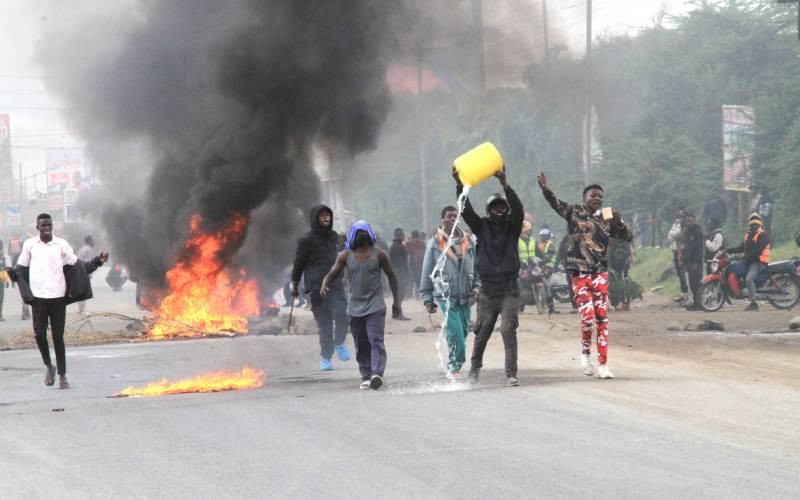
This friction is not new, but it has intensified, looking at the wave of protests that pushed down the 2024 Finance Bill. The fiscal strategy of Kenya increasingly relies on taxation in a context of high public debt and constrained growth.
The alignment of Kenya’s tax regime with global standards has improved formal compliance but has always failed to resolve domestic legitimacy concerns. Citizens are less concerned with technical efficiency. All they want is fairness, transparency, and inclusion in decision-making.
Public participation in fiscal matters should not take the box-ticking model it often takes in many bills generated by the National Assembly. Democratic participation in Kenya remains vulnerable to elite capture, where policy outcomes reflect political bargaining more than citizen input. This weakens trust in institutions and fuels the perception that law serves power even where it serves public interest.
The courts have increasingly become arbitrators of these disputes. Judicial interventions in recent fiscal and administrative decisions demonstrate some measure of resilience of constitutional checks.
However, reliance solely on courts is itself a sign of institutional failure. Ideally, conflicts over taxation and governance should be resolved within political processes that are transparent and inclusive. When the executive drops the ball, courts are repeatedly called upon to correct the excesses.
Devolution adds another layer to this complexity. County governments were meant to bring decision-making closer to the people, including on resource allocation. In the context of land governance, devolution has created new arenas of contestation as opposed to resolving old ones. Fiscal pressures at the national level often cascade downward, constraining counties and complicating service delivery. This undermines one of the Constitution’s core promises, that of equitable development.
At the heart of the current moment is a question of constitutional culture. Laws alone cannot sustain democracy; they require a shared commitment to restraint, dialogue, and accountability.
Kenya’s legal framework is robust on paper. The challenge lies in its interpretation and application under political and economic stress. Examining constitutional structure in Africa, frequent tensions arise when governments test the boundaries of constitutional limits in pursuit of policy goals.
There is also a communication gap. Fiscal policy is often presented in technical terms that obscure its real impact on citizens. This limits meaningful participation. Effective governance requires not only openness but also clarity in dissemination. Citizens must understand not just what decisions are made, but why they are necessary and how burdens are distributed. Without this, even well-intentioned policies struggle to gain acceptance.
Stay informed. Subscribe to our newsletter
Comparative perspectives reinforce this point. Our constitutional framework, particularly in environmental governance, integrates public participation as a substantive right rather than ‘a must-do’ step. This principle applies equally to fiscal decisions. Participation must influence outcomes. As of now, it merely accompanies them.
The way forward requires recalibration. First, fiscal policy must be anchored in genuine consultation. This means engaging stakeholders early, incorporating feedback meaningfully, and demonstrating how public input shapes final decisions. Second, Parliament must assert its oversight role more robustly. Legislative scrutiny should not be reduced to partisan alignment.
Third, transparency must extend beyond formal disclosures. Budget processes should be accessible and intelligible. This includes simplifying information and using multiple channels to reach diverse audiences. Fourth, the Judiciary should remain vigilant and ready to blow the whistle at any point in the game. Strengthening political accountability can reduce the need for judicial correction.
Finally, there must be a renewed commitment to constitutionalism as a guiding principle, rather than an obstacle to surmount. Economic pressures are real, but they do not justify shortcuts that weaken democratic legitimacy. On the contrary, legitimacy is a resource in itself. Policies grounded in public trust are more sustainable and less costly to enforce.
The tension between revenue needs and public consent cannot be resolved through coercion and expediency. It requires patience, dialogue, and fidelity to the principles that define the republic.
In the end, the Constitution is not self-executing. It lives through practice. Each fiscal decision, each act of governance, either strengthens or weakens it. The current debate is therefore more than a policy dispute. It is a test of whether Kenya’s democratic promise can withstand the pressures of the present moment.

Subscribe to our newsletter and stay updated on the latest developments and special offers!









 join
join