×

The Standard e-Paper
Home To Bold Columnists
 The Standard Group Plc is a
multi-media organization with investments in media platforms spanning newspaper
print operations, television, radio broadcasting, digital and online services. The
Standard Group is recognized as a leading multi-media house in Kenya with a key
influence in matters of national and international interest.
The Standard Group Plc is a
multi-media organization with investments in media platforms spanning newspaper
print operations, television, radio broadcasting, digital and online services. The
Standard Group is recognized as a leading multi-media house in Kenya with a key
influence in matters of national and international interest.

Audio By Vocalize
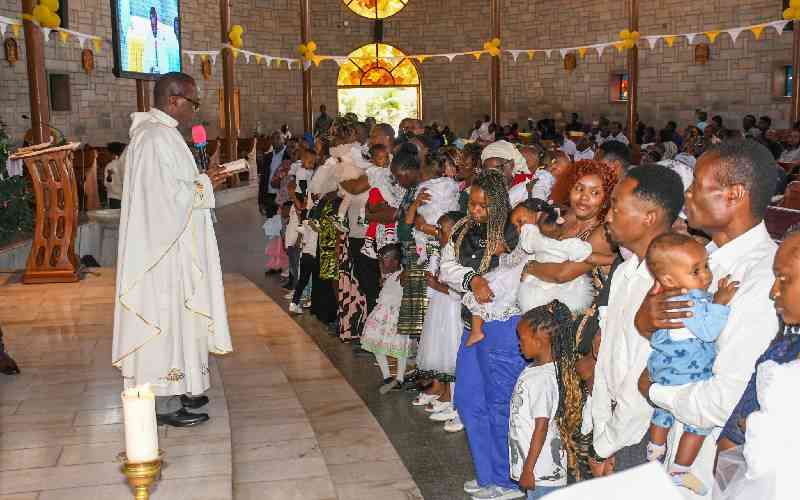
Father George Munyaka during Christmas Day celebrations at Christ the King Cathedral in Nakuru City on December 25, 2025. A total of 23 children were baptized. [Kipsang Joseph, Standard]
As 2025 draws to a close, it will be dishonest to write it off entirely as a bad year. Despite harsh economic realities, failing systems, and the loss of Baba, many people achieved far more than they dared to dream of at the beginning of the year.
Overall, our conversations became bolder. Citizens engaged more actively in political discourse with greater confidence and objectivity. Technology advanced to unimaginable heights. Careers progressed. We embraced financial literacy, became more conscious of our environment, and in many measurable ways, we grew, even surpassing our goals.
Yet, 2025 is also the year we lost so much on the humanity front.
In August, a young Ukrainian woman, Iryna Zarutska, was fatally stabbed in an unprovoked attack while riding a train in the United States. The image of her curled up in her seat, terrified as life ebbed out of her, will haunt us for a long time. That single incident symbolised just how far we have fallen as a society.
Closer home, we watched in disbelief as a young university student was arraigned in court for killing a fellow student for rejecting his advances. This case was replicated across the country. We woke up almost every day to reports of women and girls abused and then killed, of petty disputes among friends and partners escalating into death. And then there is the toxicity that now defines our digital spaces. The cruelty, the bullying, even of the dead, has been vicious. If there was a moral low, we reached it and went lower.
The truth is, we did not wake up one morning and become these people. We got here gradually, by normalising contempt for others and for humanity. We learned to disregard the truth as long as it served our interests.
We arrived here by weaponising outrage, applying it selectively, unleashing it when convenient and abandoning it when it challenged us. By advancing misinformation, shamelessly sharing half-truths so long as they supported our preferred narratives.
In pursuit of our goals, and neatly checked resolution boxes, we stopped at nothing. We traded integrity for results and reduced people to objects, useful when they served us, disposable when they didn’t. We normalised disregard for the laws of land and of nature, comforted by the fact that for every bad decision, there was a meme to justify it. We taught ourselves to live by the fallacy ‘the end justifies the means’.
But it does not have to be this way.
Last week, we buried a friend’s mother. Sitting through the proceedings, a clear pattern emerged. Speaker after speaker stood to share how the late had impacted their lives. Former students spoke of how she was more than a teacher. Colleagues shared how she made them see themselves beyond the classroom. Neighbours recalled her presence whenever they needed help. Relatives shared moments of the warmth she spread and how welcome she made them feel.
Not once did anyone speak of the properties she acquired, or did not acquire, her professional accolades, or even how carefully she guarded boundaries. Everything shared centered on how she made people feel.
We are here for a short while. A few years after we are gone, maybe only our children will remember us. What will remain is the imprint we leave on the lives we touch each day. You Only Live Once (YOLO) has often been used to excuse recklessness and poor behaviour. In 2026, maybe YOLO can instead remind us that this one life is our only chance to leave behind impacts that truly matter.
As we look to 2026, I hope we consider temporarily ditching the vision boards and Excel sheets that track our superficial success and focus instead on the far more demanding but rewarding work of becoming better humans. If we must have resolutions, let them be simpler. Better still, let there be just one: To be a good human each day.
That means treating others with respect and dignity, working honestly and diligently and respecting time, process and the privilege of simply being alive.
Stay informed. Subscribe to our newsletter
Here is to a great and more humane 2026.
The writer is a development communication consultant
Subscribe to our newsletter and stay updated on the latest developments and special offers!








 join
join