×

The Standard e-Paper
Kenya’s Boldest Voice
 The Standard Group Plc is a
multi-media organization with investments in media platforms spanning newspaper
print operations, television, radio broadcasting, digital and online services. The
Standard Group is recognized as a leading multi-media house in Kenya with a key
influence in matters of national and international interest.
The Standard Group Plc is a
multi-media organization with investments in media platforms spanning newspaper
print operations, television, radio broadcasting, digital and online services. The
Standard Group is recognized as a leading multi-media house in Kenya with a key
influence in matters of national and international interest.

Audio By Vocalize
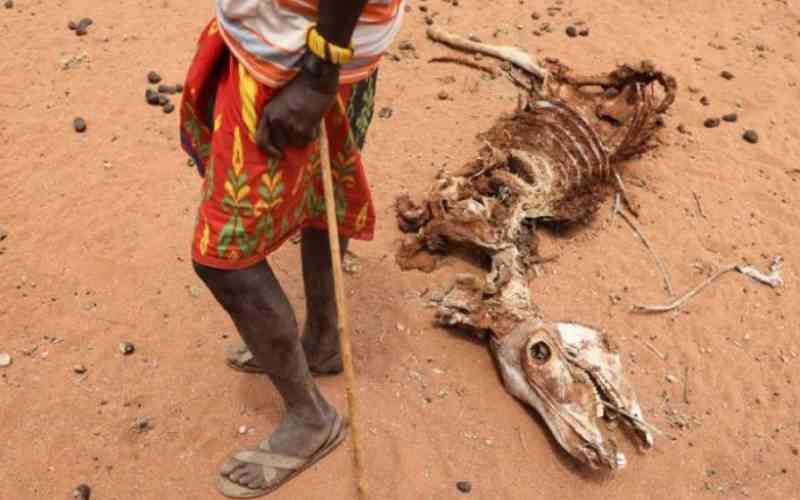
More than two million people in arid and semi-arid counties are facing crisis-level hunger as the failed short rains push northern Kenya deeper into drought.
This is even as lawmakers and aid workers warn of worsening conditions.
At a press conference in Parliament, leaders from the Northern Frontier Counties said the October to December rains performed far below normal due to La Nina and a negative Indian Ocean Dipole, raising temperatures and suppressing rainfall.
Eldas MP Adan Keynan said Mandera, Wajir, Turkana and Tana River are already experiencing acute shortages of food, water and pasture, noting households have depleted food reserves and now rely on markets where prices have surged.
"Current food security assessments show at least two point one million people in ASAL counties are facing crisis-level hunger," said Keynan, adding that dwindling water sources and pasture have weakened livestock, with disease spreading among herds and reducing value.
Keynan said the strain on grazing areas has heightened conflict risks within pastoral communities, with women and children facing higher levels of malnutrition and displacement.
The MPs urged the Government to declare the drought a national disaster and expand emergency food aid, cash transfers and livestock support, calling for borehole drilling, water trucking and repair of community water points as many riverbeds have dried up.
Mandera West MP Yussuf Adan criticised weak preparedness, saying, "This situation demands urgent action. If nothing is done, people will die. We are staring at mass casualties"
Wajir North MP Saney Ibrahim Abdi added, "The Government's first duty is to protect lives. I do not understand why we should appeal for emergency measures when the trends repeat themselves"
Humanitarian workers have echoed the alarm, warning that the crisis has shifted from an environmental problem to a humanitarian emergency.
Dr Hassan Wardere Abdikarin of the American Refugee Committee said water access, food assistance, animal feed and climate-resilient solutions must be prioritised, noting, "For communities whose lives depend on agriculture and livestock, this is a humanitarian crisis"
He called on Kenyans to rally behind affected families, adding, "Kenya has overcome great challenges before, and with unity, compassion and swift action, we will overcome this too".

Subscribe to our newsletter and stay updated on the latest developments and special offers!








 join
join