×

The Standard e-Paper
Stay Informed, Even Offline
 The Standard Group Plc is a
multi-media organization with investments in media platforms spanning newspaper
print operations, television, radio broadcasting, digital and online services. The
Standard Group is recognized as a leading multi-media house in Kenya with a key
influence in matters of national and international interest.
The Standard Group Plc is a
multi-media organization with investments in media platforms spanning newspaper
print operations, television, radio broadcasting, digital and online services. The
Standard Group is recognized as a leading multi-media house in Kenya with a key
influence in matters of national and international interest.

Audio By Vocalize
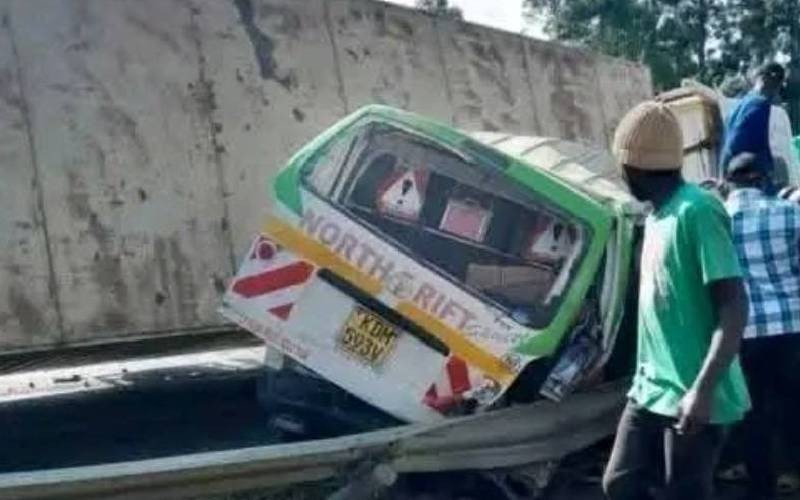
Wreckage of a 14- seater matatu and a truck that were involved in an accident at Chimoi market on June 27, 2026. [File, Standard]
Taxpayers are losing an estimated Sh1.5 trillion of the country's Gross Domestic Product (GDP) every year to road carnage, representing eight per cent of the income.
This figure, the National Transport and Safety Authority (NTSA) has warned, is likely to increase to 11 per cent if drastic measures are not taken to reduce road accidents across the country.
NTSA Director General Nashon Kondiwa told a parliamentary committee at the authority's headquarters in Nairobi that inadequate funding, weak enforcement of traffic laws and poor road-user behaviour were undermining efforts to make Kenyan roads safer.
He said the country needed to urgently invest in road safety, warning that the economic cost of road crashes could continue rising unless the Government addressed the underlying causes.
“The real people are pedestrians, cyclists and motorcyclists,” Mr Kondiwa told the committee, highlighting the vulnerability of road users who are increasingly bearing the brunt of fatal crashes.
NTSA data presented to the committee showed that 46 per cent of all road fatalities recorded between January 2021 and June 2023 involved vulnerable road users.
Kondiwa said the crisis was being worsened by weak enforcement of speed limits, helmet and seat-belt requirements, fragmented road safety projects and poor emergency response systems.
At the same time, it emerged that almost none of the roads in high-risk areas of Nairobi, Nakuru, Machakos, Makueni, Kericho, Kisumu, Kakamega and Kiambu, were safe for pedestrians.
"Only 20 per cent of road sections in these areas are 3-star, while five per cent of the 3-star are safe for vulnerable road users," the committee heard.
NTSA Director-General Nashon Kondiwa when he appeared before the National Assembly Transport and Infrastructure Committee in Nairobi on August 11, 2026. [Boniface Okendo, Standard]
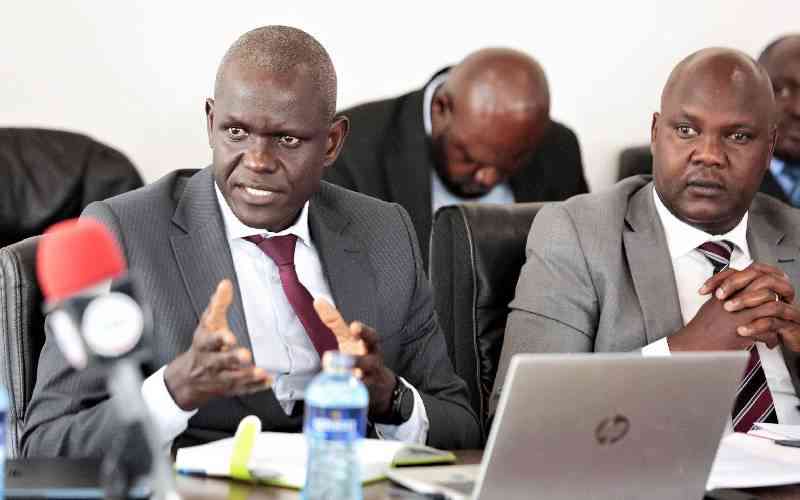
Kondiwa admitted that NTSA's operations were severely constrained by its limited presence across the country. Of Kenya's 47 counties, Kondiwa revealed that the authority has offices in only 17, forcing citizens in some areas to travel long distances to access basic services.
“It is not fair that a Kenyan in Lodwar has to come to Kitale, or someone in Mandera has to come to Garissa. That is a whole day,” he said.
According to data by the Authority, about 5,000 Kenyans have lost their lives on the roads annually in the last few years, with the agency indicating that the number of deaths has increased by 52 per cent between 2027 and 2024.
Stay informed. Subscribe to our newsletter
“Ninety per cent of road crashes are linked to human behaviour,” said Kondiwa, underscoring the need for stronger enforcement alongside public education.
The MPs also expressed concerns over what they termed as poor road designs which they argued is a key contributor to road carnage in the country.
"Some of our roads are designed in a way that clearly shows we are not bothered about human life. You will see a bump erected on a road overnight, no sign or signage, nothing to show that there is a bump," observed the committee chair and Ndia MP. George Kariuki.
The cause of road accidents by boda boda operators was also a matter of concern to the legislators, promising to partner with NTSA in providing safety gears to operators across the country.
The recent introduction of speed limits in major highways also irked the lawmakers, even as they urged for review of the policy.
"Why do we want to reduce the speed limit to 50 and congest the road unnecessarily? " asked MP Kariuki. "That's something that needs to be urgently addressed."
The authority now wants Parliament to approve its retention of Sh3 billion more from the current Sh2.5 billion in own-source revenue in the 2026/27 financial year, saying the additional resources would enable it to expand enforcement, improve services and strengthen road safety programmes.
According to Kondiwa, NTSA currently collects about Sh9 billion but retains only Sh2.5 billion, with the lawmakers expressing the need to allocate more resources to execute its mandate.
The authority is seeking funding to expand its offices, establish compliance enforcement units, deploy mobile patrols, automate enforcement and strengthen crash-data systems.
The MPs who also assessed the NTSA inspection centre along Likoni Road agreed with the proposals by the agency, promising to lobby for increasing of more funds to implement measures that would ensure reduction of loss of lives on the roads
Kondiwa said NTSA was also working on a new speed-management framework and plans to introduce a mobile driving licence to reduce the amount of time motorists spend seeking services at its offices.
The authority is further considering automated enforcement, with plans to increase the number of speed and traffic cameras. Kondiwa said NTSA had initially planned for about 200 cameras but currently had only 10.
Kondiwa said NTSA was also exploring ways of helping informal public transport operators transition into a more organised system, including through credit guarantee schemes that would enable operators to access financing and modernise their fleets.
The committee said the figures presented by NTSA were worrying and justified the authority's request for additional funding.
“The figures are quite worrying and justify why we need to act. Sh3 billion is a fair ask when compared with the money we are losing and the ripple effect on the economy,” the chair said.
The committee will retreat to prepare its report to Parliament and make recommendations to the Budget Committee and the National Treasury on NTSA's funding needs.
Subscribe to our newsletter and stay updated on the latest developments and special offers!

 Prefer the Standard on Google




 join
join