×

The Standard e-Paper
Home To Bold Columnists
 The Standard Group Plc is a
multi-media organization with investments in media platforms spanning newspaper
print operations, television, radio broadcasting, digital and online services. The
Standard Group is recognized as a leading multi-media house in Kenya with a key
influence in matters of national and international interest.
The Standard Group Plc is a
multi-media organization with investments in media platforms spanning newspaper
print operations, television, radio broadcasting, digital and online services. The
Standard Group is recognized as a leading multi-media house in Kenya with a key
influence in matters of national and international interest.

Audio By Vocalize
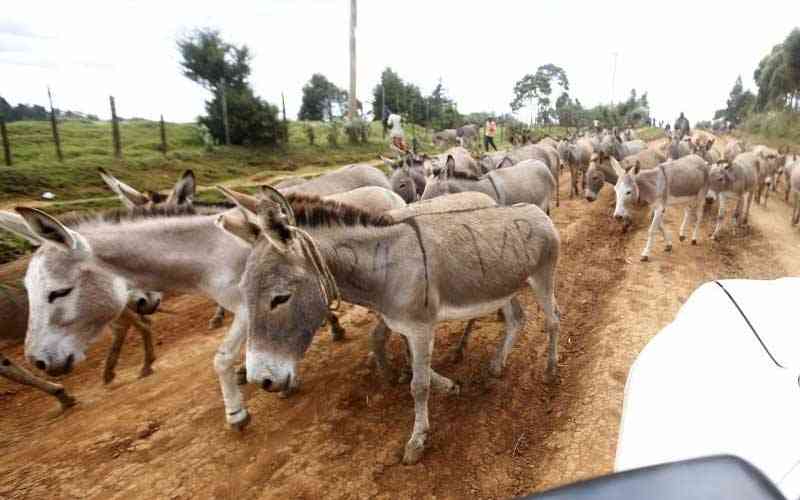
Criminal networks in Kenya no longer steal donkeys alive. They kill them on the spot and take only the skin, a new report shows.
The shift marks a departure from years of livestock theft in which stolen animals were kept for labour or resold. Owners now increasingly find only carcasses, according to the National Crime Research Centre (NCRC), as thieves prioritise the hide over the live animal.
The NCRC blames the change on surging international demand for donkey skin gelatin, known as ejiao, used in traditional Chinese medicine.
The skin has become the most valuable part of the donkey, overtaking its traditional role as a working animal, the report notes.
Kenya's donkey population fell from 1.8 million in 2009 to 1.1 million in 2019, according to the study, which the NCRC describes as the first comprehensive national assessment of the trade.
Researchers warn the species faces an "extinction stage," since its biological recovery cycle of three to four years cannot keep pace with current theft and slaughter rates.
The report draws on 205 respondents through key informant interviews and eight focus group discussions across nine counties, including Machakos, Kajiado, Mombasa, Embu, Kitui, Nakuru, Narok, Turkana and Kiambu.
Theft and illegal slaughter were most acutely reported in Mwingi East, Mwingi Central, Kiambu, Machakos and Kajiado, with veterinary and welfare officers in those counties recording more than 200 cases.
Investigators found that criminal syndicates operate with military precision. Spotters pose as water vendors or charcoal sellers during the day to identify vulnerable homesteads and monitor security patrols.
Raids typically happen between midnight and 4 a.m., often timed with heavy rain to mask noise and wash away blood trails. Guard dogs are poisoned in advance to prevent owners from being alerted.
The report also details a demand-driven model in which meat suppliers take orders from restaurants and urban markets before recruiting groups to steal, slaughter and transport meat by motorcycle to buyers in Nairobi's Burma and Ndunyu markets.
The NCRC blames weak legislation for allowing the trade to persist. The Meat Control Act focuses on cattle, goats and sheep and carries no specific penalties for donkey slaughter, while no law governs the possession or transport of donkey hides without meat inspection certificates, the report notes. Police also lack holding facilities for recovered donkeys, discouraging officers from responding to theft reports, according to the findings.
Beyond the animals themselves, the trade has reshaped rural life. Women and children now spend hours fetching water once carried by donkeys, forcing some children out of school, the report finds. Farmers describe disrupted planting cycles and lost harvests when they cannot transport produce to market in time.
The NCRC recommends that the Ministry of Agriculture and Livestock Development enact a comprehensive donkey protection law and declare donkeys a threatened species.
It also calls on the National Police Service to treat donkey theft as organised crime and record it alongside cattle rustling statistics, and urges the Kenya Revenue Authority to remove donkeys and their products from Kenya's export list to close loopholes exploited through formal trade channels.
Stay informed. Subscribe to our newsletter
The report also proposes a national donkey identification and traceability system along with rescue centres and veterinary support for recovered animals.
Subscribe to our newsletter and stay updated on the latest developments and special offers!


 Prefer the Standard on Google