×

The Standard e-Paper
Kenya’s Boldest Voice
 The Standard Group Plc is a
multi-media organization with investments in media platforms spanning newspaper
print operations, television, radio broadcasting, digital and online services. The
Standard Group is recognized as a leading multi-media house in Kenya with a key
influence in matters of national and international interest.
The Standard Group Plc is a
multi-media organization with investments in media platforms spanning newspaper
print operations, television, radio broadcasting, digital and online services. The
Standard Group is recognized as a leading multi-media house in Kenya with a key
influence in matters of national and international interest.

Audio By Vocalize

Kenya National Highways Authority (KeNHA) officials and the Nairobi Metropolitan Area Transport Authority (NaMATA) conduct an inspection of the Bus Rapid Transit (BRT) Line 2 project on June 26, 2026. [Courtesy]
Motorists will pay Sh8.50 per kilometre on the Gilgil-Nakuru-Mau Summit highway under a 30-year public-private partnership signed by the Kenya National Highways Authority (KeNHA).
The agreement between KeNHA and Shandong Hi-Speed Road & Bridge International Engineering Company Limited (SDRBI) allows the Chinese firm to finance, build, operate and maintain the 94-kilometre highway before transferring it to the government at the end of the concession period.
The project will operate under a design, build, finance, operate, maintain and transfer model, with the private investor providing most of the financing.
"The project will operate as a toll road. The applicable toll tariff is Sh8.50 per kilometre, and any future adjustments shall be implemented in accordance with the Project Agreement and applicable Government approvals and regulatory requirements," KeNHA said in a public disclosure.
The Gilgil-Mau Summit tariff follows a similar disclosure two weeks earlier covering the neighbouring Rironi-Gilgil and Rironi-Mai Mahiu-Naivasha sections, where KeNHA set a toll of Sh8 per kilometre for a separate 139-kilometre stretch built by a consortium of China Road and Bridge Corporation and the National Social Security Fund.
The Gilgil-Mau Summit rate is 50 cents higher per kilometre. The two stretches form separate concessions within the wider Rironi-Mau Summit highway project, which President William Ruto launched in November 2025.
The overall project is estimated at $1.33 billion (about Sh171.9 billion) and is being delivered under Kenya's National Tolling Policy 2025, through which private investors finance and operate roads while ownership remains with the state.
The PPP Directorate said the corridor carries close to 40 per cent of Kenya's trade traffic, linking the port of Mombasa to inland markets and neighbouring countries through the Northern Corridor.
The toll-based structure replaced an earlier proposal that would have required government to make fixed annual payments to the investor regardless of traffic levels.
The PPP Directorate noted that arrangement, structured as an availability-payment model, risked tying the Treasury to decades of repayment obligations even if the highway generated little revenue, prompting the shift to a model that places traffic and revenue risk on the investor.
The Gilgil-Nakuru-Mau Summit section forms part of the strategic A8 highway linking Nairobi with western Kenya and neighbouring East African countries.
The corridor carries thousands of passenger vehicles and heavy commercial trucks daily, making it one of the country's busiest transport routes.
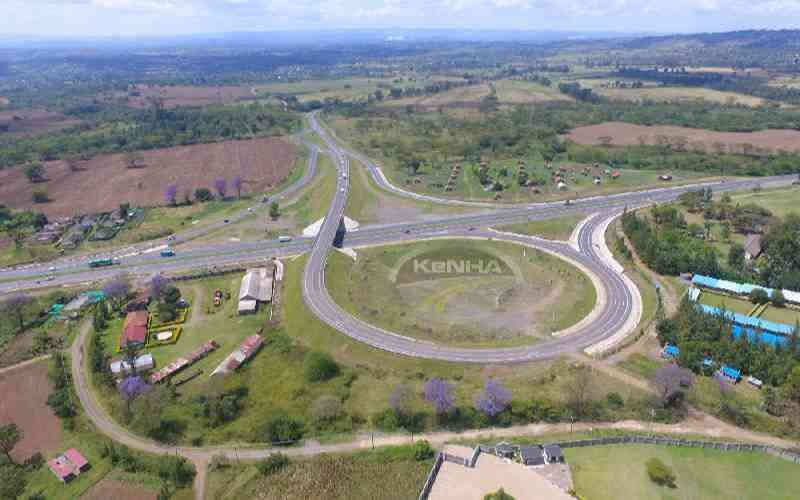
The project includes upgrading the 94-kilometre highway, constructing interchanges, a viaduct through Nakuru City, bridges, drainage systems, modern tolling infrastructure, road safety features and other facilities required to support highway operations.
KeNHA said the investment will reduce travel time, improve road safety, lower vehicle operating costs and boost trade, tourism and economic growth across the Rift Valley.
Stay informed. Subscribe to our newsletter
Subscribe to our newsletter and stay updated on the latest developments and special offers!











 join
join