×

The Standard e-Paper
Fearless, Trusted News
 The Standard Group Plc is a
multi-media organization with investments in media platforms spanning newspaper
print operations, television, radio broadcasting, digital and online services. The
Standard Group is recognized as a leading multi-media house in Kenya with a key
influence in matters of national and international interest.
The Standard Group Plc is a
multi-media organization with investments in media platforms spanning newspaper
print operations, television, radio broadcasting, digital and online services. The
Standard Group is recognized as a leading multi-media house in Kenya with a key
influence in matters of national and international interest.

Audio By Vocalize
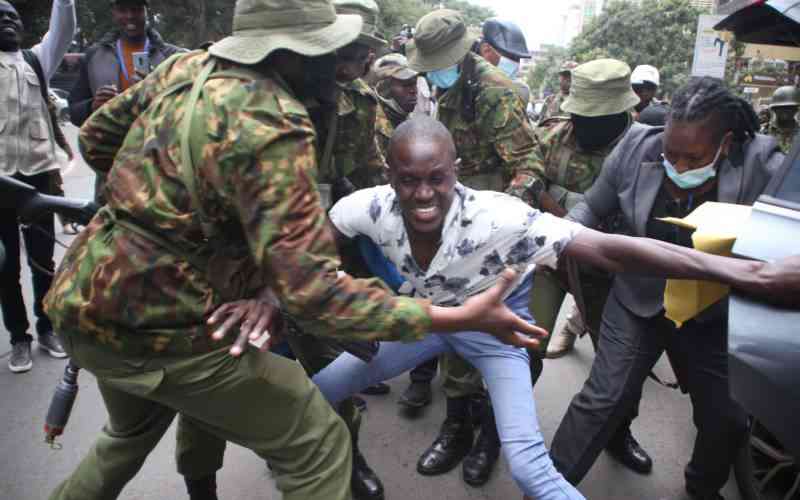
Police arrest activists along Harambee Avenue, Nairobi during Saba Saba Day commemoration on July 7, 2026. [Kanyiri Wahito, Standard]
As Kenya marks 36 years since Saba Saba, the protest tradition once led by veteran politicians now belongs to a generation demanding accountability rather than multi-party rule.
The name, Kiswahili for Seven Seven, marks July 7, 1990, when Kenyans took to the streets after the government banned a pro-democracy rally at Nairobi's Kamukunji Grounds.
Opposition leaders Kenneth Matiba and Charles Rubia had called for the restoration of multi-party politics under the one-party rule of the Kenya African National Union (KANU).
Days before the rally, security forces arrested the pair alongside other reform advocates, a move that inflamed rather than dampened public anger.
Protesters clashed with police in Nairobi and other towns. Accounts of the toll vary, but several people died, hundreds were injured and more than 1,000 were arrested.
The pressure that followed forced President Daniel arap Moi's government to repeal Section 2A of the constitution in December 1991, restoring multi-party politics and paving the way for the 1992 general election and, eventually, the 2010 constitution.
Constitutional lawyer Yash Ghai, who chaired the Constitution of Kenya Review Commission, was among speakers at a Saba Saba commemoration in 2018 who argued the aspirations of the original movement had made it into the 2010 constitution but remained short of full implementation.
Former Chief Justice Willy Mutunga, who addressed the same gathering, has separately argued that the push for rights did not end with constitutional reform and continues through civil society and ordinary citizens.
Today's Saba Saba looks little like 1990's. The original struggle centred on ending authoritarian rule and opening up political space.
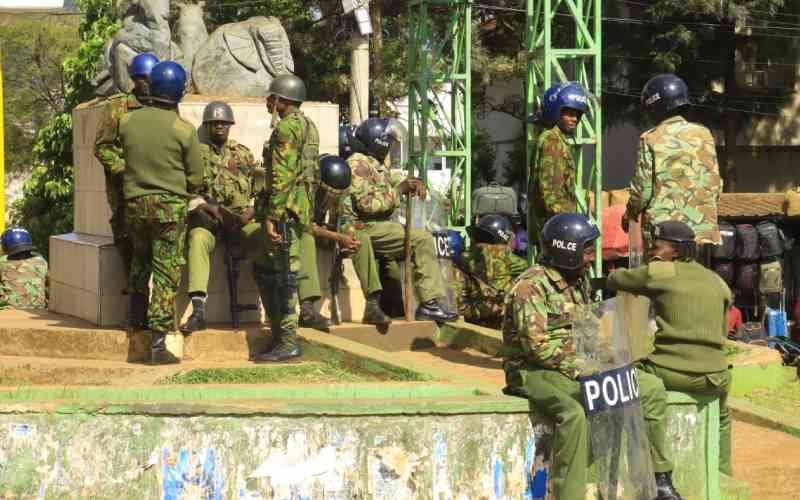
Police officers keep vigil in Kisii town on Saba Saba commemoration on July 7, 2026. [Sammy Omingo, Standard]
The current one is aimed at governance, police reform, economic justice and an end to extrajudicial killings and enforced disappearances.
The clearest shift is generational. Where the Second Liberation was led by veteran politicians, the present movement is driven by young Kenyans organising largely online, without a single dominant leader.
The 2024 anti-Finance Bill protests marked a turning point, with hashtags including #RejectFinanceBill2024, #OccupyParliament and #RutoMustGo among the most influential digital campaigns in Kenya's history, expanding from opposition to taxation into wider demands for transparency, jobs, healthcare and education.
Stay informed. Subscribe to our newsletter
Unlike 1990, when mobilisation relied on secret meetings and pamphlets, today's protests are coordinated on platforms such as X, TikTok and Facebook, with fundraising and mobilisation happening within hours.
Social justice centres in informal settlements including Mathare, Dandora, Kayole, Mukuru and Korogocho have taken on a bigger role in recent commemorations, organising marches against police brutality and pushing implementation of constitutional guarantees, shifting the day's focus from political elites to ordinary citizens.
Despite constitutional protection for peaceful assembly, tension between protesters and security agencies persists.
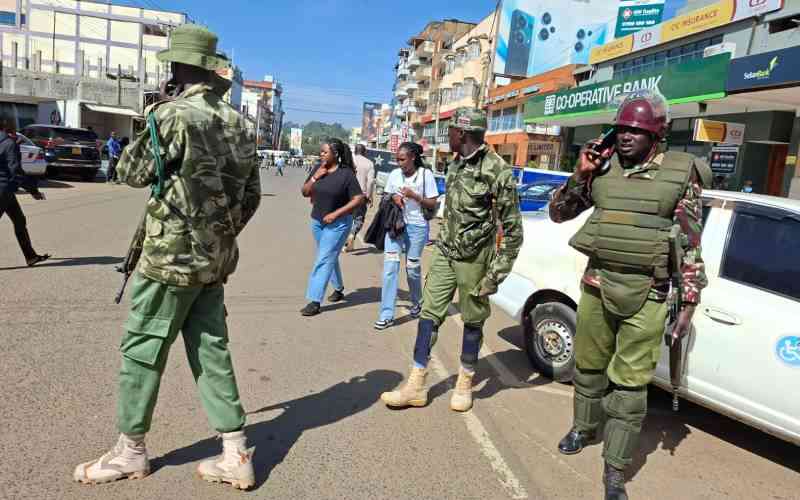
Outright bans and detention without trial defined the first decade after 1990; recent commemorations have instead brought heavy police deployment, road closures and allegations of excessive force.
Kenya's democratic institutions have expanded since 1990, but activists argue the fight to protect civil liberties remains unfinished.
Subscribe to our newsletter and stay updated on the latest developments and special offers!


 Prefer the Standard on Google






 join
join