×

The Standard e-Paper
Home To Bold Columnists
 The Standard Group Plc is a
multi-media organization with investments in media platforms spanning newspaper
print operations, television, radio broadcasting, digital and online services. The
Standard Group is recognized as a leading multi-media house in Kenya with a key
influence in matters of national and international interest.
The Standard Group Plc is a
multi-media organization with investments in media platforms spanning newspaper
print operations, television, radio broadcasting, digital and online services. The
Standard Group is recognized as a leading multi-media house in Kenya with a key
influence in matters of national and international interest.

Audio By Vocalize
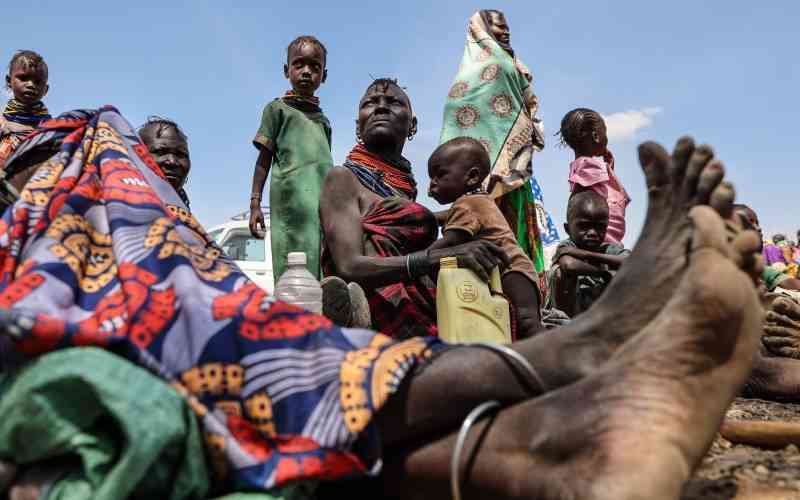
Education stakeholders have called for increased support for learners from vulnerable households and arid and semi-arid areas as schools prepare to reopen in the coming weeks, warning that poverty, hunger and lack of basic learning necessities continue to keep thousands of children out of classrooms.
The stakeholders say government agencies, civil society organisations, donors and communities must work together to ensure that financial hardship does not prevent children from accessing education.
The call comes against the backdrop of concerns raised in Turkana, where local leaders say only about 20 per cent of school-going children have reported back to school, despite national directives requiring learners to resume classes regardless of school fees or uniforms.
During a visit to New Creation Children’s Home, Lizah Foundation International Director-General Elizabeth Mutuku said community and government support was critical in ensuring vulnerable children remain in school.
“If we work together as a community to educate these children, our future as a nation will be much brighter. We also urge the government to increase funding for the education sector because education is the foundation of a nation,” Mutuku said.
The concerns have heightened calls for targeted interventions ahead of the next school reopening, with education stakeholders warning that national policies must take into account the realities faced by families in arid and semi-arid areas.
Some counties across the country have initiated programs that support the school retention of pupils in lower primary schools with Nairobi Country partnering with the national government through Dishi na County.
Lizah Foundation International has been supporting vulnerable children through educational assistance, mentorship and guidance while also working with communities on social and environmental issues.
Leaders in the county say the low attendance reflects deeper challenges facing families in marginalised regions, including hunger, lack of uniforms, bedding and learning materials, long distances to schools and limited household incomes.
“Children are being ordered to report to school, but they are hungry, they have no bedding, no uniforms and no money,” said Penina Akiru from Lomekwi. “Directives do not solve poverty.”
In Turkana, local leaders have similarly stressed the importance of bursaries and scholarships in keeping children from poor households in school.
Turkana North MP Sharif Ekuwam Nabuin recently allocated Sh60 million in bursaries for learners in the constituency and warned against proposals to abolish or reduce NG-CDF funding without providing a workable alternative.
“Education remains the most sustainable equaliser, and no child should miss school because of poverty,” Nabuin said.
Lapur Ward MCA Michael Ewoi said removing constituency-level education support could have severe consequences in the region.
“Without CDF bursaries and support, most of our schools would be empty. Children would remain at home, many would drop out completely, and the few who attend would struggle without food, bedding or learning materials,” Ewoi said.
Stay informed. Subscribe to our newsletter
Loima MP Dr Protus Akuja also welcomed affirmative action targeting learners from ASAL counties, saying lowering Grade 10 admission points for such regions would give disadvantaged students a better opportunity to compete nationally.
“The decision to lower points for ASAL counties like Turkana from 45 to 36 is a game changer,” Akuja said.
Education stakeholders say the challenges go beyond school fees. Hunger, inadequate household resources, distance to schools and lack of accommodation and learning materials can all undermine attendance and retention.
As schools prepare to reopen, stakeholders are urging policymakers and well-wishers to prioritise bursaries, scholarships, food, uniforms, bedding and mentorship for vulnerable learners.
They warn that without timely support, poverty could continue pushing children out of school, increasing the risks of child labour, early marriages and long-term inequality.
The stakeholders say education financing must therefore focus not only on enrolment but also on ensuring that children have the basic support required to remain in school and complete their education.
Subscribe to our newsletter and stay updated on the latest developments and special offers!

 Prefer the Standard on Google









 join
join