

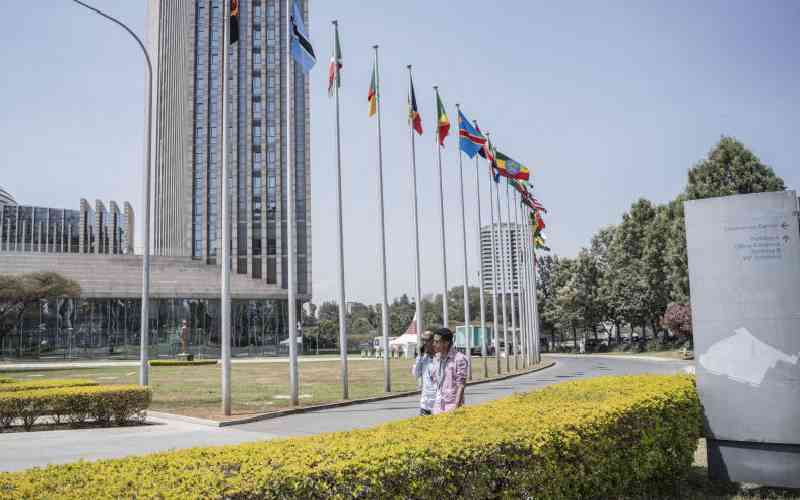
United Nations says La Niña is fading, neutral conditions likely, with El Niño possible before end of 2026. [File,Satandard]
×

The Standard e-Paper
Kenya’s Boldest Voice
 The Standard Group Plc is a
multi-media organization with investments in media platforms spanning newspaper
print operations, television, radio broadcasting, digital and online services. The
Standard Group is recognized as a leading multi-media house in Kenya with a key
influence in matters of national and international interest.
The Standard Group Plc is a
multi-media organization with investments in media platforms spanning newspaper
print operations, television, radio broadcasting, digital and online services. The
Standard Group is recognized as a leading multi-media house in Kenya with a key
influence in matters of national and international interest.

Audio By Vocalize

The warming El Niño weather phenomenon could return later this year as its cooling opposite, La Nina fades away, the United Nations said Tuesday.
The UN's World Meteorological Organisation (WMO) said the recent, weak La Nina was expected to give way to neutral conditions, which could then swing into El Niño before the end of 2026.
La Nina is a naturally occurring climate phenomenon that cools surface temperatures in the central and eastern equatorial Pacific Ocean. It brings changes in winds, pressure and rainfall patterns.
The WMO said there was a 60-per cent chance of neutral conditions during the three-month window from March to May, with a 30-per cent chance of La Nina conditions, and El Niño at a 10-per cent probability.
There is a 70-percent chance of neutral conditions during April-June.
In May-July, the chance of neutral conditions drops back to 60 per cent, with the chances of El Niño at 40 per cent.
"The WMO community will be carefully monitoring conditions in the coming months to inform decision-making," said Celeste Saulo, who heads the UN's weather and climate agency.
"The most recent El Niño, in 2023-24, was one of the five strongest on record, and it played a role in the record global temperatures we saw in 2024," the WMO secretary-general said.
El Niño contributed to making 2023 the second-hottest year on record and 2024 the all-time high.
- Above-average temperatures -
The WMO underlined that naturally occurring climate events such as La Niña and El Niño take place against the backdrop of human-induced climate change, which is "increasing global temperatures in the long-term, exacerbating extreme weather and climate events, and impacting seasonal rainfall and temperature patterns".
The US National Oceanic and Atmospheric Administration says there is a 50- to 60-per cent chance of El Niño developing during the July-September period and beyond.
"Seasonal forecasts for El Niño and La Niña help us avert millions of dollars in economic losses and are essential planning tools for climate-sensitive sectors like agriculture, health, energy and water management," said Saulo.
"They are also a key part of the climate intelligence provided by WMO to support humanitarian operations and disaster risk management, and thus save lives," she said.
Stay informed. Subscribe to our newsletter
The WMO's latest Global Seasonal Climate update says there is a widespread global signal for above-average land surface temperatures for March to May.
Rainfall predictions in the equatorial Pacific show a lingering La Nina-like pattern, but in other parts of the world, the signal is more mixed, it says.
Subscribe to our newsletter and stay updated on the latest developments and special offers!








 join
join