×

The Standard e-Paper
Home To Bold Columnists
 The Standard Group Plc is a
multi-media organization with investments in media platforms spanning newspaper
print operations, television, radio broadcasting, digital and online services. The
Standard Group is recognized as a leading multi-media house in Kenya with a key
influence in matters of national and international interest.
The Standard Group Plc is a
multi-media organization with investments in media platforms spanning newspaper
print operations, television, radio broadcasting, digital and online services. The
Standard Group is recognized as a leading multi-media house in Kenya with a key
influence in matters of national and international interest.

Audio By Vocalize
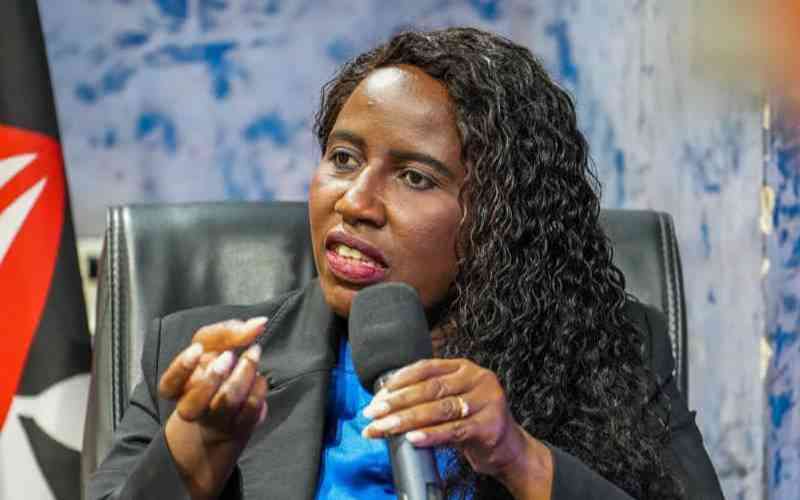
The Government is moving to consolidate academic records from recognised institutions into a single national database to make it harder for people with forged qualifications to secure jobs.
The National Qualifications Database will give employers a central platform to verify academic credentials, with the Kenya National Qualifications Authority (KNQA) aiming to connect all universities to the system by the end of the year.
So far, only 22 percent of the universities have been onboarded, as the government seeks to replace the lengthy process of verifying academic records across different institutions and agencies.
Higher Education Principal Secretary Beatrice Inyangala said technology would be used to speed up the process and facilitate the sharing of records between institutions.
“By the end of the year, we should have all the universities onboarded, because we'll put systems in place that ease the sharing of data using technology,” Inyangala said.
She said the system would serve as a one-stop shop for students, graduates, and employers seeking to establish the authenticity of academic records.
Currently, employers seeking to verify a person's academic history may have to contact different institutions and government agencies, a process that can delay recruitment.
“Sometimes, an employer wants to find out whether a graduate actually performed well at the lower levels,” Inyangala said.
The database will allow authorised users to trace an individual's qualifications from basic education through university or technical and vocational education and training.
“At the click of a button, the employer can be satisfied that this student has appropriate qualification records starting all the way to university or TVET,” she said.
The move comes against the backdrop of a growing problem of forged academic credentials, particularly in the public service.
A Public Service Commission report for the 2023/24 financial year identified 1,019 civil servants with forged academic credentials, with 744 already facing disciplinary action.
The revelations have raised concerns over how fake certificates continue to slip through verification processes and are used to secure employment.
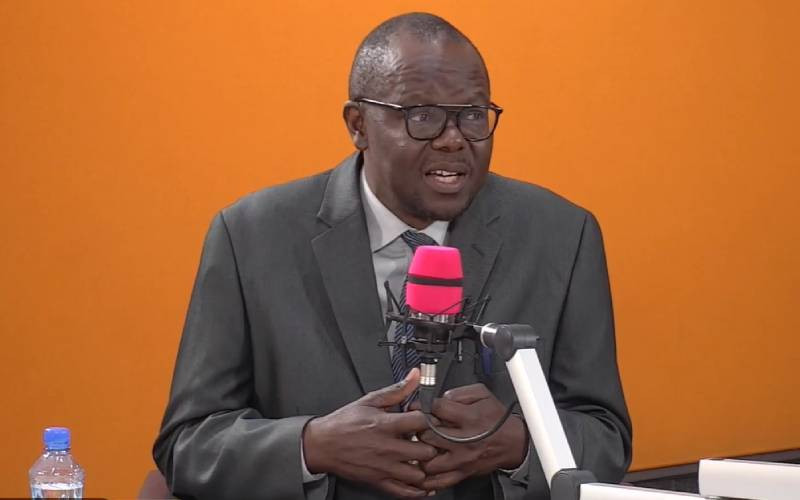
KNQA chief executive Alice Kande said the existing system of checking qualifications is cumbersome and involves tracing records from several institutions.
She said the database would help close some of the gaps created by the manual verification process while strengthening confidence in Kenyan qualifications.
Stay informed. Subscribe to our newsletter
“The country has recognised the need to build trust in our system of education, the accreditations and the qualifications,” Kande said.
Kande said most Kenyan universities issue credible certificates, but a small group of people continues to exploit weaknesses in the system.
“By and large, employers are very satisfied. We know that our universities are credible and they give credible certificates, but there is a challenge with a very small segment of Kenyans who are creative and try to get fake certificates,” she said.
The system is being rolled out under the Kenya National Qualifications Framework, a 10-level structure that provides a common way of classifying qualifications obtained through different education and training pathways.
The framework is also expected to make Kenyan qualifications easier to recognise and compare internationally.
The crackdown on questionable qualifications is also being extended to institutions offering programmes without the required regulatory approval.
Commission for University Education (CUE) CEO Mike Kuria said the commission had shut down institutions and stopped graduation ceremonies where institutions or programmes were found to be operating outside approved standards.
“We have closed down institutions and even cancelled graduation ceremonies that were not appropriate,” Kuria said.
CUE has previously flagged institutions offering degree and postgraduate programmes without the necessary accreditation, warning students that qualifications obtained from unapproved programmes may not be recognised.
The two agencies are expected to play complementary roles in strengthening the integrity of academic qualifications.
CUE regulates universities and accredits their programmes, while KNQA oversees the registration and recognition of qualifications awarded by accredited institutions.
The database is therefore expected to tackle the problem at two levels, ensuring that institutions and programmes meet required standards while giving employers a faster way of establishing whether certificates presented by job seekers are genuine.
For years, verification has largely depended on institutions responding to individual requests for confirmation. The new system seeks to replace that fragmented process with a centralised digital record.
But with only 22 per cent of universities currently onboarded, the success of the system will depend on how quickly institutions are connected and how effectively their records are integrated.
The Government says the target is to have the remaining universities onboarded by the end of the year, potentially giving employers a faster way to detect fake qualifications before they are used to secure jobs.
Subscribe to our newsletter and stay updated on the latest developments and special offers!


 Prefer the Standard on Google





 join
join