×

The Standard e-Paper
Fearless, Trusted News
 The Standard Group Plc is a
multi-media organization with investments in media platforms spanning newspaper
print operations, television, radio broadcasting, digital and online services. The
Standard Group is recognized as a leading multi-media house in Kenya with a key
influence in matters of national and international interest.
The Standard Group Plc is a
multi-media organization with investments in media platforms spanning newspaper
print operations, television, radio broadcasting, digital and online services. The
Standard Group is recognized as a leading multi-media house in Kenya with a key
influence in matters of national and international interest.

Audio By Vocalize
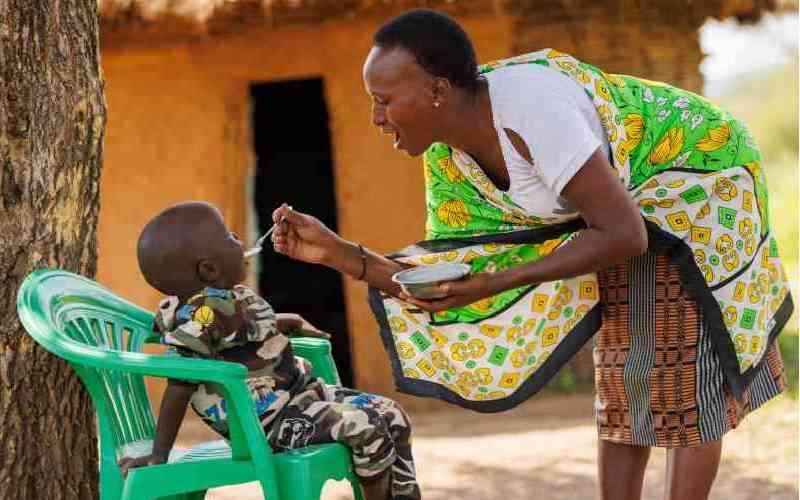
Nancy Maidong' feeds her 3-year-old son Aaron who has just recovered from moderate acute malnutrition at their home in Toitum village in Baringo. [File, Standard]
More than 3.6 million Kenyans are facing acute food insecurity, with more than 500,000 people already in emergency levels of hunger as the country grapples with rising malnutrition, disease and displacement.
The latest humanitarian update paints a grim picture of food security in the country, showing that 21 per cent of Kenyans were experiencing acute food insecurity as of June 2026.
According to Save the Children, of those affected, 545,350 people were classified under Emergency (IPC Phase 4), meaning they face critical food consumption gaps and require urgent assistance to prevent further deterioration.
The crisis is particularly severe in Kenya's Arid and Semi-Arid Lands (ASALs), where health facilities are recording a sharp rise in admissions of malnourished children and pregnant and lactating women.
Between January and June, 31,014 pregnant and lactating women were admitted for treatment of Moderate Acute Malnutrition, while 138,833 children under five were treated for severe and moderate acute malnutrition.
Another 10,449 children suffering from severe acute malnutrition and medical complications were admitted to stabilisation centers.
The situation among mothers is worsening rapidly.
Admissions of pregnant and lactating women almost doubled from 4,077 cases in January to 8,135 in June, highlighting growing nutritional vulnerability among women in affected communities.
Children are facing a similar crisis, with admissions for acute malnutrition rising from 20,637 in January to 29,973 in June.
The highest number of cases was recorded in May and June.
The humanitarian update attributes the worsening situation to the combined effects of food insecurity, disease and reduced household access to nutritious food.
But even as the number of malnourished children rises, humanitarian agencies are staring at another threat: a shortage of therapeutic food.
Kenya is projected to face a shortfall of 29,372 cartons of Ready-to-Use Therapeutic Food (RUTF) between June and December.
Stay informed. Subscribe to our newsletter
Without urgent intervention, the shortage could interrupt treatment programmes, reduce coverage and expose vulnerable children to poorer health outcomes.
The food crisis is also unfolding against a heavy burden of childhood diseases.
During the first six months of the year, 574,527 children presented with diarrhea, while 401,670 were treated for pneumonia and 22,154 were admitted with severe malaria.
Pneumonia cases alone increased from 49,490 in January to a peak of 80,735 in March, while severe malaria admissions rose from 3,186 in January to 4,097 in May before falling slightly in June.
The humanitarian crisis has been further complicated by displacement, particularly in refugee-hosting areas.
In June, 1,446 new refugees arrived in Kakuma, pushing the camp's total refugee population to 323,285.
Most of the new arrivals were Sudanese fleeing the conflict in their country, while others came from South Sudan and the Democratic Republic of Congo.
The influx has increased pressure on already stretched services, including food assistance, healthcare, shelter, water and sanitation, education and child protection.
Children remain among the most vulnerable.
In July, 135 child protection cases were reported in Kakuma/Kalobeyei and 143 in Dadaab.
The response is being hampered by a severe shortage of child protection workers. In Kakuma, one caseworker is handling approximately 400 cases, while the ratio is one to 300 in Kalobeyei and one to 450 in Dadaab far above the recommended one worker for every 25 cases.
Despite the growing needs, humanitarian organisations continue to provide critical support.
Save the Children and local partners reached 54,127 people through health, nutrition, water and sanitation, education and child protection interventions.
More than 10,000 people were screened for acute malnutrition, while thousands received medical consultations and pregnant women accessed antenatal care.
For some families, the assistance has offered a way to rebuild their lives.
Thirteen-year-old Happy, who fled conflict in South Sudan and became separated from her parents, was taken in by a foster mother, Betty, in 2017.
With humanitarian support, Happy received life-skills training while Betty received parenting support and Sh9,000 in emergency cash assistance over three months.
The money helped Betty buy Happy a school uniform, bag and learning materials, while the remainder was invested in a second-hand clothes business.
The business now provides the family with an income.
“The support from Save the Children was the spark that helped us build a better future,” Betty said.
The humanitarian outlook remains uncertain as Kenya awaits the findings of the 2026 Long Rains Assessment Report, expected in August.
The assessment is expected to provide a clearer picture of the impact of the rains on food security, nutrition, livestock, crops and household livelihoods.
For millions already struggling to put food on the table, the findings could determine where assistance is directed as the country enters the second half of the year.
The latest figures, however, already point to an urgent reality: for millions of Kenyans, hunger is no longer a looming threat, it is a daily struggle.
Subscribe to our newsletter and stay updated on the latest developments and special offers!

 Prefer the Standard on Google







 join
join